Why Most Kitchen Organization Fails
Most kitchen organization breaks down not because of bad intentions, but because the systems weren't built around real cooking habits. A drawer full of rarely used gadgets, pots stored across the room from the stove, spices buried three rows deep - these friction points add up and eventually cause the whole setup to unravel.
The principles that hold up over time share a common thread: they reflect how the kitchen is actually used, not how it looks in a catalog. If your kitchen tends to fall back into disorder, the layout itself may be working against you. For a deeper look at why organized spaces backslide, see why organized spaces keep falling apart.
Store items at the point of use, not by category alone.
When tools are stored where they're used rather than grouped arbitrarily, the kitchen flows more naturally during cooking. This reduces back-and-forth movement and makes it much easier to return items to their proper place.
Clear countertops of everything that isn't used daily.
Counter clutter compresses usable prep space and makes the kitchen feel chaotic. Reserving the counter for only the most-used appliances and tools keeps it functional and easier to wipe down.
Apply first-in, first-out rotation to pantry items.
Rotating stock so older items move to the front prevents food from expiring unused at the back of shelves. This keeps the pantry functional and reduces waste over time.
Designate a dedicated spot for every item - including irregular ones.
Items without a fixed home tend to migrate to counters or junk drawers, creating slow accumulation. Even rarely used tools should have a clear, consistent location.
Audit and declutter the kitchen at least once or twice a year.
Cooking habits change, and items accumulate gradually. Regular reviews prevent the kitchen from silently filling with tools you've stopped using, which crowds out useful storage space.
The Zone Approach: Organizing Around What You Do
Dividing your kitchen into activity zones is one of the most effective and durable organizational strategies available. The concept is simple: group items by the task they support, and store them close to where that task happens.
- Prep zone: Cutting boards, knives, peelers, and mixing bowls belong near your main work surface.
- Cook zone: Pots, pans, spatulas, and frequently used spices live near the stove.
- Clean zone: Dish soap, sponges, drying racks, and cleaning supplies stay near the sink.
- Storage zone: Pantry staples, canned goods, and dry ingredients can live in a dedicated cabinet or pantry area.
This approach reduces how much you move around the kitchen during cooking, and it gives every item a logical home that's easy to maintain. Households with multiple cooks especially benefit - zones reduce the guesswork about where things belong. For multi-person households, organizing shared spaces with different habits offers additional guidance.
Making the Most of Limited Space
Small or awkwardly shaped kitchens require a more deliberate approach to storage. The most common mistake is relying solely on cabinet shelves and drawer space while ignoring the walls, cabinet doors, and toe-kick areas.
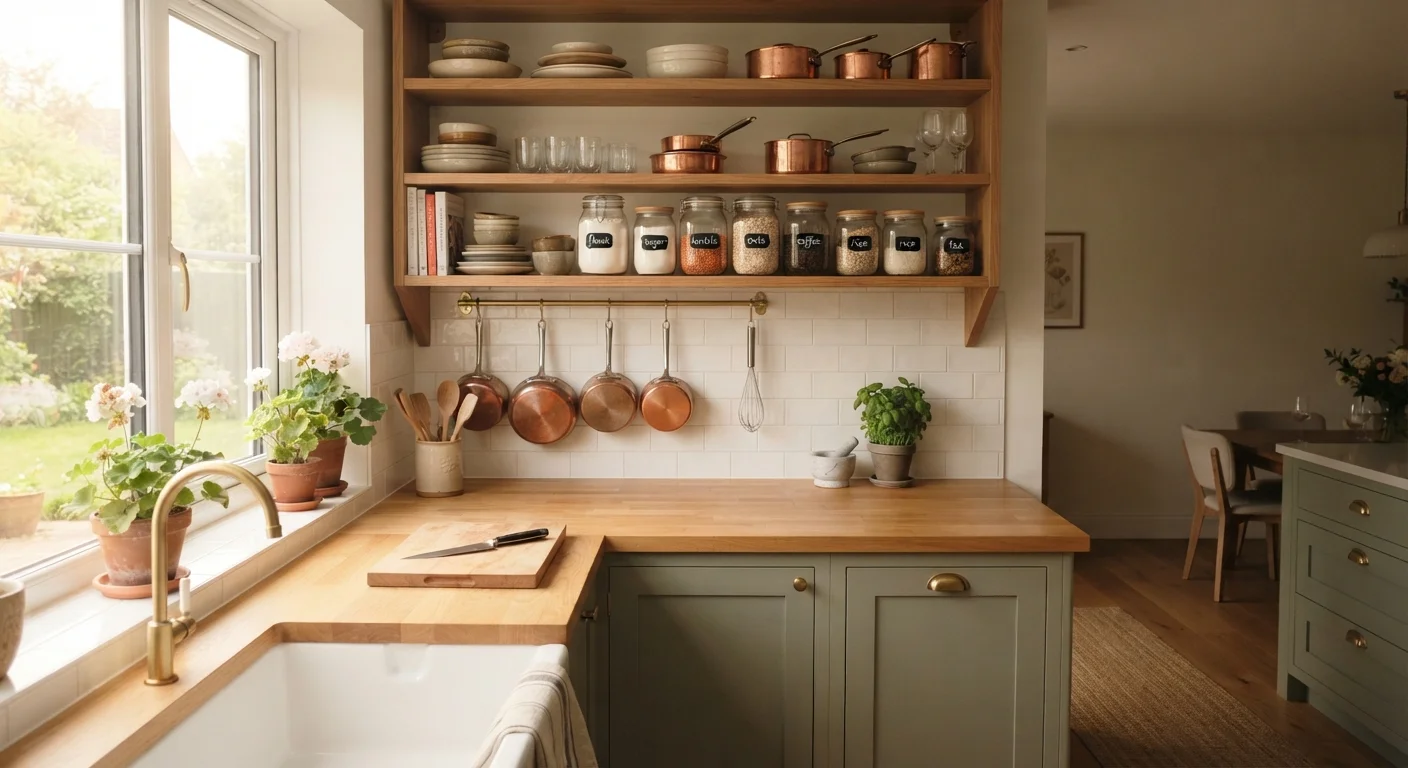
Vertical storage is particularly valuable in compact kitchens. Wall-mounted magnetic knife strips, pegboards for hanging tools, and stacked shelf risers inside cabinets all add usable space without expanding the footprint. For a broader look at when to build up versus spread out, the guide on vertical versus horizontal storage walks through the tradeoffs by room type. If you're working with a full apartment or compact home, small-space storage strategies covers the wider picture.
Renting? Check Before You Install
Some vertical storage solutions - like wall-mounted pegboards or magnetic strips - require drilling into walls or cabinets. If you're renting, review your lease and check with your landlord before making permanent modifications. Many renter-friendly alternatives use adhesive mounts or tension-based systems that don't require holes.
Habits That Sustain the System
Organization is less about a single setup event and more about the small routines that support it daily. A well-designed kitchen can still fall apart without consistent habits - and those habits are much easier to maintain when the system matches how you naturally move and cook.
30%
Average cabinet space that goes unused
Storage studies on household organization suggest a significant portion of cabinet space is typically wasted due to poor shelf configuration and item placement.
2x
More usable storage with vertical organization
Home organization professionals commonly note that using wall height and vertical dividers can roughly double effective storage in the same footprint.
The most durable kitchens tend to follow one simple rule: if something doesn't get put away consistently, it's not stored in the right place. Adjust the system before blaming the habit. For broader home organization guidance that applies room to room, explore the home improvement resource hub.
“A kitchen organized around the way you actually cook will always outlast one organized around the way you wish you cooked.”
— Home Editorial Team, Home & Garden editorial staff