Why Storage Strategy Matters More in Small Spaces
In a larger home, disorganization has room to hide. In a compact apartment or small house, clutter becomes visible and disruptive almost immediately. That's not a flaw in small-space living - it's feedback. When square footage is limited, the way you use every shelf, corner, and wall matters more than it would in a home where things can simply spread out.
The good news is that constraint encourages creativity. Small homes benefit enormously from intentional storage choices, and many of the most effective approaches require no construction at all. Whether you're in a studio apartment, a one-bedroom unit, or a compact house, the strategies below address real organizational challenges room by room. For a broader foundation, our complete home organization overview covers the full picture from entryway to garage.
Start With One Room at a Time
Trying to reorganize an entire home at once often leads to stalled projects and more disorder before things improve. Pick the room that causes the most daily friction and apply two or three of these strategies there first. Once that space holds, the approach is easier to replicate elsewhere. For a guided starting point, see our room-by-room introduction to home organization.
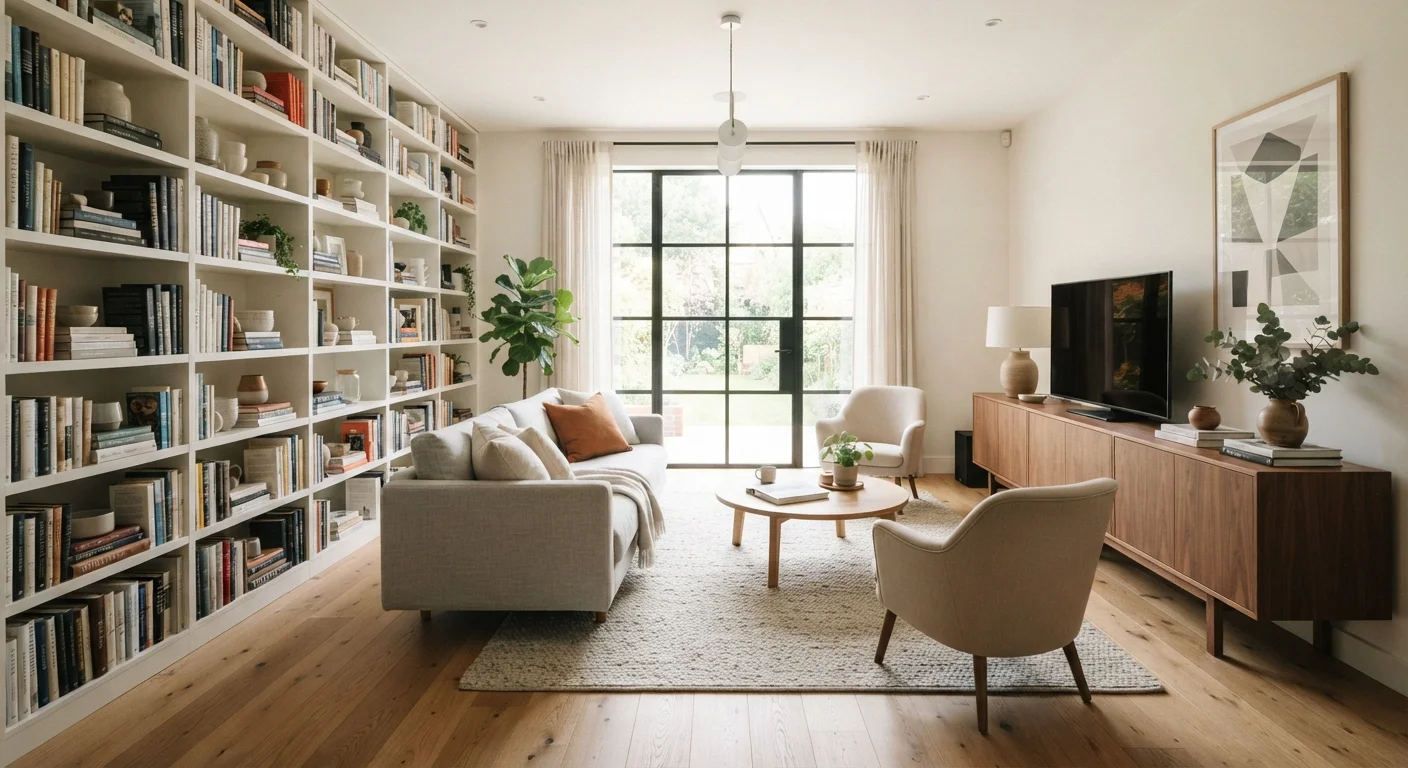
Go vertical with wall-mounted shelving
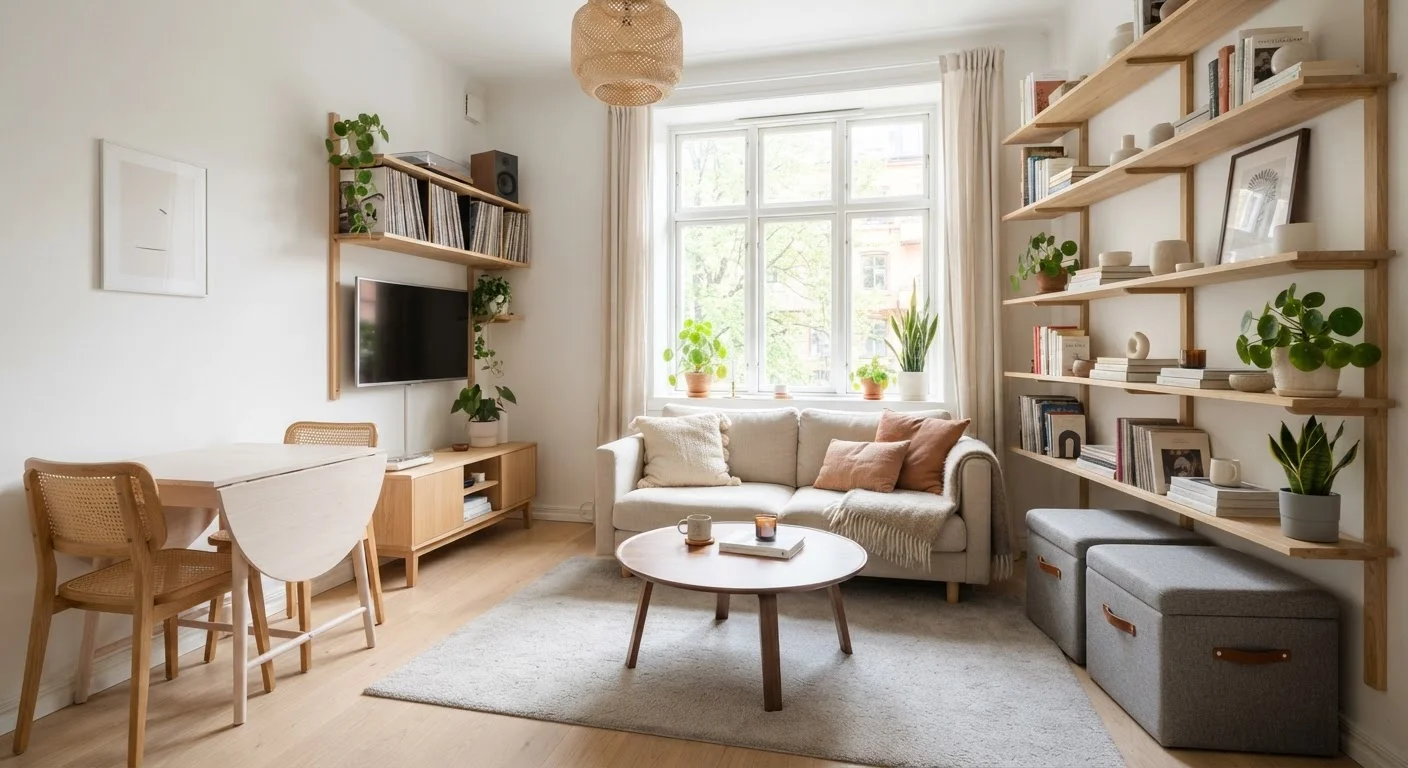
Floor space is scarce, but wall space frequently goes untouched. Installing shelving above eye level - in living rooms, hallways, and bedrooms - creates meaningful storage without encroaching on the room's footprint. Floating shelves, tall bookcases anchored to walls, and stacked modular units all take advantage of the full height of a room.
In kitchens, open shelving above countertops keeps cookware and pantry staples accessible while freeing up cabinet interiors for bulkier items. In bedrooms, shelves above the closet rod add a second tier for seasonal clothing or folded linens. Our guide to vertical vs. horizontal storage covers when and where each approach works best.
Walls are the most underused storage asset in any small home.
Choose furniture with built-in storage
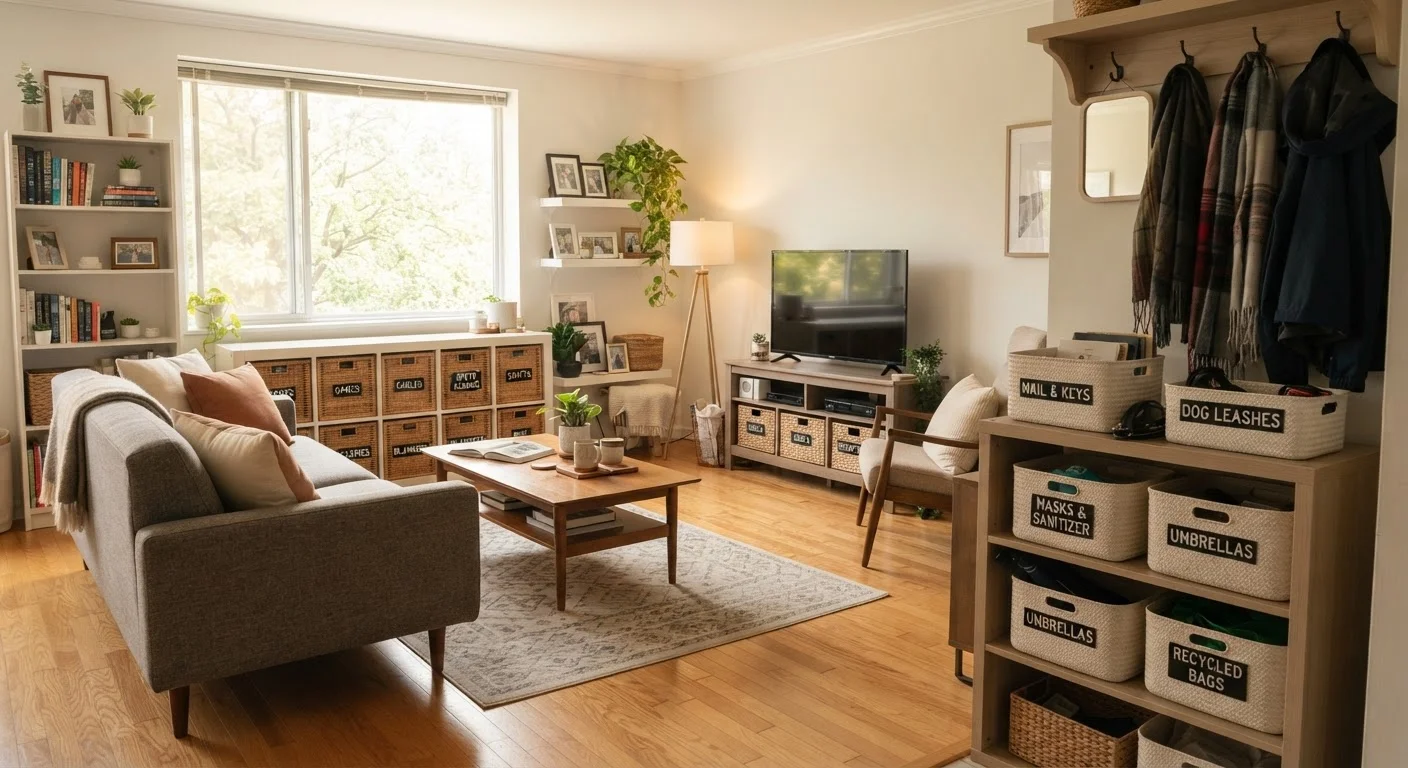
In a compact home, every piece of furniture should earn its place. Beds with drawer bases or lift-up platforms keep extra linens, off-season clothing, and luggage neatly out of sight. Ottomans with hollow interiors serve as seating, a coffee table surface, and a storage container simultaneously. Dining benches with lift-top seats follow the same logic.
When selecting new pieces, look for items where storage is integrated into the design rather than added on as an afterthought. This approach tends to feel cleaner visually and reduces the need for additional freestanding organizers that compete for floor space.
Every furniture piece should serve at least two purposes in a small home.
Use the backs of doors
The back of a door is a flat, vertical surface that most people ignore entirely. Over-door organizers work well in pantries, bathrooms, and bedroom closets - holding everything from spices and cleaning supplies to shoes and accessories. Narrow pockets suit items like hair tools, stationery, or small cleaning bottles that don't stack well on shelves.
Hooks on the back of bathroom and bedroom doors handle towels, robes, bags, and frequently used outerwear without requiring permanent wall fixtures. This matters especially for renters who need damage-free solutions that can be removed when a lease ends.
Door backs offer immediate, renter-friendly storage that most households never use.
Maximize closet interiors with layered organization
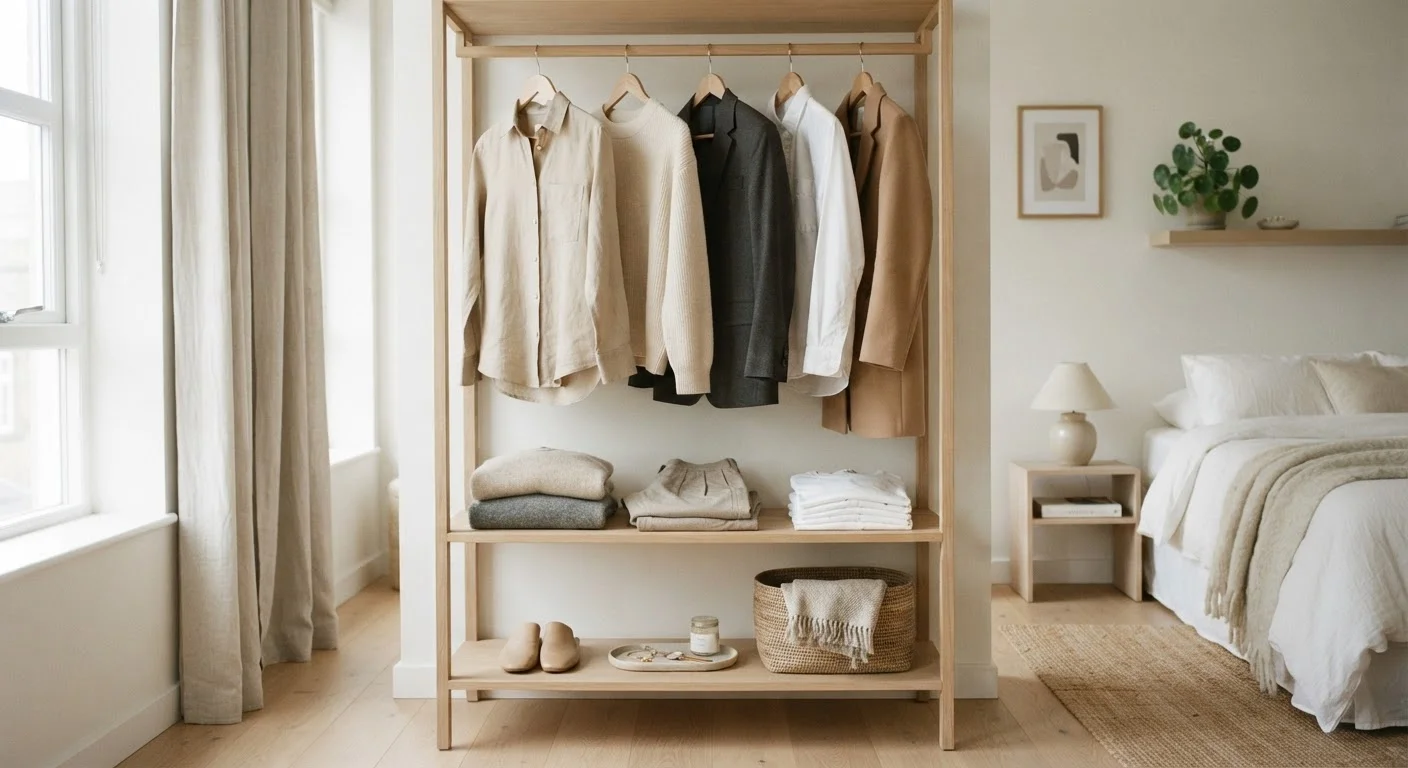
A standard closet with a single rod and one shelf uses only a fraction of the available space. Doubling up hanging rods for shorter garments, adding shelf dividers, and using stackable bins on upper shelves can roughly double a closet's usable capacity without any renovation. Slim velvet hangers also recover significant rod space compared to bulky plastic ones.
For clothing-specific organization, consider pairing this approach with a more intentional wardrobe strategy. Our article on rethinking how you store clothing explores how editing what you keep can reduce closet pressure just as effectively as adding more organizers.
Doubling rods and adding shelf dividers can roughly double a closet's usable capacity.
Identify and activate hidden storage zones
Small homes often have storage potential tucked into overlooked areas. The space under a staircase can accommodate built-in drawers, a small desk, or open shelving. The gap between the refrigerator and a wall may fit a slim rolling pantry cart. Hollow stair risers, window seats with hinged lids, and the space above kitchen cabinets all offer additional room when a home's official storage feels maxed out.
Taking a slow walk through each room with fresh eyes - looking for dead zones, awkward corners, and unused vertical runs - often reveals at least a few opportunities that daily habit has made invisible.
A slow, fresh-eyes tour of your home usually reveals storage zones you've stopped noticing.
Edit regularly to match your actual space
No storage strategy compensates indefinitely for more belongings than the space can hold. Regular editing - reassessing what you own and releasing items that no longer serve you - is the most durable form of small-space management. This doesn't require a dramatic purge; even a seasonal review of one area at a time prevents gradual accumulation from outpacing your systems.
For households where different members have different habits, building shared agreements around what gets kept and where it lives can help. Organizing a home with others addresses exactly this challenge with practical, collaborative approaches.
Regular editing is the most durable storage strategy - systems alone can't compensate for too much stuff.
Putting It All Together
Small-space storage works best when strategies layer on top of each other rather than operating in isolation. Vertical shelving creates capacity; multi-use furniture reduces redundancy; door organizers activate ignored surfaces; and regular editing keeps the whole system from quietly overloading.
The kitchen is often where these principles face the greatest test in compact homes. Our guide to kitchen organization principles addresses storage habits and layout strategies that hold up even in tight or oddly shaped spaces. And if your home includes outdoor square footage - however small - container gardening on a small patio or balcony shows how limited outdoor space can still be put to good use.
Renter Considerations
Many wall-mounted and permanent storage solutions require drilling or adhesive installation. Before making changes, review your lease agreement and check with your landlord. Damage-free alternatives - such as tension rod systems, over-door organizers, and freestanding shelving - work well in most rental situations and can be taken when you move.
The goal isn't a showroom - it's a home that works for how you actually live. Even two or three of these adjustments, applied consistently, can meaningfully change how a small space feels day to day.