What Each Approach Actually Means
Storage decisions often come down to a simple question: do you build up or spread out? Vertical storage uses wall height - think floor-to-ceiling shelving, stacked cabinets, wall-mounted pegboards, or over-door organizers. Horizontal storage spreads across floor space - low dressers, wide credenzas, under-bed drawers, or benches with interior compartments.
Neither approach is inherently better. Each reflects a different set of trade-offs between capacity, accessibility, safety, and the visual feel of a room. Understanding those trade-offs helps you make deliberate choices rather than defaulting to whatever fits the first open wall. For a broader look at how organizing logic should guide those choices, see the core logic of smart storage.
| Criterion | Vertical Storage | Horizontal Storage |
|---|---|---|
| Floor space used | Minimal - builds upward | More floor area required |
| Accessibility | Can require reaching or a step stool | Items easy to reach at most heights |
| Visual impact | Can make ceilings feel taller | Keeps sightlines open and calm |
| Safety considerations | Tall units must be wall-anchored | Lower risk of tipping; stable base |
| Best room fit | Kitchens, offices, entryways, closets | Bedrooms, living rooms, bathrooms |
| Capacity per sq ft of floor | Higher - maximizes vertical plane | Lower - limited by surface area |
| Suitability for shared households | Varies - upper shelves inaccessible to some | Generally better for mixed-ability users |
Where Vertical Storage Works Best
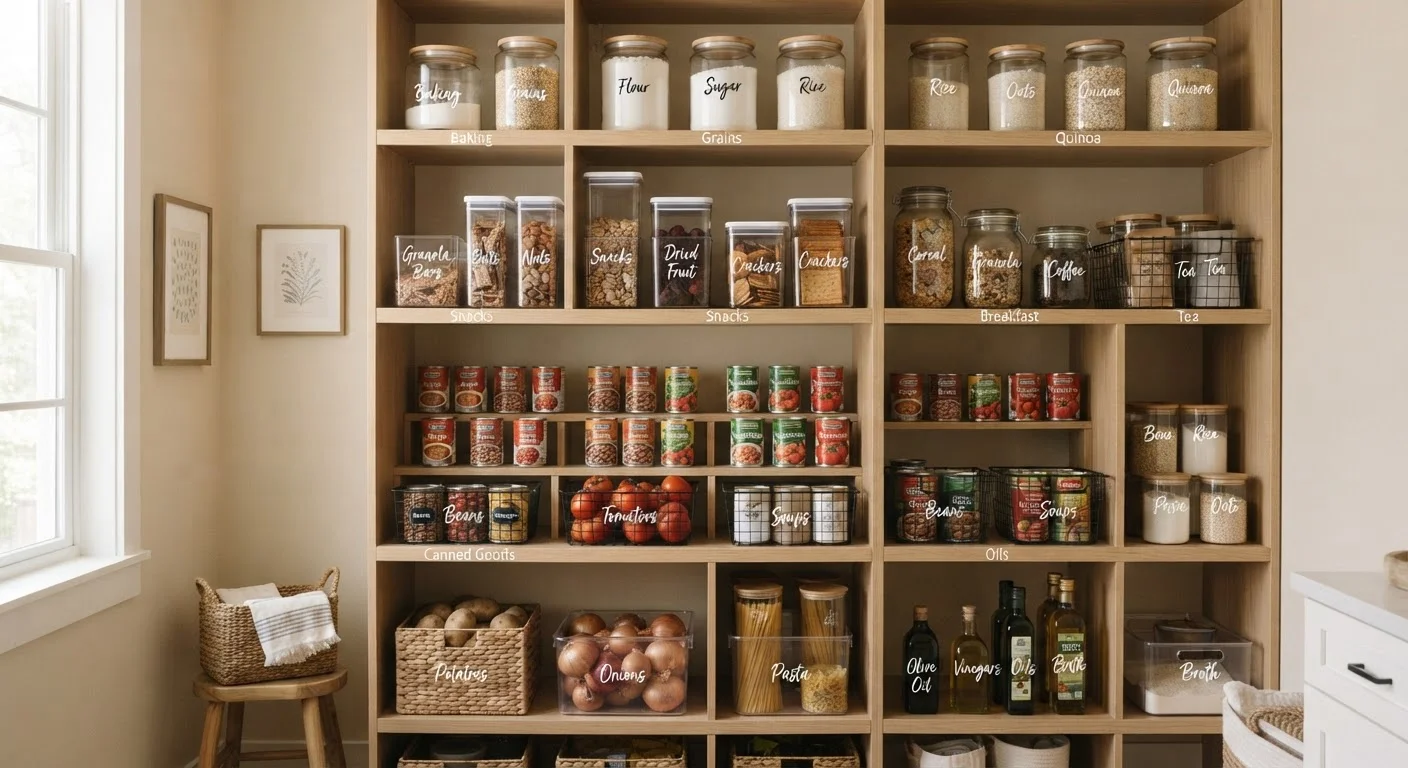
Vertical storage shines whenever floor space is the scarce resource. A tall pantry cabinet in a narrow kitchen, floating shelves above a desk, or a wall-mounted bike hook in an entryway all accomplish the same thing: they move clutter off the floor without eating into the room's usable area.
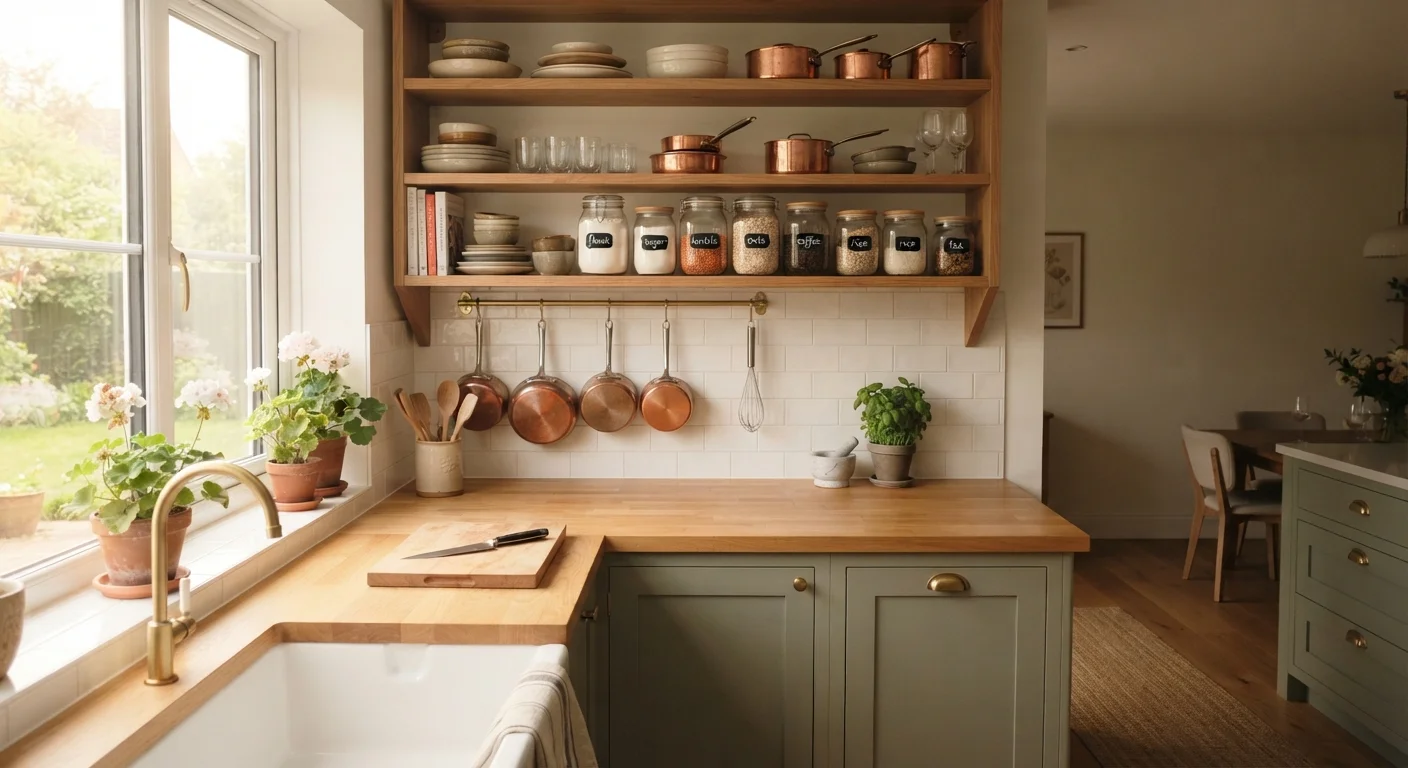
This approach is especially powerful in kitchens and home offices, where many distinct categories of items need a home. Kitchen organization principles that hold up over time consistently point to wall-mounted and stacked solutions as key tools for keeping surfaces clear.
One caution worth taking seriously: tall freestanding units - bookshelves, wardrobes, storage towers - must be anchored to the wall to prevent tipping. This is a safety requirement, not optional. Anti-tip straps and wall anchors are widely available and straightforward to install, but the step is easy to skip. Don't.
~15%
of US emergency room furniture injuries involve tip-overs
The U.S. Consumer Product Safety Commission has long tracked furniture tip-over incidents, with unsecured tall units being a leading cause of in-home injuries, particularly for young children.
8 ft+
Standard ceiling height in most US homes
Most American homes built after the 1990s have ceilings of at least 8 feet, leaving meaningful wall space above standard furniture that vertical storage can put to use.
Where Horizontal Storage Has the Edge
Horizontal storage trades ceiling capacity for ease of access and visual calm. A low console table with drawers, a storage ottoman, or an under-bed rolling drawer gives you plenty of capacity without requiring any reaching above shoulder height - which matters for households that include older adults, young children, or anyone with limited mobility or reach.
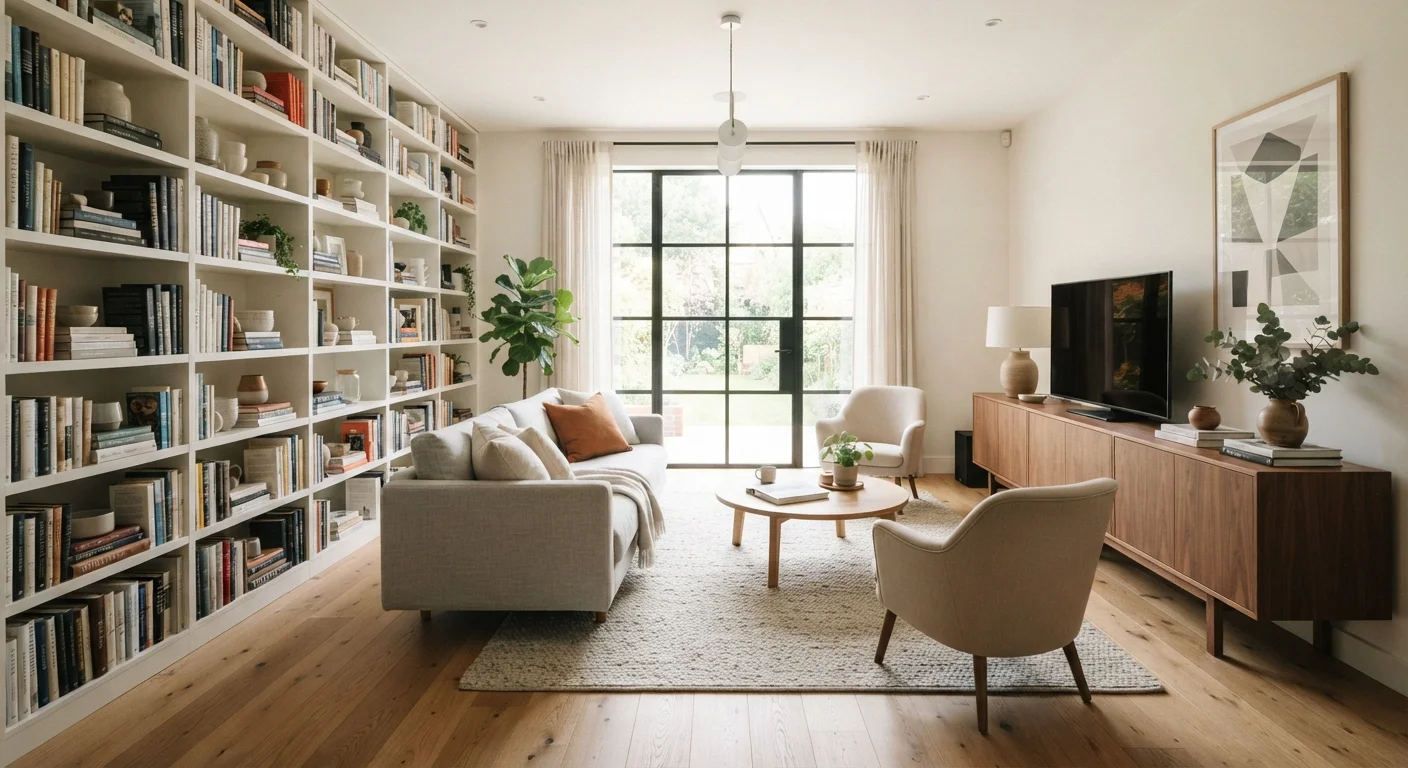
Horizontal solutions also tend to preserve sightlines. In open-plan living areas, keeping storage low maintains a sense of spaciousness that tall shelving can interrupt. If you're organizing a shared space where different people have different habits and needs, organizing strategies for shared households can help you think through which approach suits everyone.
Bathrooms offer an interesting case: even a small bathroom often has more wall height than floor space, making vertical solutions attractive - but horizontal storage at counter height keeps toiletries accessible. Small bathroom layout and storage approaches explores this balance in detail.
Combining Both for a Whole-Home Strategy
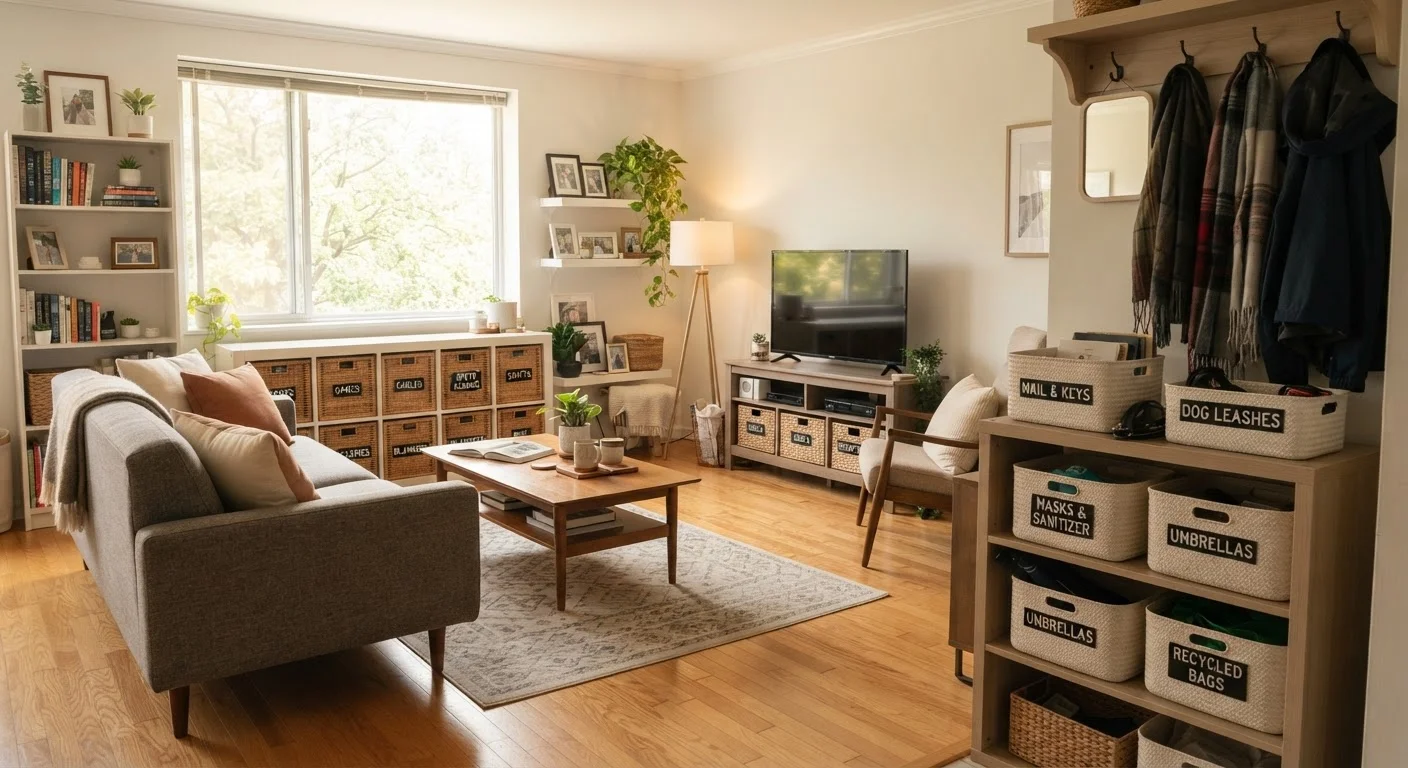
The most functional homes don't commit entirely to one approach - they apply each where it makes sense. A bedroom might use vertical shelving in the closet while keeping a low dresser visible in the room. A home office might mount shelves above a desk while keeping frequently-used supplies in a horizontal drawer unit at sitting height.
The guiding question is always: how often is this item used, and who needs to reach it? Frequently-used items belong at accessible heights. Rarely-used items - seasonal décor, archive boxes - are good candidates for higher vertical storage. If you're rethinking a compact home overall, small-space storage strategies offers room-by-room thinking worth reviewing.
For those weighing whether to commit to fixed shelving or prefer adaptable systems, fixed vs. modular storage systems is a natural next step. And if clothing storage is a priority, considering a more streamlined wardrobe approach - as outlined in the capsule closet concept - can reduce the total storage burden in bedrooms significantly.
Renters: Check Before You Mount
Wall-mounted vertical storage often requires drilling into walls, which may need landlord approval in rental homes. Many renters turn to freestanding tall shelving, tension-rod systems, or furniture that rests against walls without anchoring. If you do anchor units, confirm your lease terms and plan to patch any holes when you move out.