Why Home Organization Feels Hard (And How to Change That)
Most people don't struggle with organization because they lack discipline - they struggle because they've never been shown a clear starting point. Faced with a whole house of clutter, the natural response is paralysis. The fix isn't motivation; it's a smaller scope.
Effective organization isn't about achieving a magazine-perfect home. It's about reducing the daily friction of finding things, putting things away, and feeling comfortable in your space. When you reframe the goal that way, the pressure drops considerably.
If you're also dealing with accumulated clutter and aren't sure where to begin, our low-pressure decluttering guide walks through a room-by-room approach at your own pace.
Take a Photo Before You Start
Photograph each room or area before you begin organizing. This gives you a clear before-and-after reference, helps you spot patterns in where clutter collects, and provides a motivating visual of your progress once you're done.
Core Principles Before You Buy a Single Bin
Before touching a shelf or ordering storage containers, internalize these foundational rules:
Designated home
A specific, consistent location for a particular item so it always gets returned to the same place.
Decluttering
The process of deciding which items to keep, donate, or discard before organizing what remains.
Friction
The small daily annoyances - searching for items, navigating clutter - that make a disorganized space stressful to live in.
Category grouping
Storing similar items together (e.g., all baking supplies in one zone) so you always know where to look and where to return things.
Daily reset
A brief, consistent routine - usually five to ten minutes - spent returning items to their designated spots to prevent clutter from accumulating.
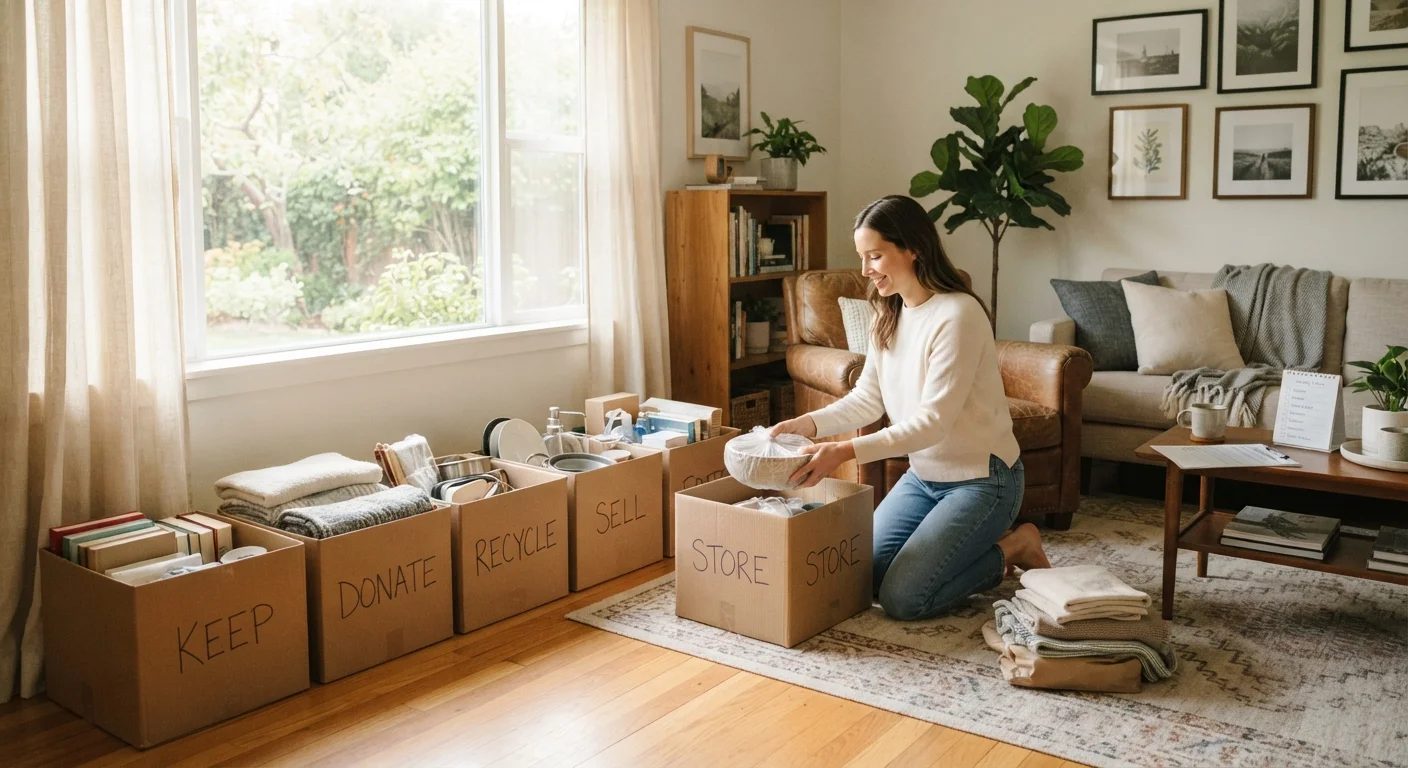
- Declutter first, organize second. Organizing items you don't need just hides the problem. Go through each area and decide what to keep, donate, or discard before thinking about storage.
- Give everything a designated home. Clutter is often just items that have no assigned place. When every object has a specific spot, putting it away becomes automatic.
- Match systems to your real behavior. If you always drop your keys on the counter, put a small tray there rather than fighting the habit with a hook by the door.
- Start small, build momentum. A single organized drawer is a genuine win. Let early successes motivate the next area.
Room-by-Room Starting Points
Each room has a different function, so it benefits from a different organizational logic.
Kitchen
Group items by task: prep tools near the cutting board, mugs near the coffee maker. Clear counter space is the biggest payoff - limit what lives on the surface to daily-use items only.
Bedroom
Clothing is usually the biggest challenge. Sort by category, keep frequently worn items most accessible, and establish a system for the in-between items - clothes that aren't dirty but not ready to be folded. A designated hook or chair prevents floor piles.
Living Room
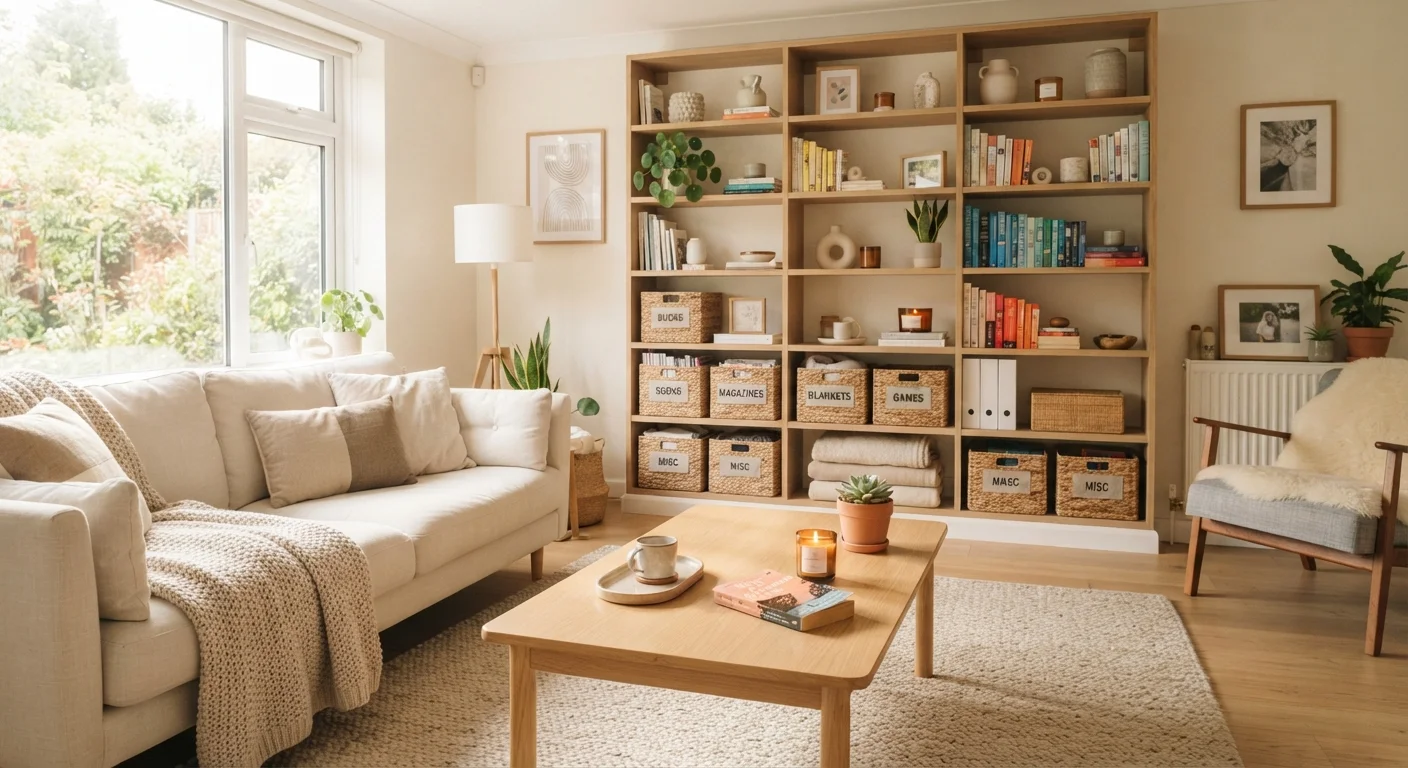
Identify what actually belongs in this space versus what has drifted in. Baskets and trays work well here to corral remotes, chargers, and reading material without making the room feel sterile.
Bathroom
Group products by use (daily skincare, hair, first aid) and purge expired items first. Drawer dividers and small bins inside cabinets make a significant difference in a compact space.
Entryway
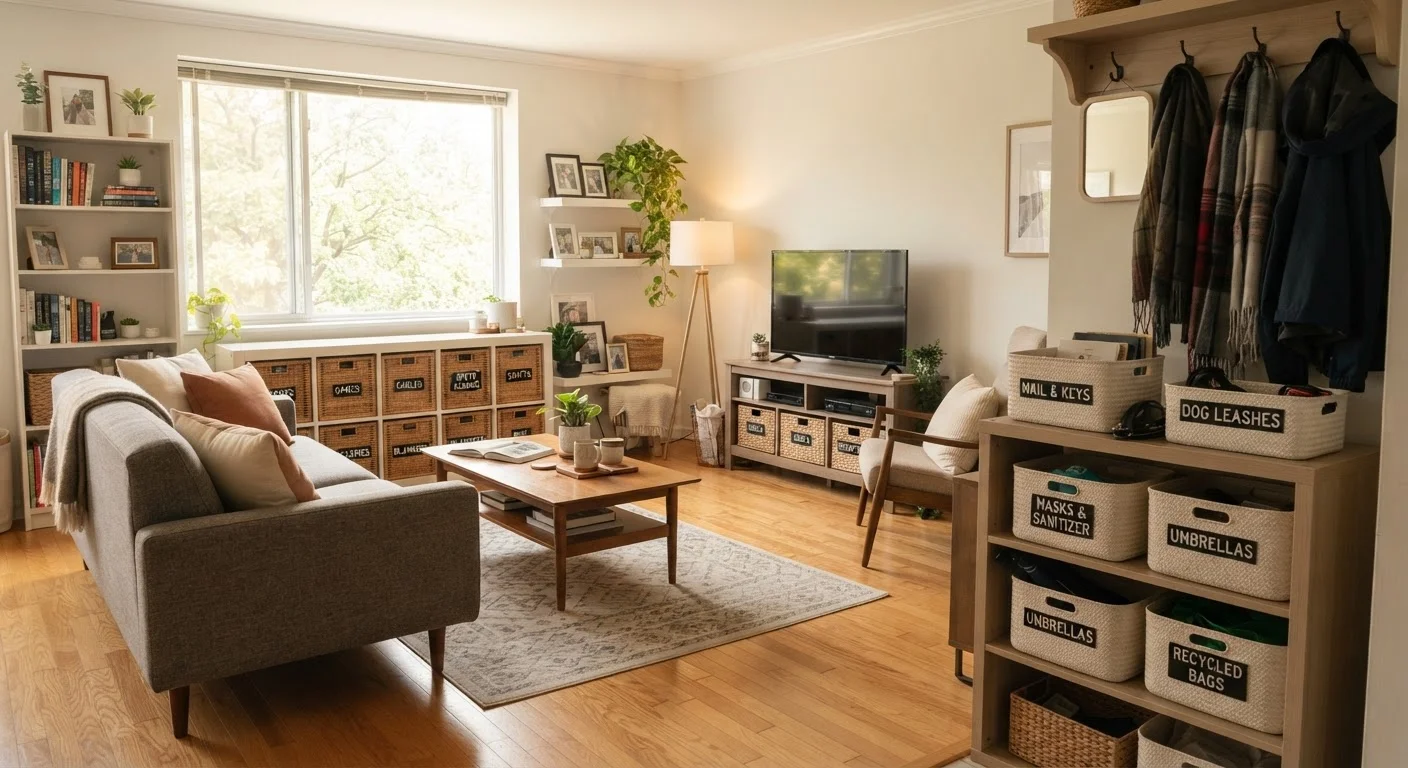
This is the room's first impression and the transition zone between outside and inside. A consistent system for keys, shoes, bags, and outerwear prevents the rest of your home from absorbing that chaos.
For a thorough look at every area of the home - including garage and utility spaces - see our complete home organization overview.
Small Spaces Need a Different Approach
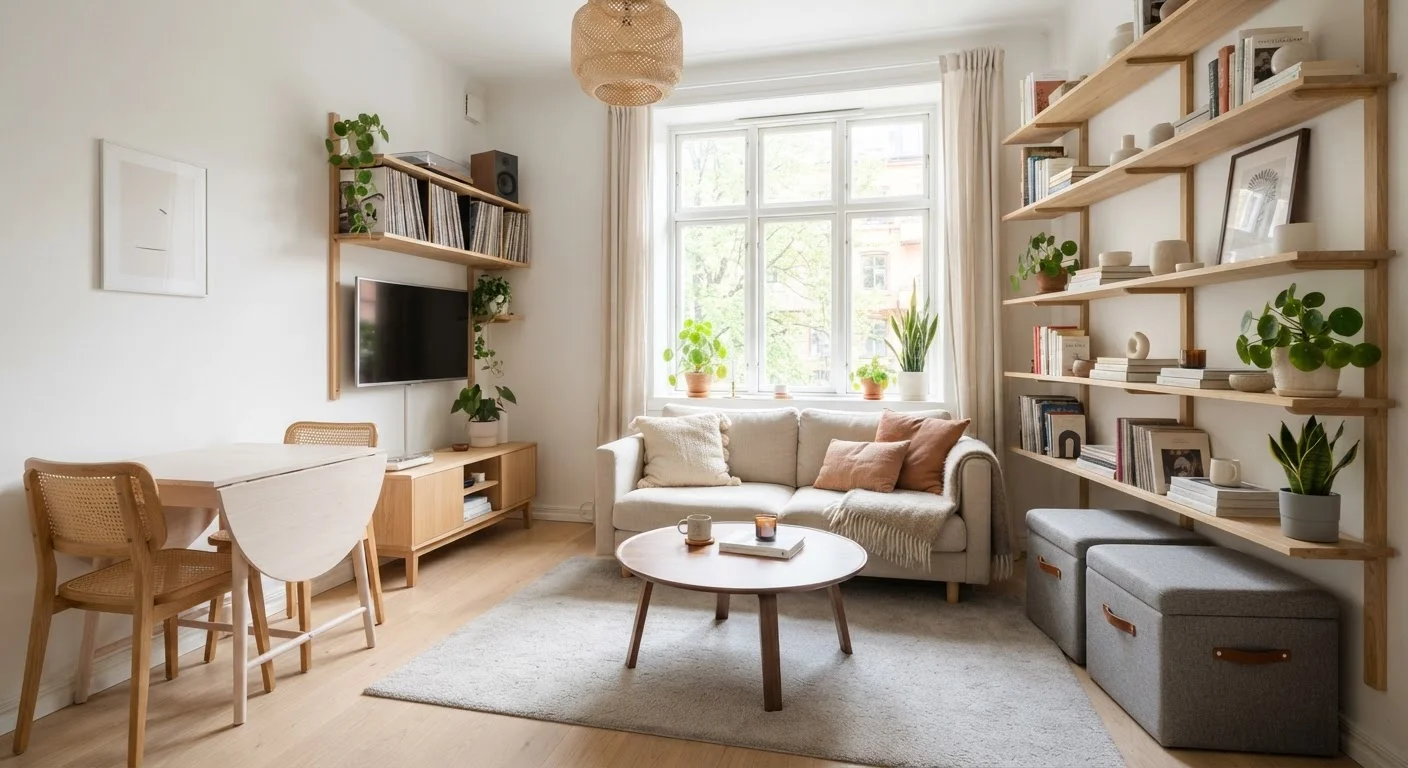
If you're working with a studio apartment or compact home, standard room-by-room advice may need adaptation. Vertical storage, furniture with built-in storage, and strict limits on what you keep all matter more when square footage is limited. Our small-space storage strategies guide covers these scenarios specifically.
Building Habits That Stick
Even the best organizational system breaks down without consistent upkeep. The goal is to make tidying so low-effort that it happens automatically.
- The one-minute rule: If something takes less than a minute to put away, do it immediately rather than setting it down.
- Daily resets: Spend five minutes at the end of the day returning items to their homes. This prevents small messes from compounding.
- Regular reassessment: Every few months, check whether your systems still match your life. Habits change, households evolve, and your organization should too.
If you share your home with others, building shared habits is just as important as the physical setup. Our guide on organizing shared spaces offers practical strategies for households with different tidiness styles.
Organization is a skill, and like any skill, it improves with practice. Start with one drawer, one shelf, or one corner - and build from there.
Avoid Buying Storage Before Sorting
One of the most common beginner mistakes is purchasing bins, baskets, and organizers before decluttering. You'll likely buy the wrong sizes, quantities, or styles - and may end up organizing things you should have discarded. Always sort first, measure your space, then shop for storage solutions.