Why Most Storage Systems Break Down
Most storage problems aren't about a lack of bins, labels, or square footage. They stem from a missing framework - a set of organizing principles that determine where things should live and why. Without that logic, even a beautifully arranged space will drift back into disorder within weeks.
Three core principles govern smart storage: zones, categories, and frequency of use. Understanding how these work together - and what happens when any one of them is ignored - is the foundation of any organization system that actually holds. This is explored in depth in why organized spaces revert to chaos.
| Core organizing principles | 3 - Zones, Categories, Frequency |
| Most common storage mistake | Grouping by appearance, not function |
| Daily-use item access rule | One motion to retrieve |
| Seasonal item placement | Hard-to-reach areas: high shelves, under-bed, back of closet |
| Zone definition basis | Activity or behavior, not room name |
The Three Principles Defined
Zones
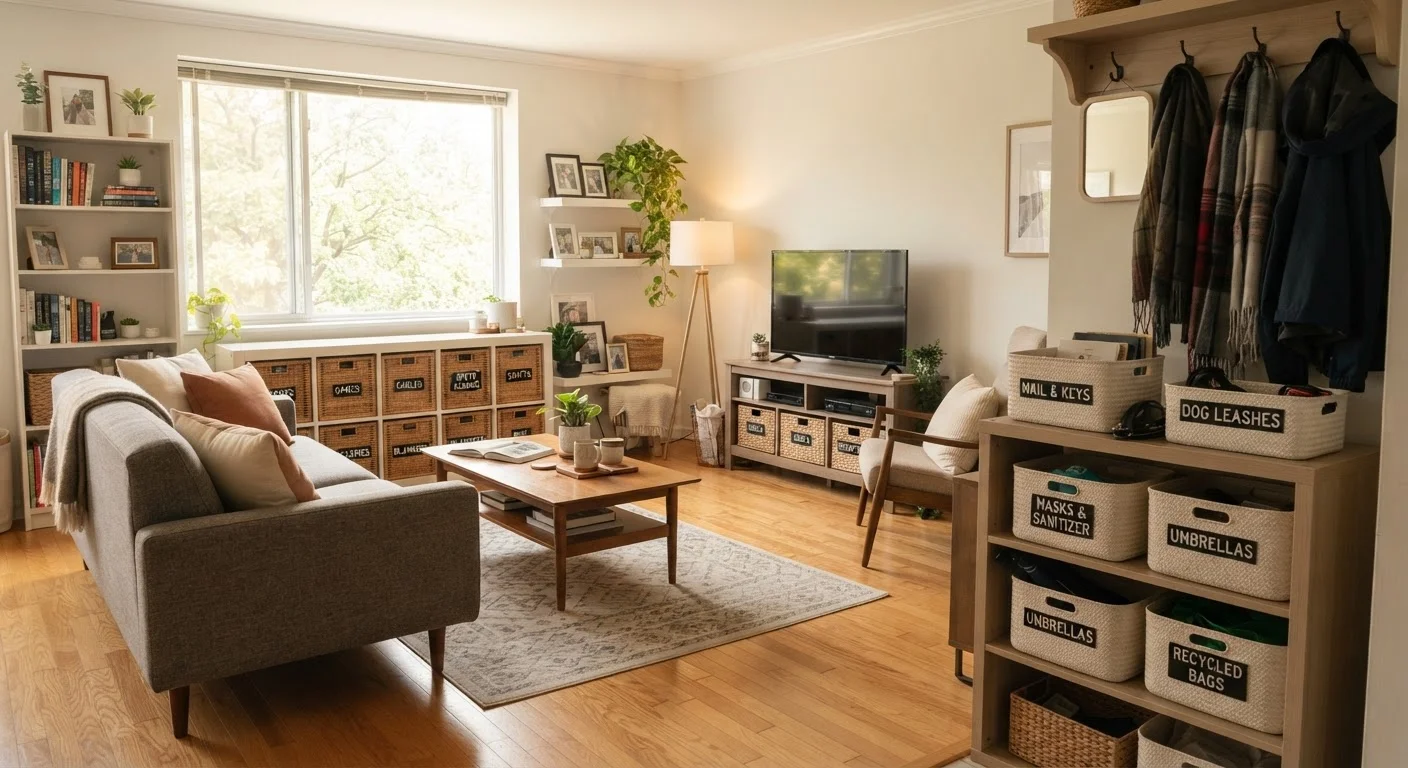
A zone is a designated area of your home where a specific activity happens. The kitchen has a cooking zone, a prep zone, and perhaps a coffee zone. The entryway has a drop-and-go zone. Zones are defined by behavior, not by room names. When storage is aligned with zones, items end up exactly where you need them during a specific task - which is what makes retrieval fast and return intuitive.
Categories
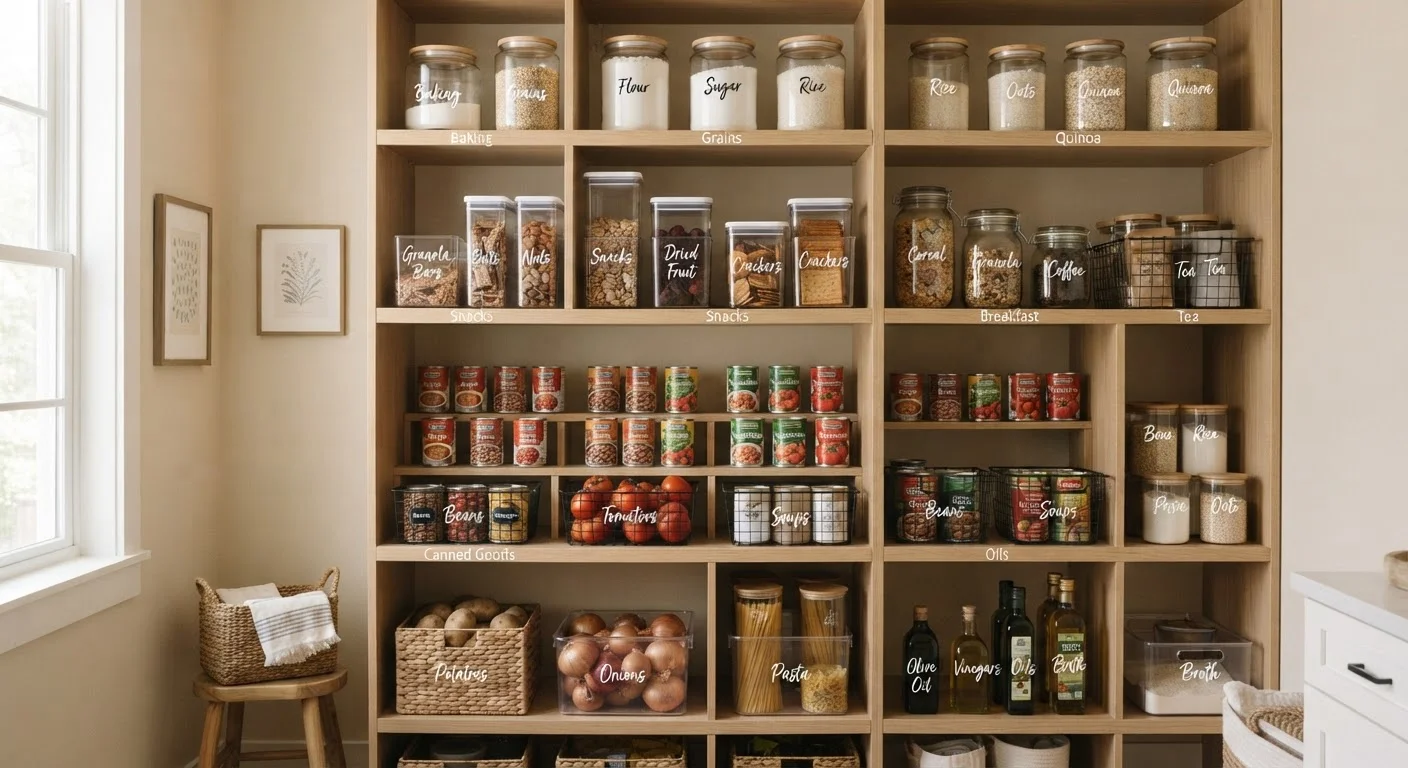
A category groups items that belong together by type or function. Baking supplies form a category. Cleaning products form a category. The mistake most people make is grouping by shape or container size rather than by what things do. A mixing bowl stored with decorative serving platters creates category confusion - neither group is easy to find at the right moment.
Frequency of Use
This principle is about physical accessibility. Items used daily should require no more than one motion to retrieve. Items used weekly can occupy mid-level shelving or drawers. Items used seasonally belong in harder-to-reach spaces - high shelves, back corners, or under-bed storage. Reversing this hierarchy is one of the most common and most disruptive storage mistakes.
Zone
A designated area tied to a specific activity or behavior. Storage within a zone is organized around what you do there, not just what room it falls in.
Category
A logical grouping of items by type or function. Effective categories reflect how you use things, not how they look or what container they fit in.
Frequency of use
How often an item is accessed. This principle determines how physically accessible something should be - daily items stay closest at hand, seasonal items go furthest away.
Prime real estate
The most accessible storage spots in any space - eye level, within arm's reach, or at the front of a shelf. Reserved for the most frequently used items.
Category confusion
What happens when items that serve different functions are stored together, making retrieval slower and returns less intuitive.
Putting the Three Principles Together
Each principle does part of the work. Zones tell you which room or area something belongs in. Categories tell you which group it belongs with. Frequency tells you exactly where within that area it should sit. Remove any one leg and the system wobbles.
A practical example: kitchen spices. The zone is the cooking area (not a pantry across the room). The category is seasonings and flavorings - not mixed with baking extracts or condiments. The frequency is daily or near-daily, which means they should be at eye level or within arm's reach of the stove, not buried behind appliances.
The same logic scales to every room. For households where multiple people share storage, aligning on these three principles first - before buying organizers - prevents the system from fragmenting around individual habits. See how this applies in organizing shared spaces with different habits.
Start With Logic, Not Containers
A frequent misstep is purchasing storage bins and organizers before deciding on zones, categories, and frequency. Containers should fit a system you've already mapped out - not define the system by default. Sketch your zones and categories first, then measure and shop accordingly.
In smaller homes, these principles become even more powerful because every cubic foot of storage counts. Applying zone logic carefully can reveal underused vertical space and dual-purpose areas. Small-space storage strategies builds directly on this framework.
For a room-by-room application of all three principles, the complete home organization overview provides detailed guidance from entryway to garage.
1 Motion
Max effort to access daily-use items
A widely used ergonomic principle in workspace and kitchen design holds that the most-used items should require only one reach or pull to retrieve.
3 Tiers
Frequency-based storage hierarchy
Daily, weekly, and seasonal use each correspond to distinct accessibility levels - prime, mid-level, and deep storage respectively.