Why These Three Terms Get Confused
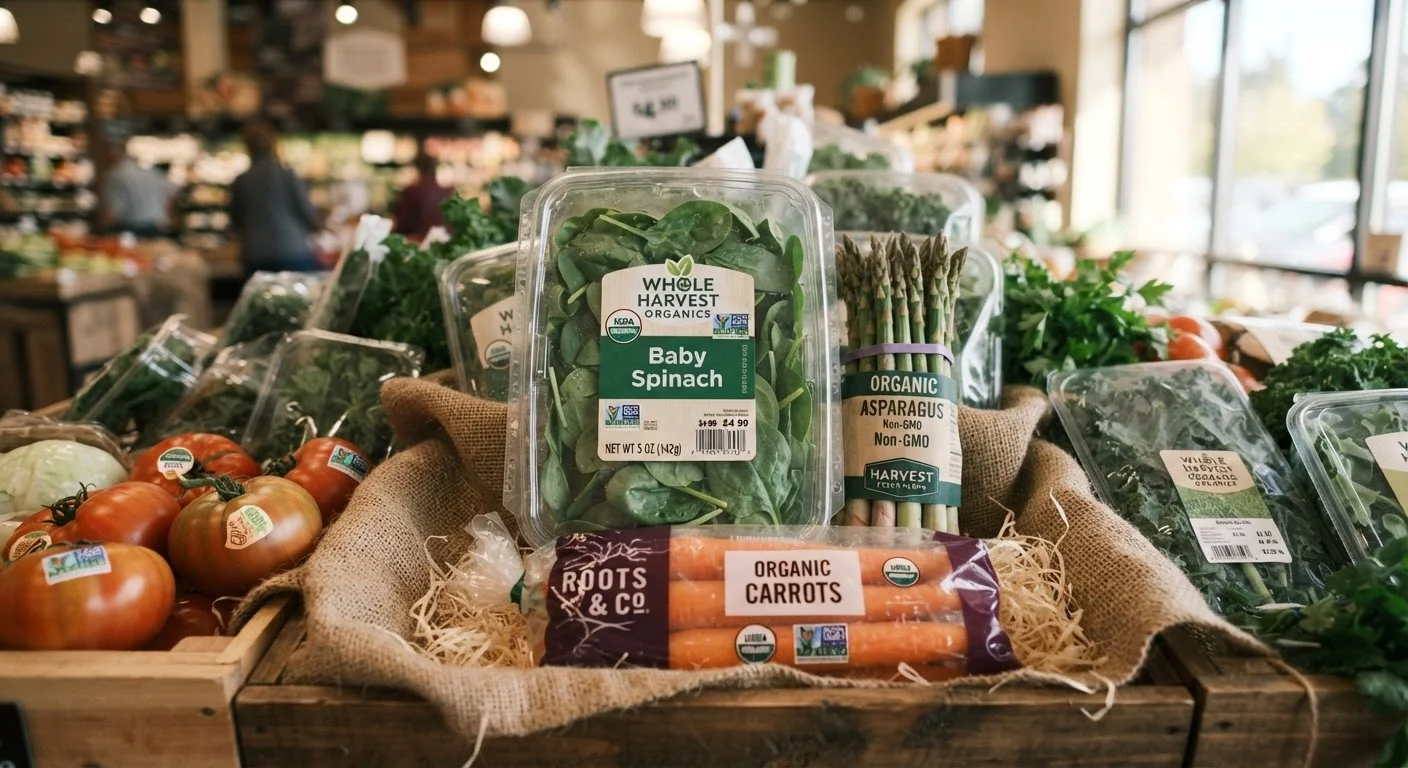
Walk through any grocery aisle and you'll encounter "organic," "natural," and "Non-GMO" on the same shelf, sometimes even on the same package. Consumers often treat them as roughly equivalent - markers of a healthier or cleaner product. In reality, they operate under entirely different levels of regulatory oversight, and conflating them can lead to misplaced confidence in what a label is actually communicating.
As part of a broader effort to understand what product labels are actually telling you, it helps to start with the fundamental question: which of these terms carries a legally enforceable definition, and which doesn't?
| Criterion | USDA Organic | Non-GMO / "Natural" |
|---|---|---|
| Federal legal definition | Yes - defined under NOP regulations | Non-GMO: no federal standard; "Natural": not formally defined for most foods |
| Third-party certification required | Yes - mandatory accredited certifier | Non-GMO Project: yes (voluntary); "Natural": none |
| GMO prohibition | Yes - GMOs are prohibited | Non-GMO Project: yes; "Natural": not addressed |
| Synthetic pesticide restrictions | Yes - most prohibited | No - neither claim addresses pesticide use |
| Livestock/farming conditions covered | Yes - feed, housing, and practices regulated | No - neither claim covers animal welfare or farming practices |
| Processing and additive rules | Yes - approved substance list applies | Limited for "Natural"; not addressed by Non-GMO |
USDA Organic: A Regulated Standard With Real Requirements
"USDA Organic" is the most rigorously defined of the three. Governed by the National Organic Program (NOP) under the U.S. Department of Agriculture, the label requires that producers be certified by an accredited third-party certifying agent. For crops, this means the land must have been free of prohibited substances - including most synthetic pesticides, herbicides, and fertilizers - for at least three years before certification. For livestock, it involves requirements around feed, living conditions, and restrictions on antibiotics and growth hormones.
Products can carry different organic claims depending on content: "100% Organic" means every ingredient qualifies; "Organic" means at least 95% of ingredients do; "Made with Organic " means at least 70% qualifies. Products in the last category cannot display the USDA Organic seal prominently.
3 years
Land transition period required for USDA Organic crop certification
Under USDA National Organic Program rules, farmland must be free of prohibited substances for at least three years before a crop can be certified organic.
95%+
Organic ingredient threshold to display USDA Organic seal
Products labeled simply "Organic" must contain at least 95% certified organic content by weight, excluding water and salt, per USDA NOP standards.
No standard
Federal definition status of "natural" for most foods
The FDA has not established a formal regulatory definition for "natural" on most food packaging, as acknowledged in the agency's own public policy statements.
Because GMOs are prohibited under organic standards, a USDA Organic product is by definition also Non-GMO - but the reverse is not true. A Non-GMO product can still be grown with synthetic pesticides, processed with chemical additives, or produced in ways that organic standards would not permit.
"Natural": An Essentially Meaningless Label
For most food categories, "natural" has no enforceable federal definition. The FDA has considered defining the term on multiple occasions and, as of its most recent policy statements, has not established a formal standard. The agency has noted informally that it does not object to the use of "natural" when a product contains no artificial ingredients or added color, but this is guidance - not a binding regulation with inspections or certification behind it.
For meat and poultry, the USDA has its own informal definition: "natural" products must be minimally processed and contain no artificial ingredients. However, this does not address how animals were raised, what they were fed, or whether growth promotants were used.
"Natural" belongs to the same category of unverified packaging language covered in our guide to marketing terms that have no legal definition. Without a certification body, an inspection process, or a clear statutory definition, the term functions primarily as a marketing signal.
Non-GMO: A Spectrum From Verified to Self-Declared
"Non-GMO" occupies a middle position. The claim itself - just the words on a package - is not federally defined or regulated for most products, meaning any manufacturer can technically print it without independent verification. However, the Non-GMO Project Verified seal is a different matter: it is a third-party certification program that requires testing of risk ingredients and adherence to defined standards to confirm a product avoids intentionally introduced genetically engineered material.
It's worth noting what Non-GMO certification does not address: it says nothing about synthetic pesticide use, farming conditions, processing additives, or labor practices. A Non-GMO verified snack food can still contain highly processed ingredients and conventionally farmed components. For shoppers interested in the full production picture, third-party certification comparisons - like those covered in our consumer's reference guide to product certifications - can clarify exactly what each seal does and doesn't verify.
Can a Product Be Both Organic and Non-GMO Verified?
Yes - and many are. Because USDA Organic standards already prohibit GMOs, some brands carry both the USDA Organic seal and the Non-GMO Project Verified seal. The dual certification doesn't necessarily add protection beyond what organic already provides on the GMO front, but it can signal a brand's commitment to transparency across multiple verification systems. Shoppers evaluating such products may want to focus on which specific claim matters most to their purchasing criteria, since the two seals overlap significantly on the GMO question while diverging on pesticides, farming practices, and processing.