Why Packaging Language Deserves Skepticism
When a product calls itself "pure," "clean," or "wholesome," those words are doing marketing work - not legal work. For the vast majority of consumer product categories, including packaged food, personal care, and household cleaners, these terms have no official federal definition. Any manufacturer can print them on a label without meeting any specific standard or undergoing any external review.
That gap between persuasive language and enforceable meaning is exactly where informed shoppers need to pay attention. Understanding which claims are regulated - and which are essentially freestyle - is one of the most practical skills a consumer can develop. It pairs directly with knowing how to read what's actually in a product, explored in our ingredient list guide.
| "Natural" regulatory status (FDA) | No formal legal definition for most food products (FDA.gov, policy statement) |
| "Pure" regulatory status | Unregulated marketing term on most consumer products |
| "Clean" regulatory status | No federal definition across food, personal care, or cleaning products |
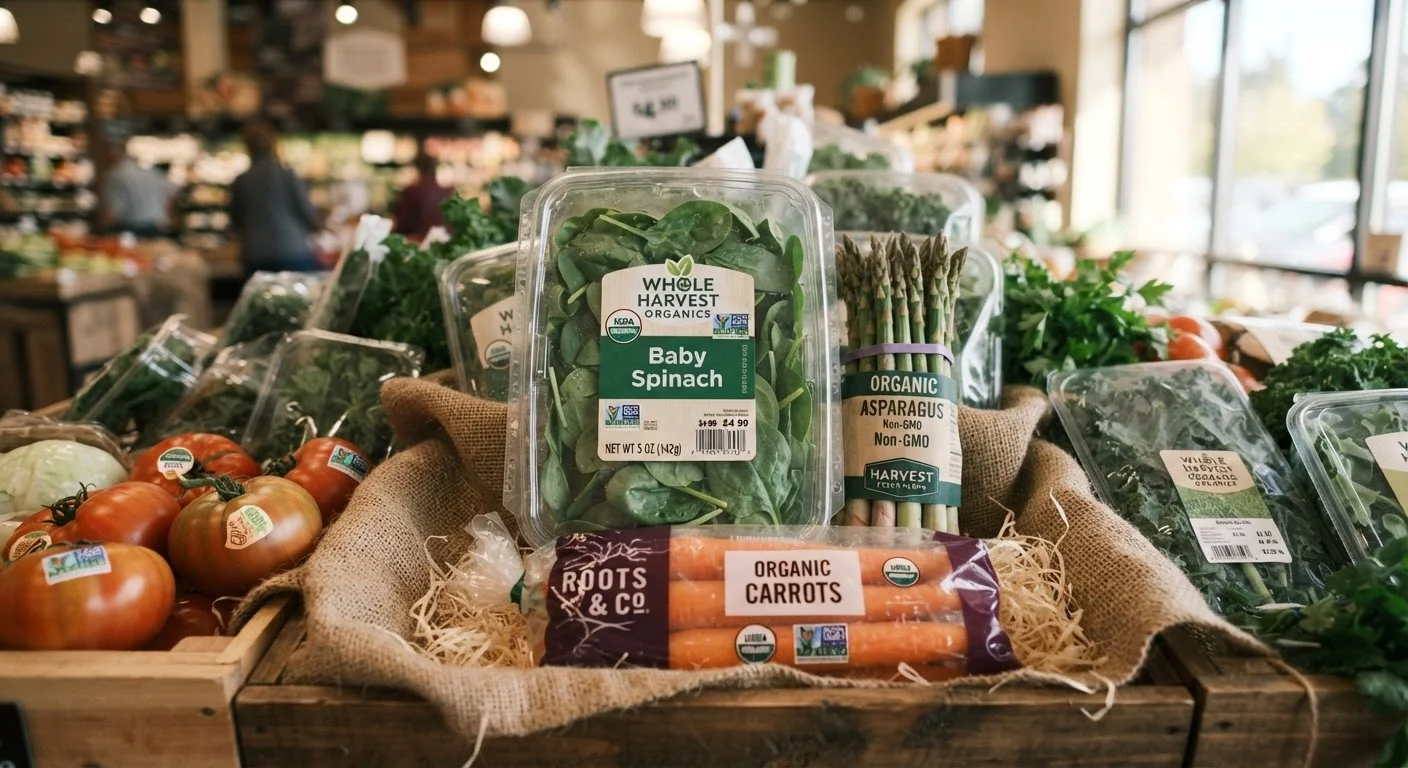
| Terms with enforceable definitions | "USDA Organic," "Non-GMO Project Verified," "Fair Trade Certified" (USDA Agricultural Marketing Service) |
| FTC oversight scope | "Green" claims subject to FTC Green Guides enforcement (FTC Green Guides, 16 CFR Part 260) |
| Regulated nutrient content claims | Terms like "low fat" and "high fiber" have specific legal definitions for food labels (21 CFR Part 101) |
Common Terms That Carry No Legal Weight
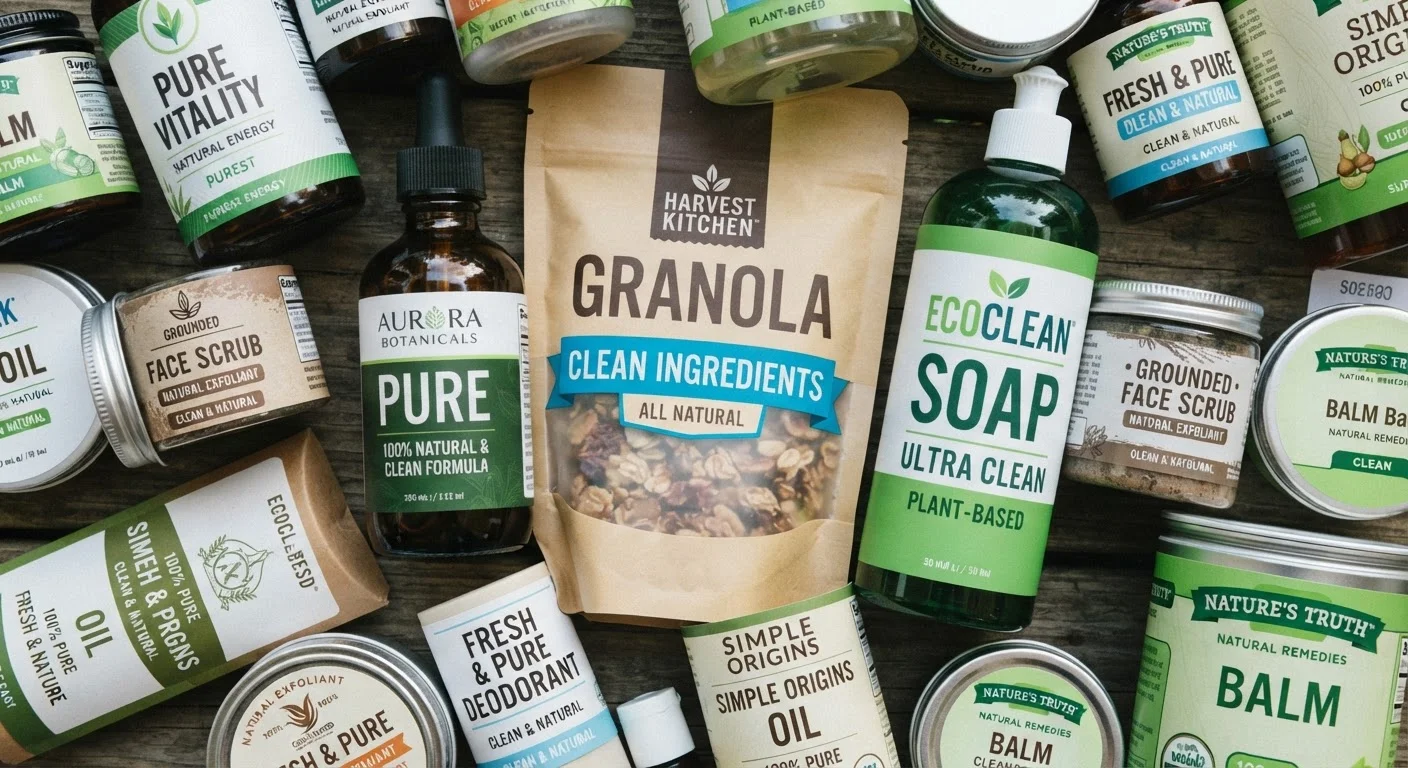
The following phrases appear on countless products but are not defined or enforced by any federal regulatory body for most product categories:
- "Pure" - Implies freedom from additives or contaminants, but no agency defines what purity means on a general consumer label.
- "Clean" - Widely used in food and beauty marketing to suggest minimal or recognizable ingredients. There is no federal clean-label standard.
- "Wholesome" - A legacy food marketing word with no regulatory meaning.
- "Natural" - The FDA has acknowledged it has not formally defined this term for food labeling. The agency's informal policy suggests nothing artificial was added, but this is not enforced with specificity.
- "Simple" or "Simply Made" - Evokes short ingredient lists but carries no required ingredient count or composition standard.
- "Artisan" or "Craft" - Suggests small-batch production or skilled technique; no industry or regulatory definition applies.
- "Premium" - Signals quality positioning only; not tied to any material standard.
This is distinct from terms like "organic," which carry documented requirements - explored further in our comparison of organic, natural, and non-GMO labels.
Regulated Claims Exist - But They're Specific
Not every label phrase is empty. Nutrient content claims on food labels - such as "low sodium," "reduced fat," or "high in fiber" - are precisely defined by the FDA under 21 CFR Part 101. Similarly, USDA Organic certification requires producers to meet documented agricultural standards. The challenge is distinguishing these enforceable terms from lookalike phrases that carry no equivalent obligation.
How to Tell a Meaningful Claim from Marketing Filler
Meaningful claims tend to share a few characteristics: they are issued or verified by a party independent of the manufacturer, they reference a documented standard, and they are subject to audit or renewal.
Unregulated claim
A marketing phrase that no federal agency has defined or enforced with a specific standard. Any product can use it without meeting qualifying criteria.
Structure/function claim
A statement about how a nutrient or ingredient affects the body's structure or function - permitted on dietary supplements without FDA pre-approval, provided a disclaimer is included.
Implied claim
A suggestion about a product's quality or safety made through imagery, color, or adjacent language rather than explicit wording. Implied claims can be as influential as direct ones.
Third-party certification
A label issued by an independent organization - not the manufacturer - that verifies a product meets a defined standard. Examples include USDA Organic and NSF International.
When evaluating any packaging claim, ask three questions:
- Who defined this term? If the answer is the brand itself, treat it as marketing language.
- Is there a third-party seal? Certifications from organizations such as USDA, NSF International, or Fair Trade USA involve external verification against published criteria.
- Can I look up the standard? Legitimate certifications publish their requirements publicly. If a claim's definition isn't findable, it likely doesn't exist.
Country-of-origin labels follow a similar pattern of rules that can surprise shoppers - our article on "Made In" designations explains where those labels hold firm and where they fall short. For a broader framework on evaluating unfamiliar products across any category, see our guide to smart product evaluation habits.