How Each Era Distributed Culture
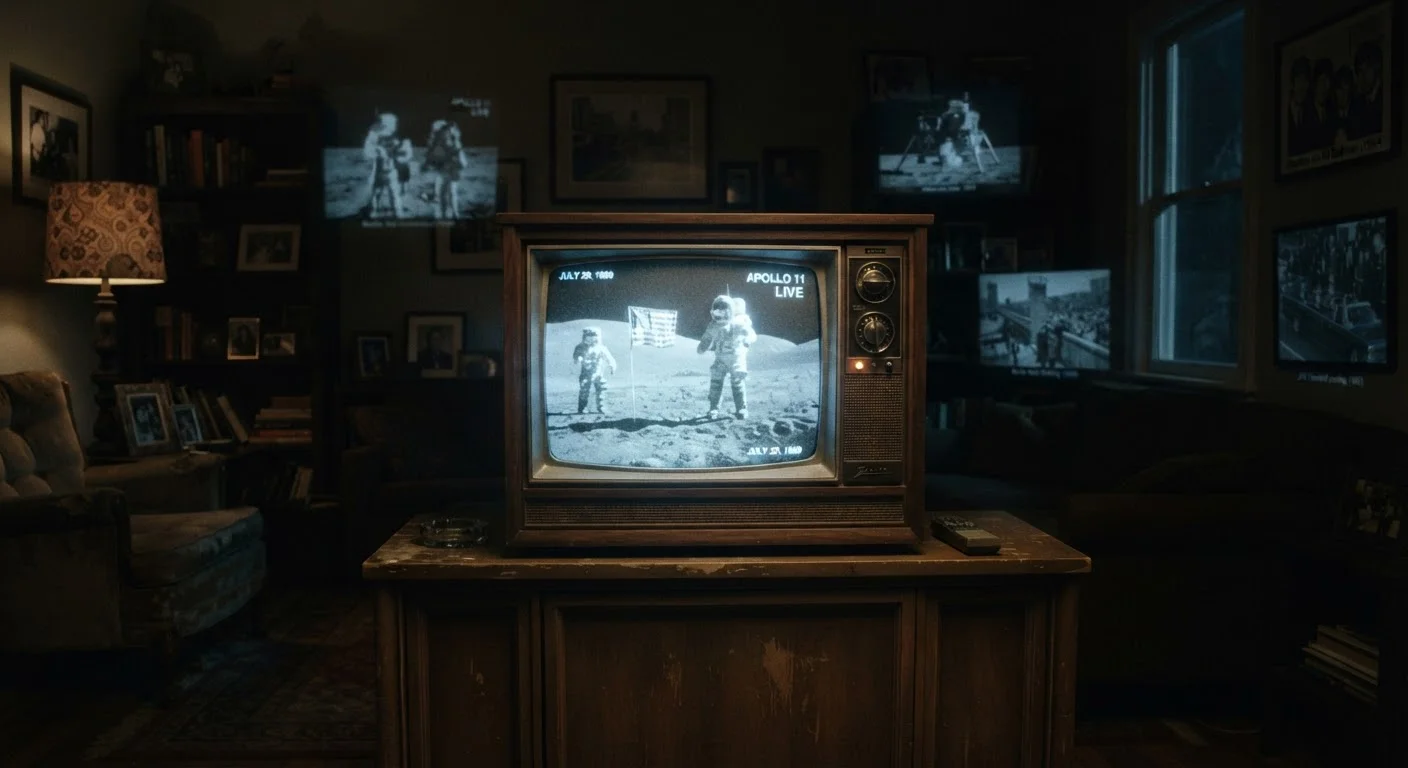
For most of the twentieth century, American television was a scarcity medium. Three major broadcast networks - ABC, CBS, and NBC - and later a fourth in Fox, delivered programming to the entire country on a fixed schedule. Watching meant showing up at a specific time, and missing an episode often meant missing it entirely. This constraint was also television's superpower: it synchronized the national imagination.
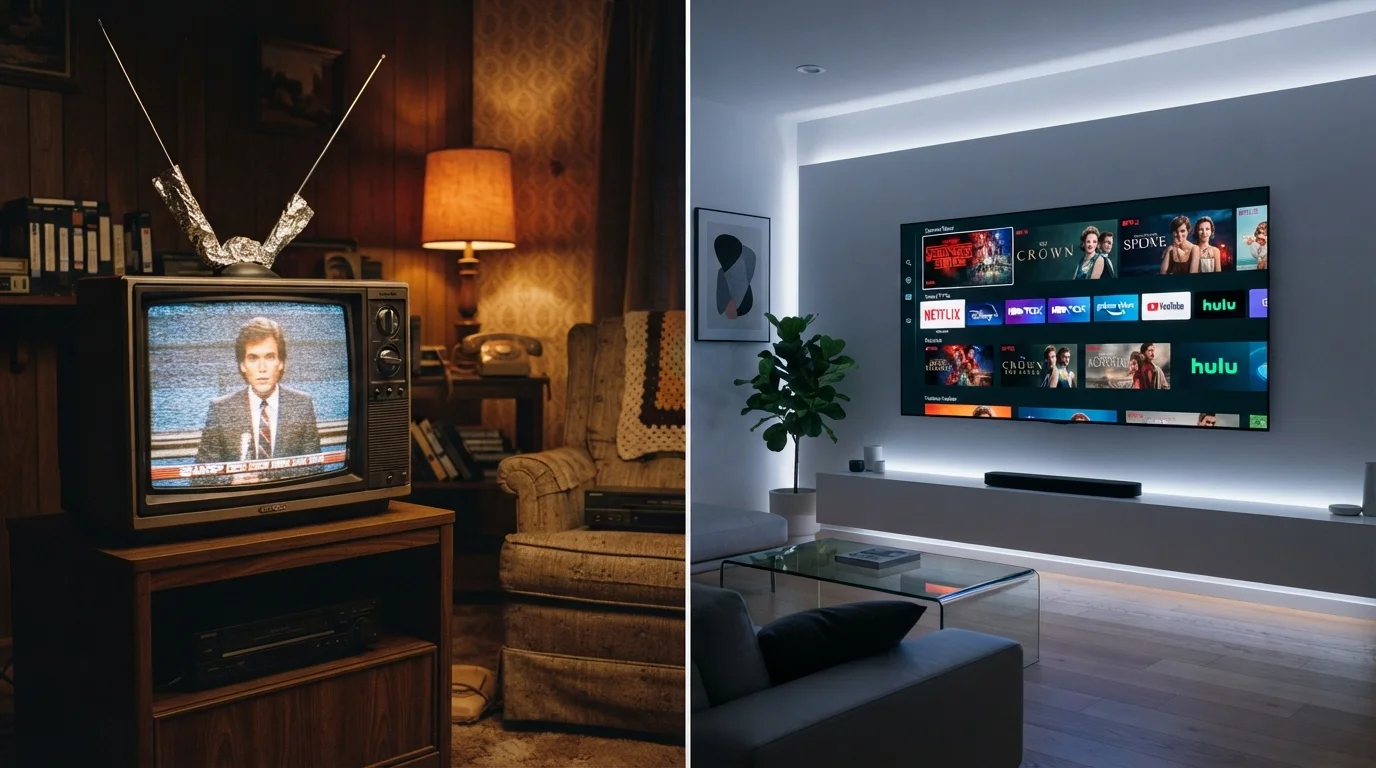
The streaming era dismantled that synchronization. When Netflix began offering full-season drops in the early 2010s, viewers gained the ability to consume a series across a weekend rather than across months. Audience fragmentation accelerated - not just across dozens of cable channels, as had happened in the 1980s and 1990s, but across hundreds of platforms, each cultivating distinct subscriber tastes. For a deeper look at how these cultural ripples spread beyond the screen, see cultural moments that defined each decade of American television.
| Criterion | Broadcast Era | Streaming Era |
|---|---|---|
| Content delivery | Fixed schedule, network-controlled | On-demand, viewer-controlled |
| Audience size per show | Tens of millions simultaneously | Millions spread across days or weeks |
| Revenue model | Advertiser-funded (CPM-based) | Subscriber fees (some ad-supported tiers) |
| Storytelling format | Episodic, broadly accessible, reset-friendly | Serialized, niche-friendly, complex arcs |
| Cultural synchrony | High - same episode, same night | Low - individual viewing timelines vary |
| Path to celebrity | Mass reach via network scheduling | Screen presence plus social media amplification |
| Content volume | Limited by channel count and air time | Vast - hundreds of originals per platform annually |
| Global content access | Predominantly domestic programming | Foreign-language shows reach mainstream US audiences |
Storytelling, Format, and Creative Risk
Broadcast television's commercial model demanded broad appeal. Advertisers paid for eyeballs, and networks needed as many as possible, which incentivized accessible, episodic formats that could be picked up mid-season without confusion. The 22-episode procedural - reset to neutral each week - thrived in this environment. So did the multi-camera sitcom. Complex serialized arcs were considered risky because dropping a viewer meant losing a customer.
Streaming economics work differently. Subscriber retention, not per-episode ad revenue, drives platform decisions. That shift encouraged longer story arcs, morally ambiguous characters, and genre experiments that broadcast gatekeepers historically declined. Limited series, documentary hybrids, and foreign-language productions found mainstream US audiences for the first time. The trade-off is volume: the sheer quantity of streaming content makes it harder for any single show to cut through, even when it's genuinely distinctive. This dynamic connects directly to how viral moments now form - a subject explored in depth in what makes some pop culture events spread while others fade.
~106M
US streaming subscribers (Netflix alone, 2024)
Netflix's US subscriber count as reported in company earnings disclosures illustrates the scale streaming has achieved relative to any single broadcast network's weekly reach.
~106M
Viewers for the 1983 M*A*S*H finale
The M*A*S*H series finale drew an estimated 106 million viewers in a single broadcast night - a benchmark no streaming title release has replicated in simultaneous viewership.
600+
Original scripted series produced in a single US year
FX Research tracked over 600 original scripted series produced across broadcast, cable, and streaming in recent peak years, illustrating the volume challenge facing any individual show.
Celebrity, Fandom, and the Collapse of the Water-Cooler Moment
Broadcast-era fame had a straightforward architecture. A performer appeared on a show watched by 20 to 40 million households weekly, and cultural ubiquity followed almost automatically. The audience was captive enough that a network could make a star simply by scheduling them well. Reality television later complicated that equation, but the fundamental broadcast logic - mass simultaneous reach equals cultural presence - held through the early 2000s.
Streaming diluted that arithmetic. A critically praised series might generate passionate engagement from a few million subscribers while remaining unknown to a much larger general public. Streaming stars frequently rely on social media to achieve the ambient recognition that broadcast once delivered automatically. Fandoms organize on platforms like Reddit and TikTok, sometimes propelling a mid-tier show to unexpected cultural relevance - a pattern that mirrors how internet trends travel from niche forums to the mainstream. The water-cooler moment hasn't disappeared, but it now requires an algorithm, a tweet, or a meme to convene the crowd.
That tension between broad cultural impact and deep niche loyalty shapes audience expectations in ways that explain the current appetite for reboots and legacy IP - audiences want the shared reference points that streaming's fragmentation makes harder to create organically. The debate between reboots and original stories reflects exactly this tension.
The Hybrid Reality Most Americans Live In
Most US households don't live exclusively in one era. Broadcast and cable television remain significant - NFL games, news, and live events still draw tens of millions of simultaneous viewers. Many streaming services now carry live sports and news, blurring the distinction further. The "broadcast vs. streaming" framing is most useful as a cultural lens, not a strict technological divide.