When the Calendar Becomes the Destination
Most travel itineraries are built around geography - cities to visit, landscapes to see, monuments to stand beside. But some of the most transformative journeys are shaped instead by the calendar. A festival rooted in centuries of tradition doesn't just add color to a trip; it reorganizes your understanding of a place from the ground up. Suddenly, the streets, the food, the sounds, and the strangers around you are all telling the same story.
The festivals gathered here aren't entertainment in the conventional sense. They're living expressions of belief, history, community, and resilience. Planning a trip around one means doing real homework first - on history, on customs, on what your presence means to the communities hosting you. Our guide to researching a destination before you book is a useful starting point for building that foundation before you commit to dates.
Attendance Is a Form of Participation
Cultural festivals are not performances staged for tourists - they are living community practices that predate modern tourism entirely. Your presence as a visitor shapes the experience for everyone around you. Arriving informed, dressing appropriately, following local guidance, and spending money with local vendors rather than outside operators all make a genuine difference to how your attendance lands.
Festivals That Reshape the Way You See a Place
Diwali, India - The Festival of Lights
Celebrated across India and in Indian communities worldwide, Diwali marks the triumph of light over darkness and knowledge over ignorance. For five days each autumn, cities like Varanasi, Jaipur, and Amritsar fill with oil lamps called diyas, fireworks, sweets, and the ringing of temple bells. The Golden Temple in Amritsar glows with particular intensity during this period, its reflection doubling across the sacred pool below.
Visitors are generally welcomed at public celebrations, but understanding the festival's spiritual layers - rooted in Hindu, Jain, and Sikh traditions - makes attendance far more meaningful than simply watching the light show. Accommodation books out early across major cities, often by mid-year for the autumn dates.
Diwali's five-day span transforms entire cities into living expressions of spiritual and communal identity.
Carnival, Brazil - A City in Full Expression
Rio de Janeiro's Carnival is among the most recognized festivals on earth, but its scale and emotional intensity still catch first-timers off guard. The Sambadrome parades - in which neighborhood samba schools compete with elaborate floats, choreography, and costuming built over an entire year - are performances of extraordinary discipline and creative ambition. Beyond the main event, the city's street parties, known as blocos, offer a more democratic, spontaneous form of celebration.
Practically speaking, Carnival week requires planning far in advance. Grandstand tickets for the Sambadrome sell out, accommodation prices rise sharply, and the city's transport network strains under millions of visitors. Arriving a day or two early to settle in before the main events is widely recommended.
The samba schools that compete at Carnival spend a full year building their performances - what you witness is a community's annual act of creation.
Yi Peng Lantern Festival, Thailand - Light on the River
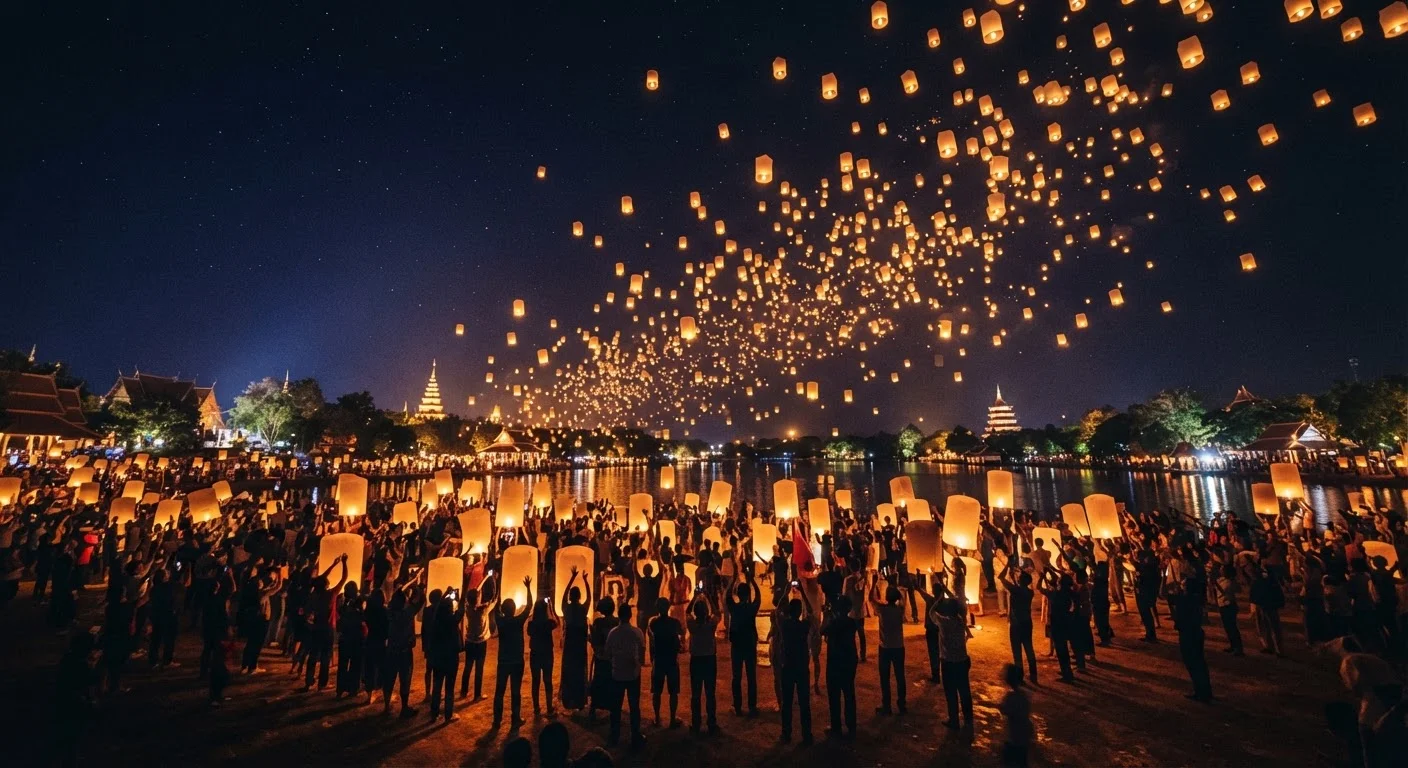
Held in Chiang Mai each November during the full moon of the Thai lunar calendar, Yi Peng is the festival most often pictured when travelers imagine lanterns rising into a night sky. Thousands of khom loi - biodegradable paper lanterns - float upward simultaneously, a practice tied to releasing misfortune and making merit in the Buddhist tradition.
The festival coincides with Loi Krathong, during which decorated baskets are floated on rivers and waterways. Both carry genuine spiritual weight for Thai Buddhists, and respectful participation means understanding that context. If you're unfamiliar with researching lesser-covered destinations, these strategies for researching unfamiliar places can help you build reliable background knowledge.
Yi Peng's lanterns represent a living Buddhist practice - attending with that understanding transforms the experience entirely.
Día de los Muertos, Mexico - Memory as Celebration
Observed on November 1st and 2nd, Día de los Muertos is a Mexican tradition rooted in pre-Columbian indigenous practices fused with Catholic observance. Families build ornate ofrendas (altars) for deceased loved ones, adorned with marigolds, photographs, food, and objects the departed cherished in life. In Oaxaca, Michoacán, and Mexico City's neighborhoods, public cemeteries become sites of candlelit vigil and communal gathering.
This is not Halloween adjacent. The tone is one of love, memory, and continuity - not fear. Travelers who approach it as a spectacle risk misreading it entirely. Those who take time to understand its depth, particularly the indigenous roots that underpin it, often describe it as among the most moving experiences of their lives. Reading our piece on engaging with indigenous cultural experiences ethically is worth doing before you go.
Día de los Muertos is, at its core, an act of love - families welcoming the dead home for one luminous night.
Holi, India - Color as Communion
Holi, the Hindu festival of color, arrives with the spring equinox and announces itself in the most physical way possible - strangers covering each other in vivid powdered pigment and water. What looks, from the outside, like cheerful chaos is in fact a deeply layered celebration tied to the story of Prahlada and Holika, and to the renewal that spring brings after winter.
Mathura and Vrindavan - cities associated with the deity Krishna - are considered among the most spiritually significant places to witness Holi, though the festival erupts across India and in Indian diaspora communities worldwide. Travelers should note that the day before Holi includes Holika Dahan, a bonfire ritual with its own distinct meaning, and attending both events gives a fuller picture of the celebration's arc.
Holi's explosions of color are an invitation - a rare moment when strangers are drawn together by shared joy rather than divided by it.
Inti Raymi, Peru - A Solar Ceremony Reclaimed
Each June solstice, Cusco hosts Inti Raymi - the Festival of the Sun - a ceremony originally celebrated by the Inca Empire and revived in the 20th century after centuries of suppression. The main event unfolds at the Sacsayhuamán archaeological complex above the city, where hundreds of performers in traditional dress re-enact ancient rituals honoring Inti, the sun god.
For travelers already drawn to Peru's pre-Columbian history, Inti Raymi adds a dynamic, living dimension to sites that might otherwise feel like archaeology alone. The June dates also coincide with the Southern Hemisphere's dry season in the Andes, generally favorable for travel in the region, though altitude and cold nights are genuine factors to prepare for. Verify current entry and health requirements through official sources well before travel.
Inti Raymi reclaims a suppressed ceremony in the shadow of the very stones where it was once silenced - that history is inseparable from its meaning.
Book Accommodation Earlier Than You Think
For major festivals like Carnival, Diwali in Varanasi, or Yi Peng in Chiang Mai, accommodation in desirable areas fills up six months to a year in advance. Locking in lodging early - before flights, even - gives you far more flexibility. Staying within walking distance of main events also reduces the stress of festival-week transport, which is often overwhelmed.
Traveling to a Festival With Intention
Attending a cultural festival as an outsider carries real responsibility. The best festival travelers go beyond watching - they read, ask respectful questions, eat what locals eat, and follow the lead of the community rather than the tourist crowd. Our piece on neighborhood immersion travel offers a useful framework for showing up in a way that enriches the experience for everyone involved.
Food, too, is often inseparable from festival tradition. Many celebrations center on specific dishes, rituals of cooking, or communal meals that carry as much meaning as any ceremony. Pairing festival attendance with culinary curiosity deepens the entire encounter. Whatever event draws you, arrive as a genuine guest - prepared, respectful, and ready to be changed by what you witness.
This article is for general informational and inspirational purposes only. Festival dates, entry requirements, local laws, visa rules, and health conditions change regularly. Always verify travel details through official government sources and local authorities before booking.