What Makes a Pilgrimage Route Different from a Long Hike
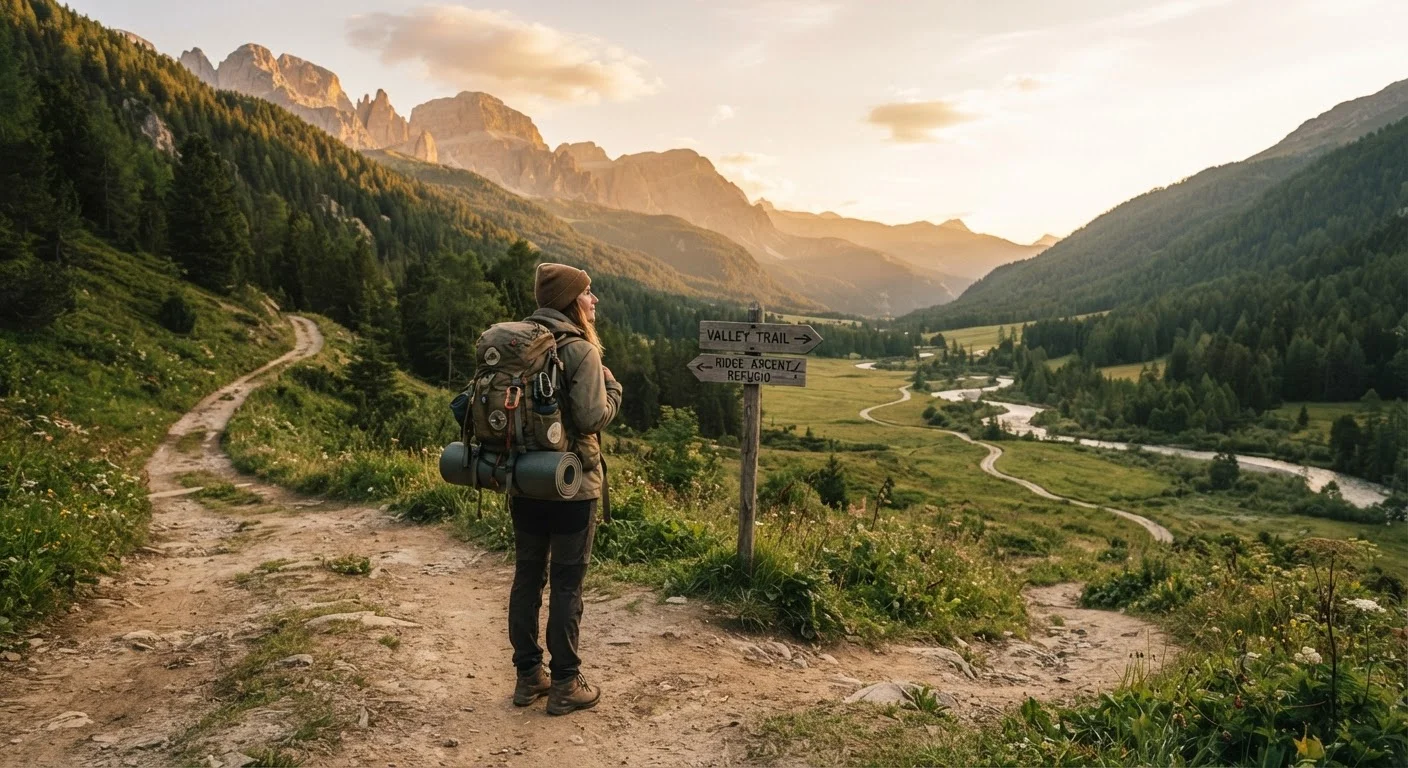
Strip away the religious context and a pilgrimage route might look, at first glance, like any other long-distance trail. There are waymarks to follow, hostels to sleep in, and blisters to manage. But travelers who have walked both tend to describe something qualitatively different about the pilgrim experience - a combination of shared purpose, deliberate simplicity, and historical weight that reshapes how the miles feel.
Where a traditional hiking trail rewards scenery and physical achievement, a pilgrimage route layers those rewards over centuries of human meaning. You are walking paths worn by medieval merchants, monarchs seeking absolution, and grieving parents making impossible vows. That accumulated human story is present in the stone underfoot and in the way strangers greet each other along the way.
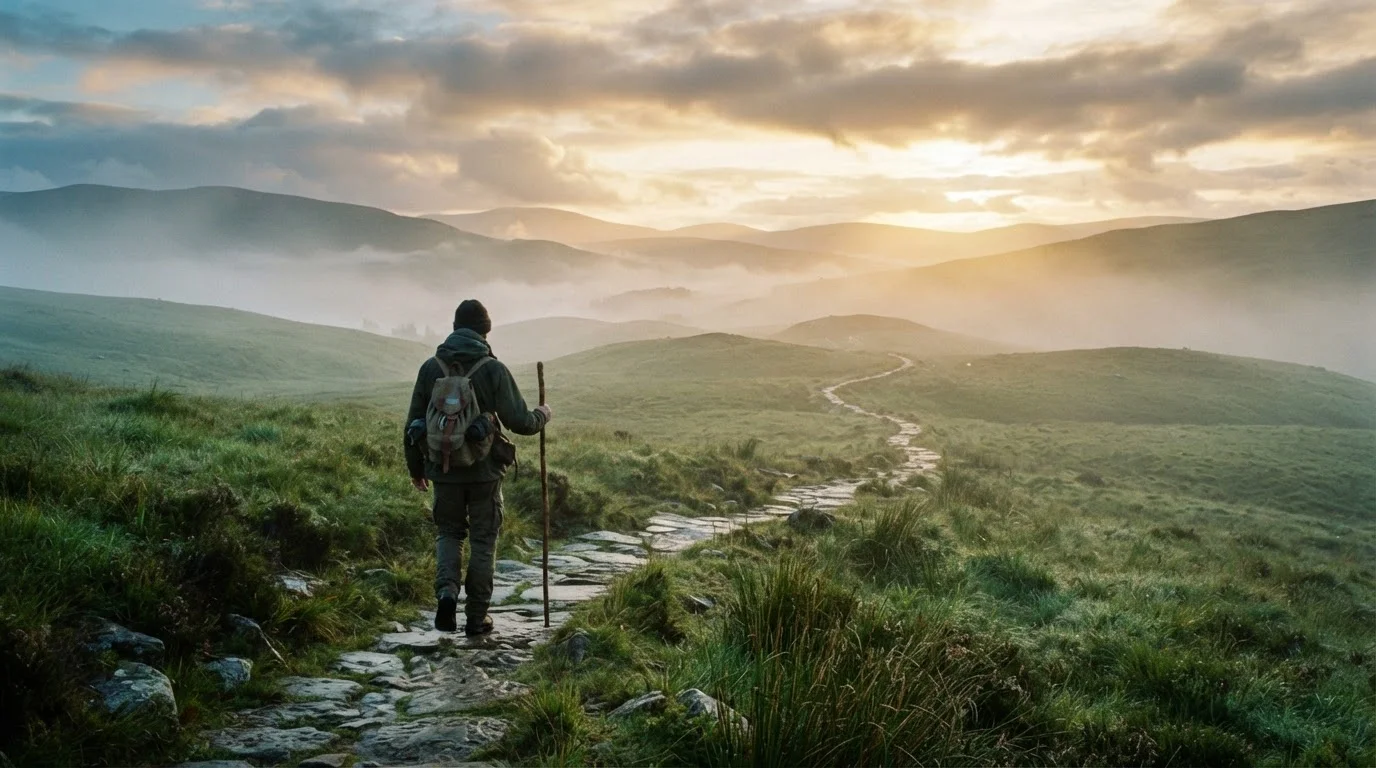
The daily rhythm is another distinction. Pilgrim life tends to organize itself around early starts, shared meals, and evenings spent in communal dormitories. Devices and distractions recede. The body and the road become the whole conversation. For many walkers, that enforced simplicity is precisely the point.
“The pilgrim's road is a spiritual laser that brings you to yourself. You can't avoid your own thoughts when you're walking for six hours a day.”
— Paulo Coelho, Author of 'The Pilgrimage,' a memoir of walking the Camino de Santiago
Routes Worth Knowing: A Glimpse at the World's Great Paths
The Camino de Santiago in northern Spain remains the most internationally recognized pilgrimage route. Its most popular variant, the Camino Francés, begins in the Pyrenees and covers roughly 500 miles to the cathedral city of Santiago de Compostela. Tens of thousands of walkers complete it each year, drawn from dozens of countries and a wide spectrum of beliefs. The infrastructure is mature: pilgrim passports, stamped at cafes and churches along the way, document the journey, and a network of affordable albergues lines the route.
Japan's Kumano Kodō offers something older and more contemplative - a network of ancient trails threading through the forested mountains of the Kii Peninsula. Unlike the Camino, the Kodō requires more navigation and rewards those comfortable with solitude and ritual. The shrines of Kumano Hongu Taisha, Nachi Taisha, and Hayatama Taisha anchor the route in Shinto tradition, though the trails are open to all visitors.
The Via Francigena stretches roughly 1,100 miles from Canterbury in England to Rome, tracing a medieval archbishop's documented journey from the 10th century. Less developed than the Camino in terms of pilgrim infrastructure, it draws walkers seeking a less crowded, more historically textured experience through France, Switzerland, and Italy.
350,000+
Pilgrims reaching Santiago annually
According to the Pilgrim's Reception Office in Santiago de Compostela, over 350,000 pilgrims received the official Compostela certificate in recent peak years, representing dozens of nationalities.
~40%
Non-religious Camino walkers
Surveys conducted by the Pilgrim's Reception Office consistently find that a significant share of walkers - often around 40% or more - describe their primary motivation as personal, cultural, or athletic rather than religious.
1,100 miles
Full length of the Via Francigena
The Via Francigena stretches from Canterbury, England to Rome, passing through France, Switzerland, and Italy - one of Europe's longest designated pilgrimage corridors.
For travelers curious about experience-driven travel that goes beyond standard tourism, these routes offer something that a weekend city break cannot - immersion measured in weeks, not hours. See our first-time independent traveler's guide for broader advice on building immersive trips from scratch.
Preparing to Walk: What the Journey Actually Demands
Pilgrimage tourism is not self-selecting for the extraordinarily fit. Walkers of many ages and physical backgrounds complete routes like the Camino every year. What matters more than peak fitness is consistency - the ability to walk six to eight hours a day, day after day, without catastrophic breakdown in the feet or knees. That tolerance is built through training, not assumed.
Train Before You Commit to the Full Route
Start building your daily walking distance at least two to three months before departure. Gradually increase to multi-hour walks on consecutive days - this is more valuable than a single long weekend outing. Pay attention to how your feet and joints respond, and address any issues before the trail does it for you.
Footwear deserves particular emphasis. A boot or trail shoe that performs beautifully on a single afternoon hike can produce debilitating blisters over 20 consecutive days. Breaking in footwear on progressively longer training walks - ideally over several months - is one of the most consistent pieces of advice given by experienced pilgrims. Socks matter too; wool-blend hiking socks reduce friction and moisture in ways that ordinary cotton cannot.
Navigation on well-marked routes like the Camino is relatively forgiving. The yellow arrows and scallop shell waymarks are hard to miss in daylight. Less-developed routes demand more active map reading, and downloading offline maps before departure is worth the effort on any trail. Always verify current trail conditions and any entry or accommodation requirements with official route organizations before you go - conditions can shift seasonally.
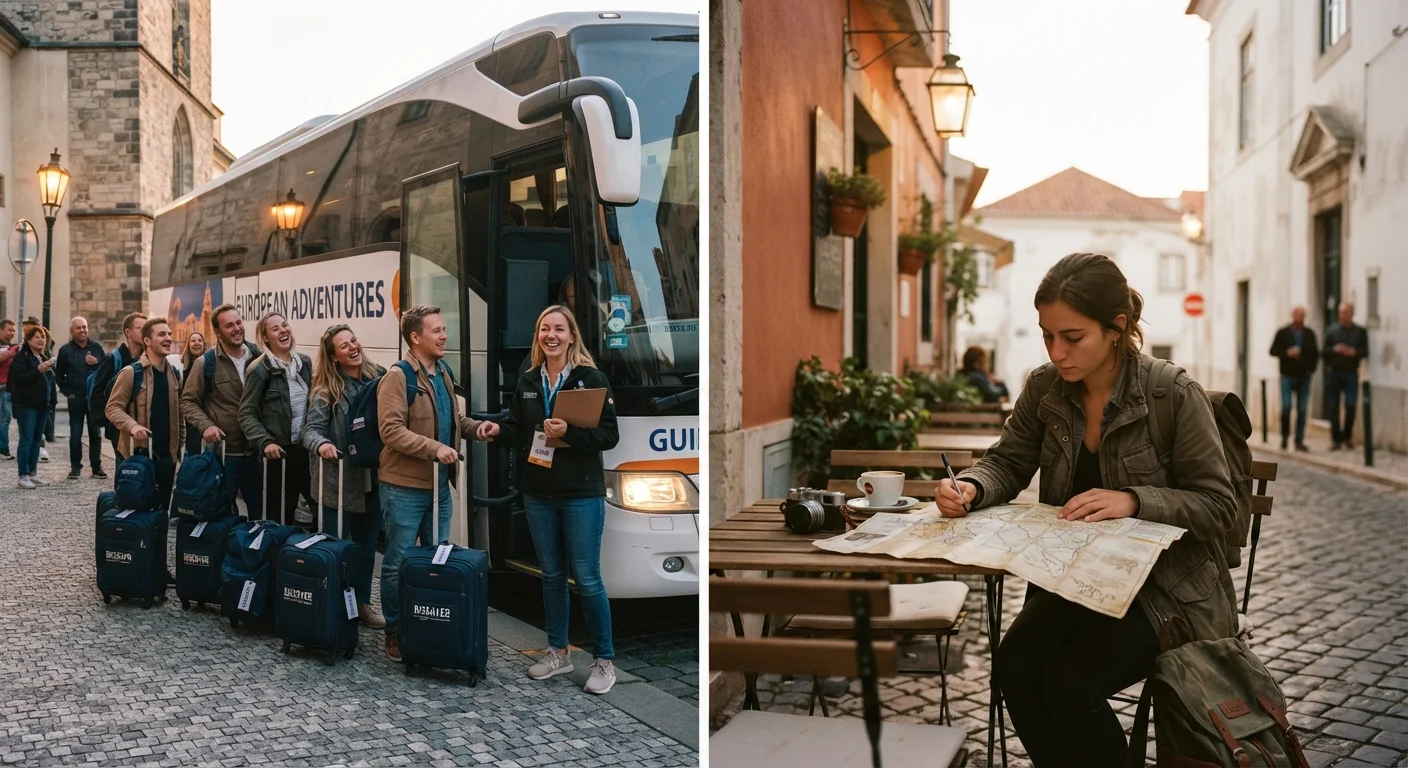
The social dimension is harder to prepare for and often the most memorable part. Pilgrimage routes have their own culture: a greeting exchanged between walkers, a shared table at dinner, a conversation with someone whose life looks nothing like yours. Those encounters are not guaranteed, but they are common enough that many pilgrims cite them as the lasting memory of the road. For travelers weighing solo versus group approaches to this kind of journey, our piece on group travel vs. independent travel explores the planning dynamics worth considering.
The Secular Pilgrim: Why Non-Religious Travelers Are Walking These Routes
The growth of secular pilgrimage is one of the more telling trends in contemporary travel. Researchers and route organizations have observed that a growing share of walkers describe their motivation in terms of personal challenge, grief processing, life transition, or simply a desire to slow down - rather than religious devotion. This shift does not diminish the experience; if anything, it reveals how powerfully the structure of pilgrimage meets something that cuts across belief systems.
There is something to the argument that modern life rarely asks us to do one thing for a sustained period. Pilgrimage routes impose exactly that constraint. You walk. You sleep. You walk again. The absence of choice - the fact that the path is already decided - turns out to be a form of freedom for many people. The route becomes a container for reflection that ordinary life doesn't provide.
This is also why pilgrimage travel fits within a broader category of immersive, locally grounded travel that prioritizes depth over coverage. Unlike a highlight-reel itinerary that bounces between famous sites, a pilgrimage demands presence in a single unfolding experience. The destination matters, but it is the road - and who you become on it - that tends to stay with people longest.
This article provides general travel information for educational purposes. Entry requirements, trail conditions, accommodation availability, and local regulations vary by route and season. Always verify current information with official route organizations and your government's travel advisories before making plans.