The Science Behind the Struggle
Anyone who has landed in Rome at 8 a.m. after an overnight flight-eyes burning, stomach confused, desperate for a bed that local custom insists you shouldn't yet occupy-knows jet lag as a bodily fact, not a complaint. But understanding why it happens is the first step toward managing it with more than just willpower.
Jet lag, formally called CRSWD, occurs when your body's internal clock-the circadian rhythm-falls out of sync with the external environment. That clock, regulated largely by the suprachiasmatic nucleus in the brain, responds primarily to light cues. Cross multiple time zones quickly, and the body needs days to recalibrate. Symptoms commonly include disrupted sleep, daytime fatigue, digestive disturbance, difficulty concentrating, and mood shifts.
The severity depends on several factors: direction of travel, number of zones crossed, individual biology, and-crucially-what you do before and during the flight. As research in chronobiology has advanced, it's become increasingly clear that jet lag is manageable, even if it's not entirely avoidable. For a broader look at staying well on the road, see our guide to practical health habits for travelers.
Busting the Biggest Jet Lag Myths
Travelers carry a surprising number of misconceptions about jet lag-some inherited from well-meaning friends, others from pop-culture shorthand. The myth-fact pairs below draw on current sleep science to set the record straight.
Myth
Alcohol helps you sleep on planes, so it's a good jet lag remedy.
Fact
Alcohol disrupts sleep architecture, reduces REM sleep quality, and dehydrates you-all of which worsen jet lag recovery.
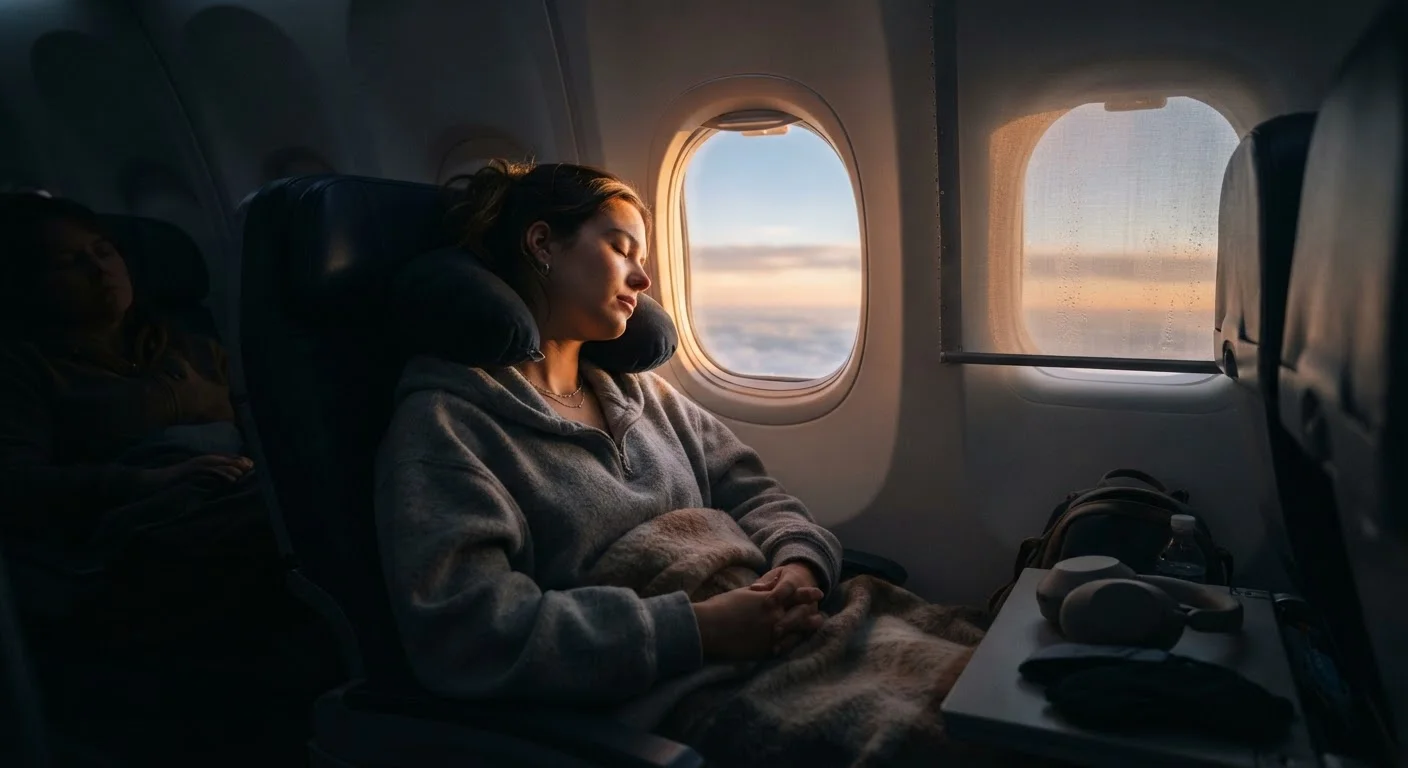
It's a tempting logic: a glass of wine blunts anxiety and induces drowsiness. But sleep induced or deepened by alcohol is physiologically shallow. Research consistently shows that alcohol suppresses REM sleep, the restorative phase most critical for cognitive recovery. Arriving dehydrated and REM-deprived is a worse starting point than arriving simply tired. If sleep on the plane is the goal, a more effective strategy involves dimming your screen, using an eye mask, and-if appropriate for you personally and discussed with a doctor-a low dose of melatonin timed to your destination's night cycle.
Myth
East and west travel affect you the same way, so direction doesn't matter.
Fact
Eastward travel is consistently harder on the body because it requires advancing the clock, which runs counter to the circadian system's natural drift.
The human circadian rhythm naturally runs slightly longer than 24 hours-closer to 24.2 hours on average. That means it's easier to delay your clock (stay up later, as in westward travel) than to advance it (go to bed earlier, as in eastward travel). Flying New York to London means your body must shift forward by five to six hours, essentially asking your clock to sprint ahead. Flying in the reverse direction allows it to drift back more naturally. Travelers crossing many time zones eastward typically need more recovery days and benefit most from targeted light management in the mornings after arrival.
Myth
Melatonin is a sleeping pill and will knock you out whenever you take it.
Fact
Melatonin is a timing signal, not a sedative. Its effectiveness depends almost entirely on when you take it relative to your current and target sleep cycles.
Melatonin is a hormone naturally produced by the pineal gland that signals darkness and sleep onset-it doesn't force sleep the way a sedative does. Taking it at the wrong time (say, mid-afternoon in your origin time zone) is unlikely to help and may confuse the clock further. Research, including reviews published in sleep medicine literature, suggests melatonin is most useful taken close to the target destination's bedtime for the first few days after arrival, particularly after eastward travel. Appropriate dosage and timing is something to discuss with a healthcare professional, especially for people with underlying health conditions or those taking other medications.
Myth
Napping freely on arrival day is the fastest way to recover.
Fact
Uncontrolled long naps on arrival can anchor your sleep cycle to the wrong time zone and delay full adjustment by a day or more.
The pull toward a long nap after an overnight flight is almost irresistible-but surrendering to it fully can backfire. Sleeping several hours in the early afternoon of your destination essentially tells your body that afternoon is nighttime, making it harder to fall asleep at the local hour. If rest is genuinely necessary, chronobiologists generally suggest limiting naps to 20-30 minutes and timing them to avoid the late afternoon window. Pushing through to a local bedtime-supported by daylight exposure and light activity-typically accelerates adaptation more reliably than unstructured rest.
Myth
Jet lag is just tiredness and passes the same way for everyone within a day.
Fact
Jet lag recovery varies significantly by individual, direction of travel, and number of time zones crossed-and can last several days for some travelers.
A rough rule of thumb used in sleep research is that the body adjusts roughly one time zone per day, though this varies considerably. Some people-often younger adults-readjust faster; others, including older travelers, may experience more pronounced and prolonged symptoms. Chronotype (whether you're naturally an early riser or a night owl) also plays a role. Framing jet lag as a quick inconvenience can lead travelers to under-prepare and overcommit their first days at a destination, which compounds the problem. Building a light buffer day into itineraries is a strategy seasoned travelers rely on for exactly this reason.
What Actually Works: Evidence-Backed Strategies
Once you understand the circadian mechanics at play, practical strategies become more intuitive. Light is your most powerful reset tool. Seek bright morning light after eastward travel to push your clock earlier; avoid bright light in the evening. After westward travel, the opposite applies-evening light helps delay your rhythm to match the new time zone. If the timing is off, even a short walk in the wrong sunlight can inadvertently worsen your adjustment.
Meal timing, surprisingly, also plays a role. Emerging research suggests that the timing of when you eat-not just what you eat-may help anchor peripheral clocks in digestive organs, potentially supporting faster realignment. Eating meals aligned to your destination's local schedule, even before you feel hungry, can gently reinforce the new rhythm.
~1 day
Recovery time per time zone crossed
A commonly cited chronobiology estimate suggests the body adjusts approximately one time zone per day, though individual variation is significant.
24.2 hrs
Average human circadian cycle length
Research on circadian rhythms indicates the internal clock naturally runs slightly longer than 24 hours, explaining why westward travel tends to feel easier.
6-8 zones
Time zone threshold for significant disruption
Crossing six or more time zones is widely associated with pronounced jet lag symptoms lasting multiple days, according to sleep medicine literature.
Pre-flight preparation matters too. Shifting your sleep schedule by 30 to 60 minutes per day in the days before a major eastward trip gives your body a head start. Seasoned travelers quietly rely on buffer days and similar small adaptations-habits explored in our roundup of underrated traveler habits.
Melatonin Is Not Risk-Free for Everyone
While low-dose melatonin is available over the counter in the US, it is not appropriate for everyone. Individuals who are pregnant, breastfeeding, taking blood thinners or immunosuppressants, or managing certain health conditions should consult a healthcare professional before use. Dosage and timing matter considerably-taking too much or at the wrong time can worsen sleep disruption rather than help it.
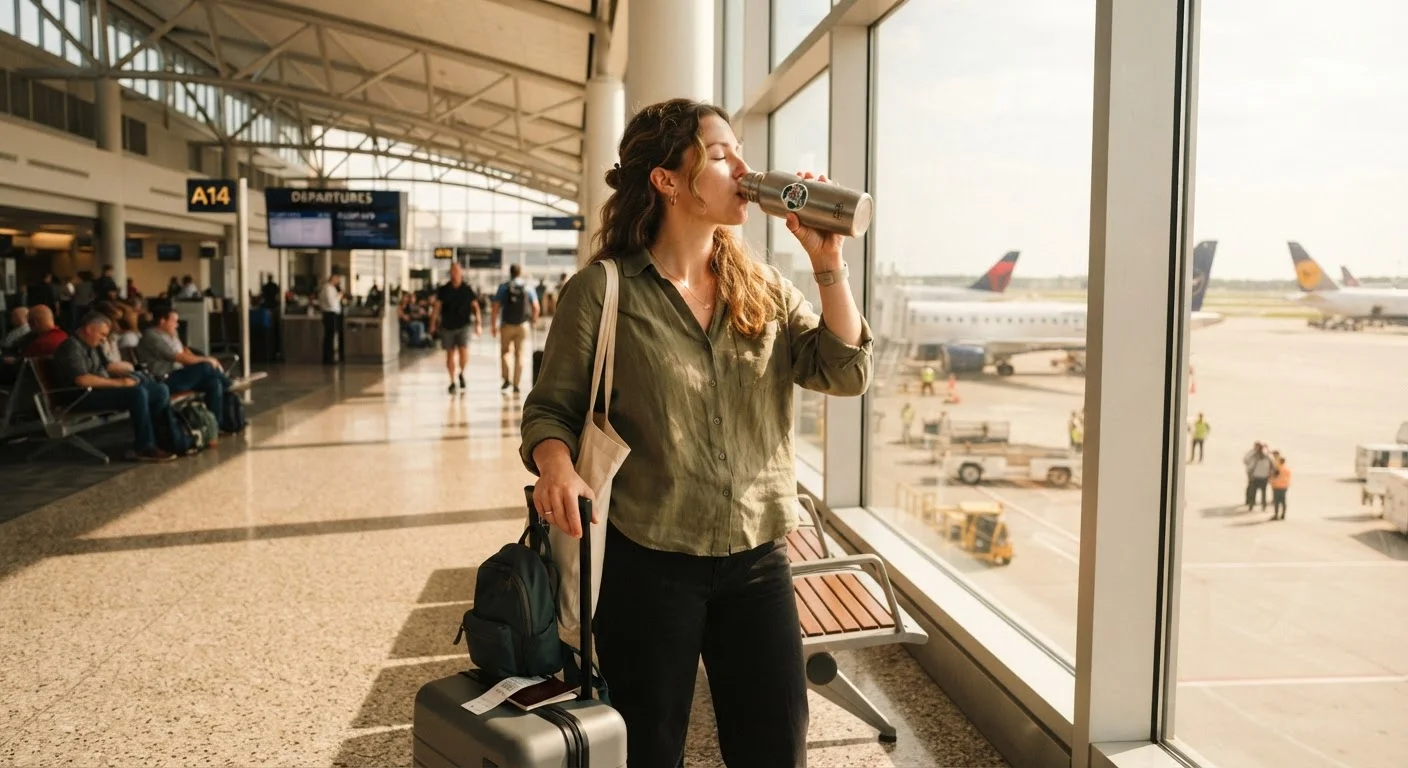
Hydration deserves a mention: cabin air is notoriously dry, and dehydration amplifies fatigue. Drinking water consistently throughout a long flight doesn't cure jet lag, but it removes a compounding variable that makes the experience worse. Alcohol and excessive caffeine, by contrast, can fragment sleep and deepen the disruption. Packing smart for comfort is a companion concern-our guide on avoiding overpacking includes carry-on strategies that keep you comfortable for the journey itself.