The Psychology Behind an Overstuffed Bag
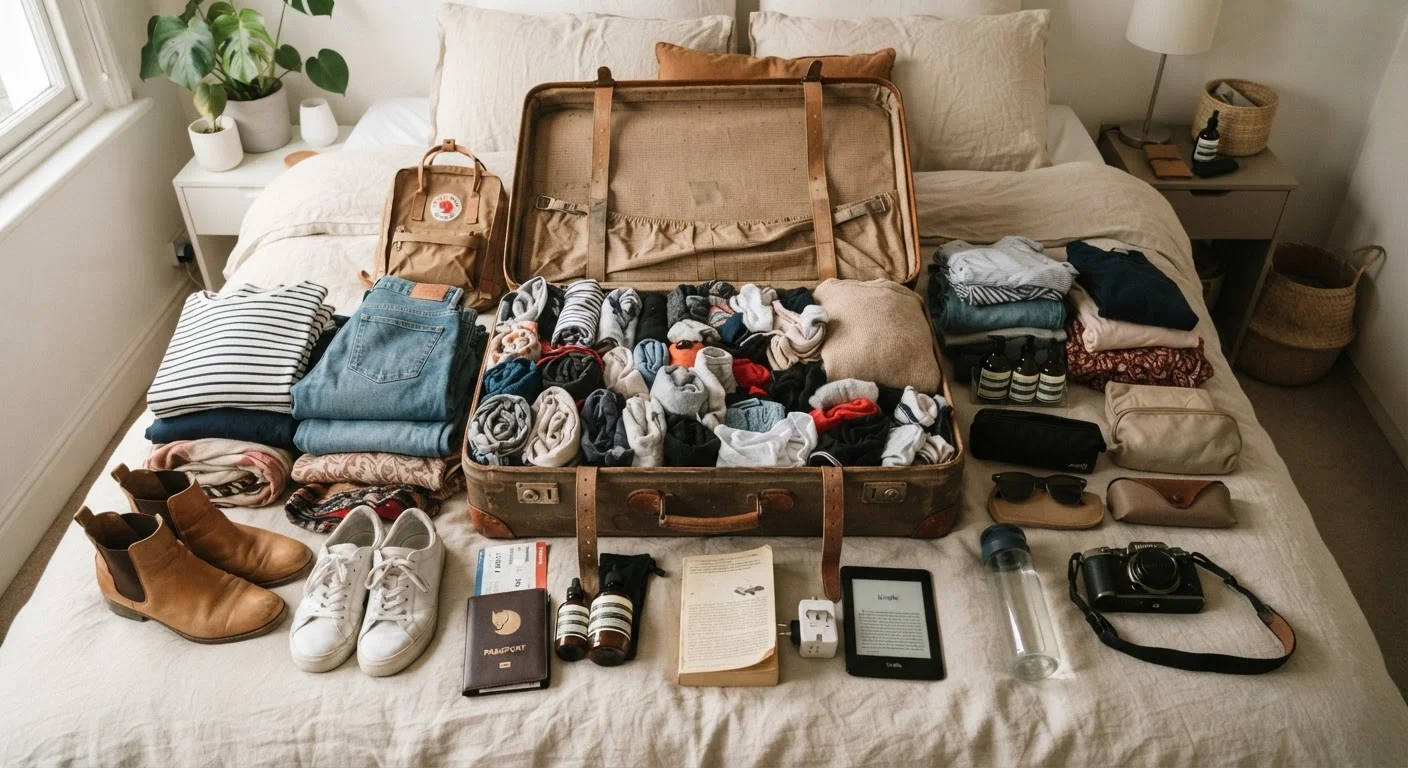
There's a predictable moment that happens in nearly every traveler's bedroom before a trip: the suitcase is open, the packing list exists, and somehow the bag is overflowing anyway. It's not a logistics failure - it's a psychological one. Overpacking is almost always rooted in anxiety about the unknown. When we imagine a trip, we imagine every version of it: the formal dinner that might happen, the rain that might fall, the unexpected beach day that surely awaits. We pack for all those scenarios simultaneously.
That mental spiral - sometimes called "just-in-case thinking" - is one of the most reliable predictors of a heavy bag. Clothing accounts for roughly 60 to 70 percent of most bags' weight, and surveys of returning travelers consistently show that a significant portion of what was packed never got touched. The extra blazer, the third pair of shoes, the backup cardigan: they travel thousands of miles folded and untouched, then travel home again.
Understanding this pattern is the first step to breaking it. The goal isn't minimalism for its own sake - it's recognizing that every unnecessary item adds friction to every moment of the trip: the drag through the airport, the hunt for an overhead bin, the aching shoulder on cobblestone streets.
Packing for imagined scenarios rather than planned activities.
Why it happens: Travelers mentally rehearse every possible situation - formal events, sudden cold snaps, spontaneous hikes - and pack defensively for all of them at once.
Treating the suitcase as a safety net rather than a transport tool.
Why it happens: Being far from home triggers a nesting instinct - the bag becomes a portable version of everything you'd want at arm's reach domestically.
Packing by category instead of by outfit.
Why it happens: It feels logical to pack 'five shirts' as a unit, but this ignores how items actually combine - resulting in multiples that serve the same functional role.
Skipping the final cut before closing the bag.
Why it happens: Once items are packed, removing them feels like going backwards. The sunk-cost feeling of having already folded and arranged things discourages editing.
Overpacking toiletries and personal care items.
Why it happens: Personal care routines feel non-negotiable, so travelers pack full-size versions of everything - adding significant weight for items widely available at destinations.
Rules That Actually Change the Habit
Knowing why you overpack doesn't automatically fix it. What does help are concrete constraints applied before the bag is zipped. Experienced travelers - the kind whose quiet routines make trips run smoother - tend to rely on a handful of repeatable rules rather than willpower alone.
Airline Weight Limits Can Be Costly
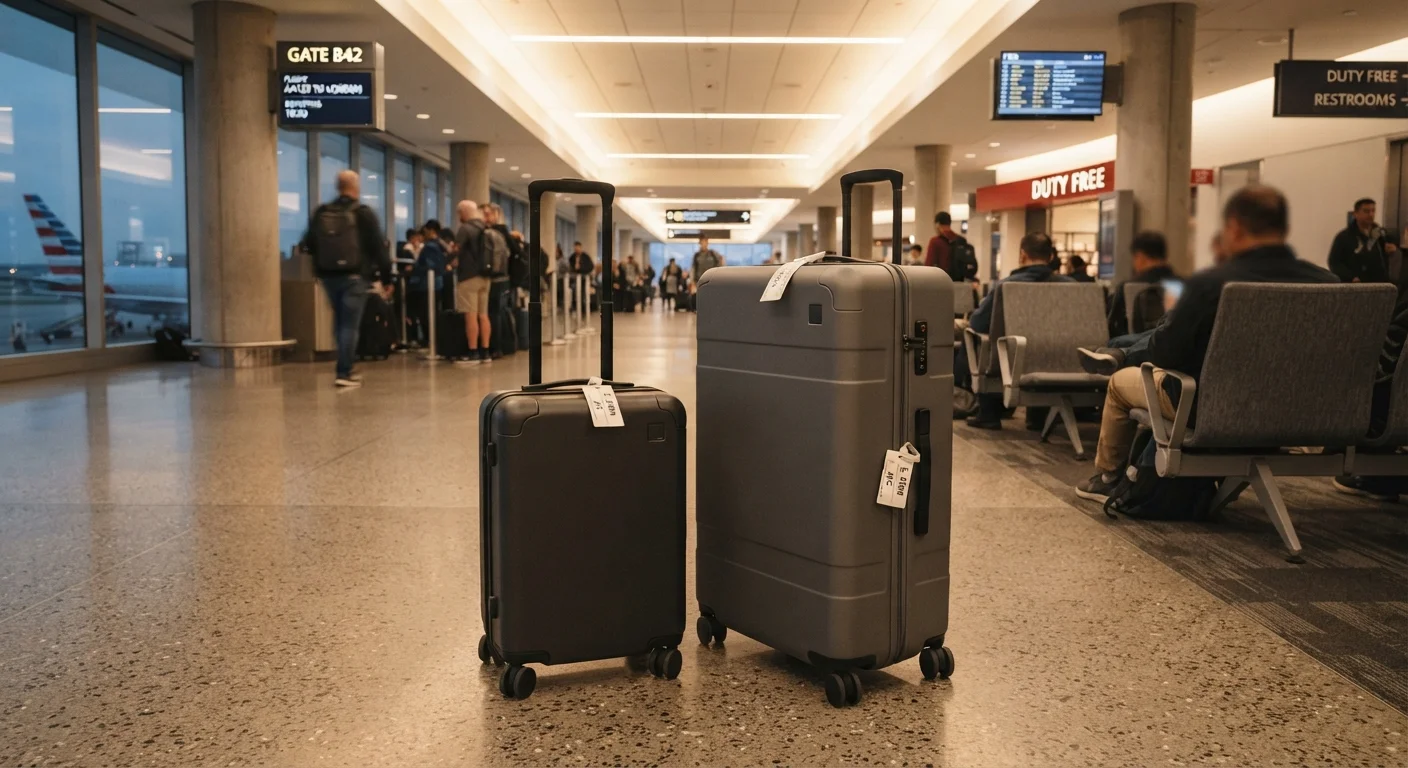
Most US carriers enforce strict checked and carry-on weight limits, and fees for oversized or overweight bags can add meaningfully to trip costs. Beyond the financial side, a bag that's difficult to lift overhead or maneuver through transit adds real physical strain over a multi-day trip. It's worth weighing your bag at home before you leave - not just to avoid fees, but because a heavy bag quietly shapes every movement you make.
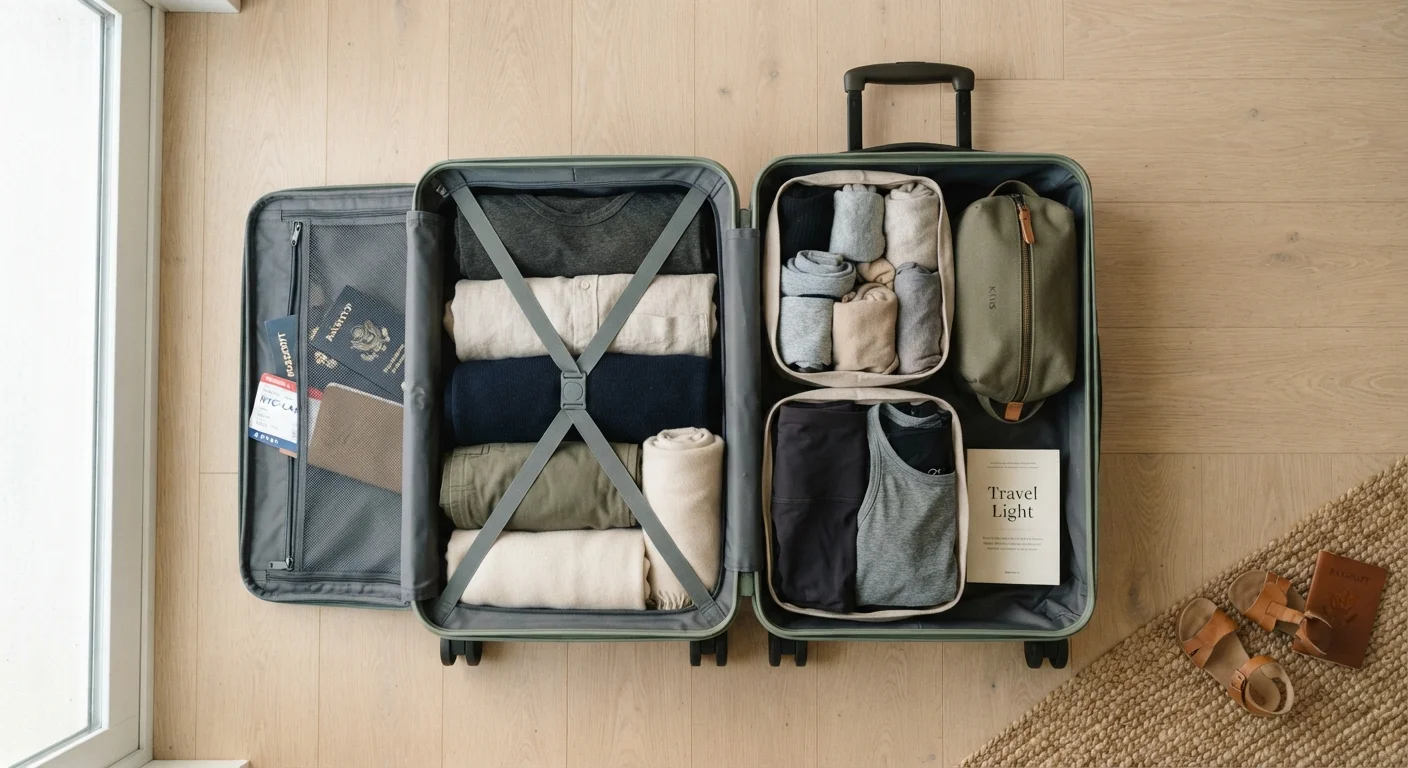
One of the most effective is packing by outfit rather than by category. Instead of packing five shirts and hoping they pair with three pairs of pants, you lay out complete looks for each day. This reveals redundancy immediately - you'll notice the third dinner outfit uses the same shoes as the first, and suddenly one pair of shoes becomes two instead of four. A related technique is the final cut: after you've packed everything you think you need, remove two to three items before closing the bag. Over time, this trains your brain to be more selective from the start.
For trips where carry-on travel is a realistic goal, understanding the trade-offs is essential. Our guide to carry-on vs. checked bag strategy walks through how trip length, destination, and airline rules all factor into which approach actually serves you. And when you're ready to apply those principles to specific wardrobe and toiletry decisions, packing light without leaving essentials behind offers a practical framework for doing exactly that.
Most 'What If' Items Never Get Used
The strongest argument against just-in-case packing is empirical: the vast majority of backup items travel untouched. Before adding any item to your bag, ask whether you've actually used it on a previous trip of similar length and type. If the honest answer is no, it's a strong signal the item belongs at home.
The deeper shift overpacking requires is a change in how travelers measure preparedness. A lighter bag isn't a sign of under-preparation - it's evidence of better planning. The travelers who move most freely through the world aren't carrying less because they care less. They've simply learned that most things can be bought, borrowed, or improvised at the destination, and that the freedom of an unencumbered journey is worth far more than a fourth outfit option.