
The Quiet Edge That Experience Builds
Most seasoned travelers don't move through airports and foreign cities with magic-they move with habits. Small, deliberate routines quietly eliminate the friction that turns a promising trip into an exhausting one. These aren't grand strategies; they're the kind of micro-decisions that barely register as preparation but pay dividends when something inevitably goes sideways.
The traveler who breezes through a missed connection or a lost bag usually isn't luckier than you. They've simply built a few invisible safety nets before they left home. What follows are some of the most underrated of those habits-the ones experienced travelers rarely advertise but almost universally practice.
Photograph Your Luggage Before Every Flight
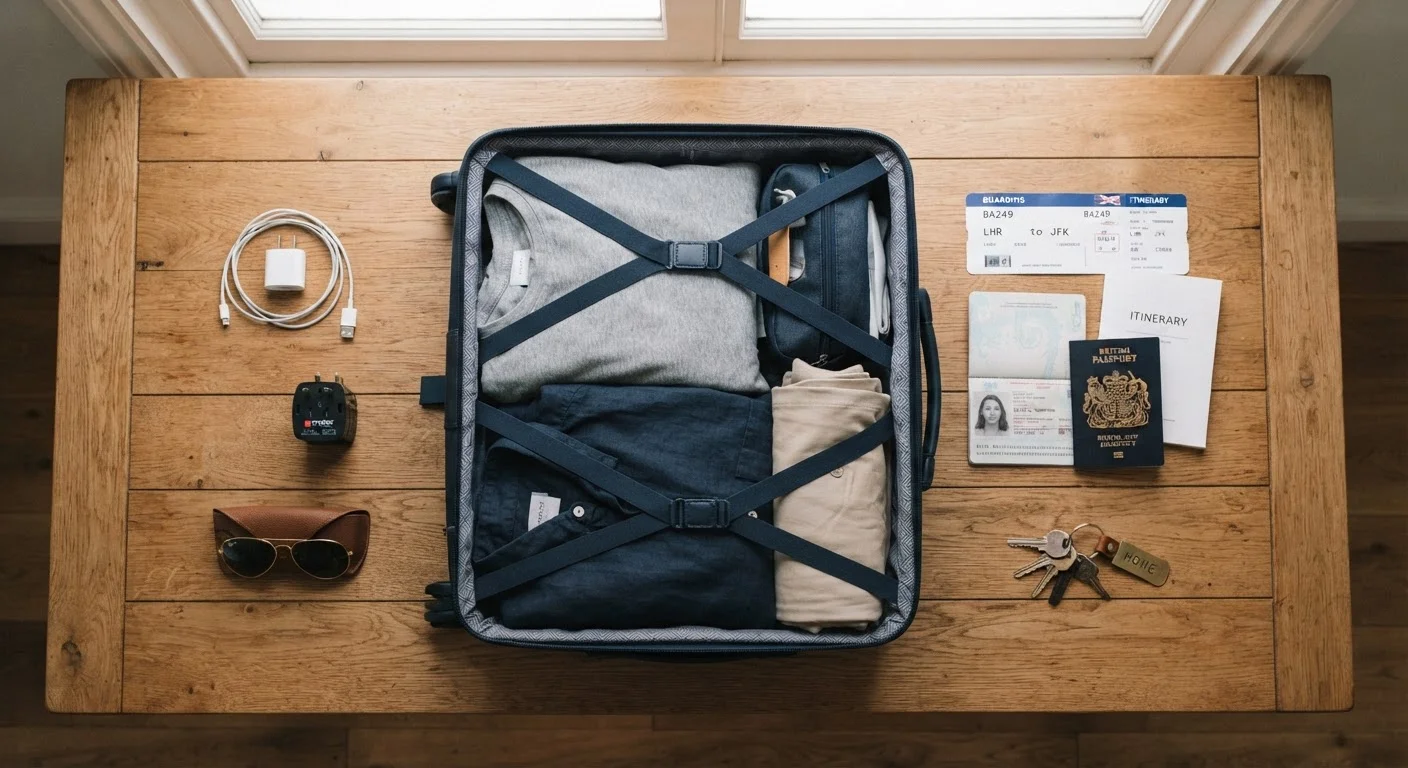
Before checking a bag or even closing a carry-on for the last time, experienced travelers take a quick photo of their luggage-exterior and interior. If a bag is lost or delayed, that image gives airline staff an immediate, accurate visual reference rather than a verbal description you're trying to reconstruct under stress. It also documents the bag's contents, which matters if you need to file a claim. The habit takes ten seconds and has saved countless travelers hours of frustration at baggage claim counters.
A ten-second photo before departure can save hours of frustration at baggage claim.
Build Buffer Days Into Itineraries
Cramming every day with back-to-back activity feels efficient during planning but creates a single point of failure: one delay cascades through everything else. Experienced travelers routinely build one or two buffer days-or at minimum buffer hours-between major legs of a trip. These aren't wasted time; they become the moments for spontaneous discovery, genuine rest, or graceful recovery from a missed connection. If you're weighing how to structure complex travel segments, it's also worth understanding how layover length affects real-world risk.
Buffer days aren't wasted time-they're insurance against the inevitable unexpected.
Download Offline Maps and Key Documents Locally
Connectivity is never guaranteed-roaming charges, poor signal, and dead phone batteries are facts of travel life. Before departure, seasoned travelers download offline maps of their destination, save PDF copies of confirmations and itineraries to their device, and photograph any documents they might need at a border or hotel desk. This simple step removes dependence on a stable internet connection at the exact moments when you most need information and are least likely to have it.
Offline access to maps and documents removes dependence on connectivity when you need it most.
Carry a Written Record of Essential Information
A small folded card tucked into a wallet-containing the address of your accommodation, your travel insurance policy number, an emergency contact, and your passport number-sounds almost quaint in the smartphone era. Experienced travelers keep one anyway. Phones die, get stolen, or simply run out of storage at critical moments. A physical backup of your most essential travel information is the kind of redundancy that costs nothing and matters enormously when digital options fail.
A folded card with key details costs nothing but matters enormously when digital options fail.
Learn Ten Words in the Local Language
Fluency isn't the goal-gesture is. Travelers who invest fifteen minutes learning greetings, please, thank you, excuse me, and how much? in the local language report meaningfully warmer interactions with locals than those who default immediately to English. It signals respect for the place you're visiting, and that signal travels. This is especially true in destinations that receive large volumes of tourists and where residents have good reason to be weary of visitors who arrive without curiosity. For destinations off the usual circuit, researching unfamiliar destinations covers how to build cultural and linguistic baseline knowledge before you go.
Ten words in the local language signal respect-and locals notice the difference.
Arrive Early Enough to Genuinely Observe
Experienced travelers often arrive at airports, stations, and border crossings with more time than strictly required-not out of anxiety, but out of acquired wisdom. Extra time allows you to locate the correct terminal, spot signage in a foreign language without rushing, identify where your gate or platform actually is, and adjust if something has changed. Beyond logistics, arriving early at a destination-a neighborhood, a market, a cultural site-often reveals it before the crowds do, which is frequently when it's most worth seeing. This connects directly to why experiences tend to outlast places in memory: the unplanned, unhurried moments are often what you carry home.
Arriving early doesn't just reduce stress-it reveals destinations before the crowds arrive.
Pack One Complete Change of Clothes in Your Carry-On
Even travelers who check bags routinely keep one full outfit-including any essentials-in their carry-on. The logic is straightforward: if checked luggage is delayed, you're not stranded without options for twenty-four or forty-eight hours. This habit also serves as a gentle forcing function toward breaking the overpacking cycle, since carrying a meaningful carry-on requires making deliberate choices about what actually needs to be within arm's reach.
One outfit in your carry-on is cheap insurance against a delayed checked bag.
Bringing It All Together Before You Go
None of these habits require expensive gear or elaborate planning systems. They're low-effort, high-return practices that compound across every trip you take. If you want a structured starting point, the pre-trip checklist is a reliable framework for turning these instincts into consistent pre-departure routines.
Pairing smart habits with thoughtful packing is equally worthwhile-our guide on packing light without leaving essentials behind covers how to make every item in your bag earn its place. Travel rarely goes exactly to plan, but with the right habits in place, the gaps between plan and reality become a lot easier to navigate.
Start with One New Habit per Trip
Trying to adopt every habit at once tends to make none of them stick. Consider choosing one practice from this list for your next trip-photographing your luggage, downloading offline maps, or writing out a physical info card-and letting it become automatic before adding the next. Consistent travelers build their toolkit one trip at a time.