Why Light Packing Changes the Entire Trip
There's a moment every overloaded traveler knows well: standing at the top of a cobblestone street, shoulders aching, realizing the bag strapped to their back was supposed to make the trip better. Packing light isn't about deprivation - it's about trading dead weight for freedom. When you're not wrestling luggage, you move faster, stress less at airports, and stay more present wherever you've landed.
If you've ever found yourself wondering why you brought three-quarters of what's in your bag, you're not alone. The psychology of overpacking runs deep, but the habits that break the cycle are learnable. This guide walks through the practical mechanics - clothing strategy, folding technique, and toiletry editing - so you can arrive at your destination with everything you need and nothing you don't.
What you will need
The Capsule Wardrobe Approach for Travel
The capsule wardrobe concept - a small, cohesive collection of pieces that work together - translates especially well to travel. The goal is to select clothing in two or three neutral base colors (think navy, grey, or olive) so that every item can be paired with every other item. A week-long trip rarely requires more than three to five bottoms, four to six tops, one layering piece, and one versatile shoe beyond what you wear on the plane.
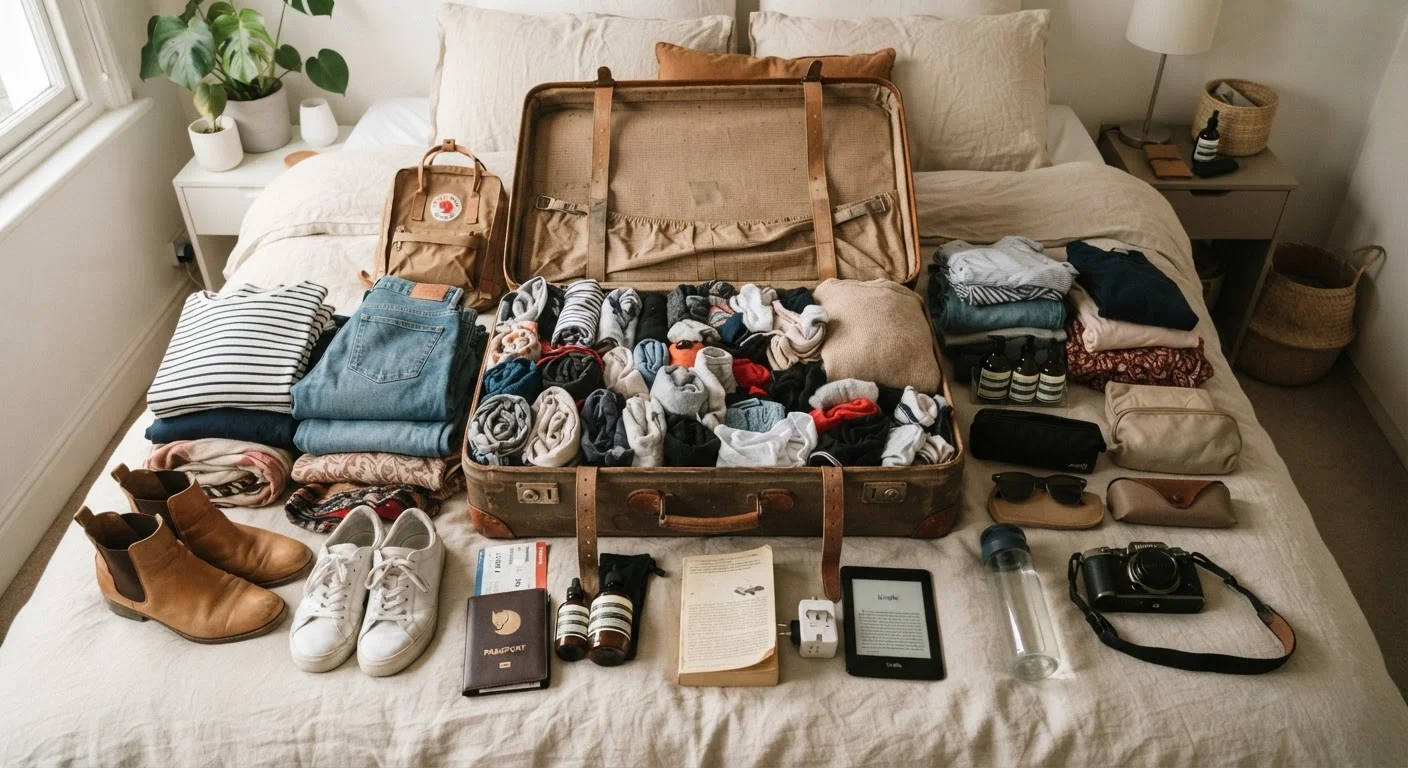
Before packing a single item, lay your entire intended wardrobe flat on a bed and perform what seasoned travelers call the "outfit audit": trace at least two distinct outfits through each piece. If a garment only works in one combination, it probably doesn't earn its space. This same mindset - editing down to what truly earns its place - is explored in depth in the capsule closet approach, which applies at home just as powerfully as it does on the road.
Plan Outfits, Not Individual Pieces
Instead of thinking "I'll need a blue shirt," think "I need Tuesday's dinner outfit." Planning complete looks before packing prevents the habit of tossing in extras "just in case" - which is where most extra weight quietly accumulates.
Roll, Fold, or Bundle? Settling the Packing Debate
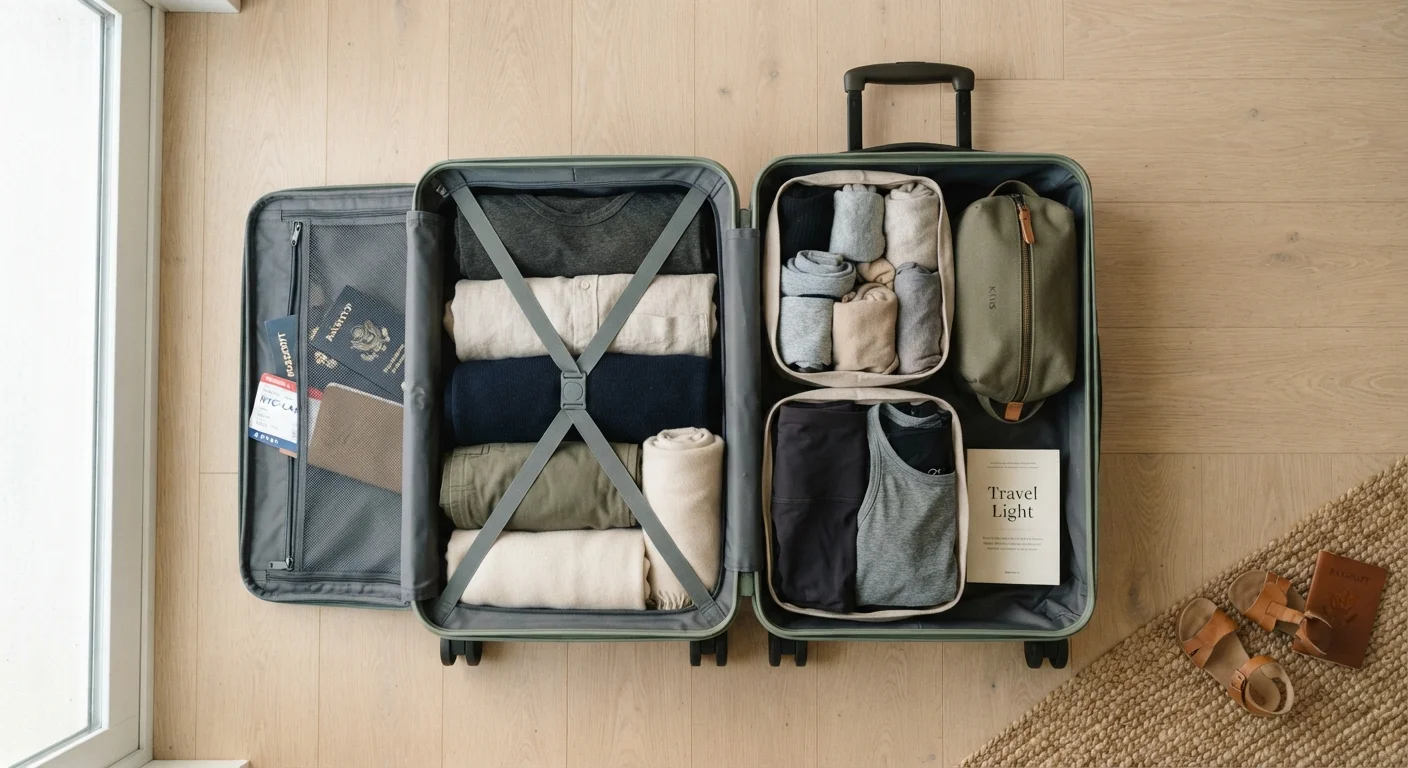
The rolling-versus-folding debate has a more nuanced answer than most packing guides admit. Rolling works best for knits, t-shirts, jeans, and casual fabrics - it compresses volume and reduces creasing. Flat folding remains preferable for structured pieces like blazers or dress shirts, where sharp creases are more damaging than the fold lines a careful stack creates. A hybrid approach - rolling soft pieces, folding structured ones - tends to yield the most efficient use of space.
Packing cubes take this further by compartmentalizing categories (tops in one cube, bottoms in another) so the bag stays organized throughout the trip rather than collapsing into chaos after the first unpack. They also make airport security pat-downs and hotel room transitions significantly less disruptive. For travelers weighing whether a carry-on can realistically handle a longer trip, the carry-on vs. checked bag trade-offs are worth reviewing before committing to a bag size.
Verify Carry-On Limits Before You Pack
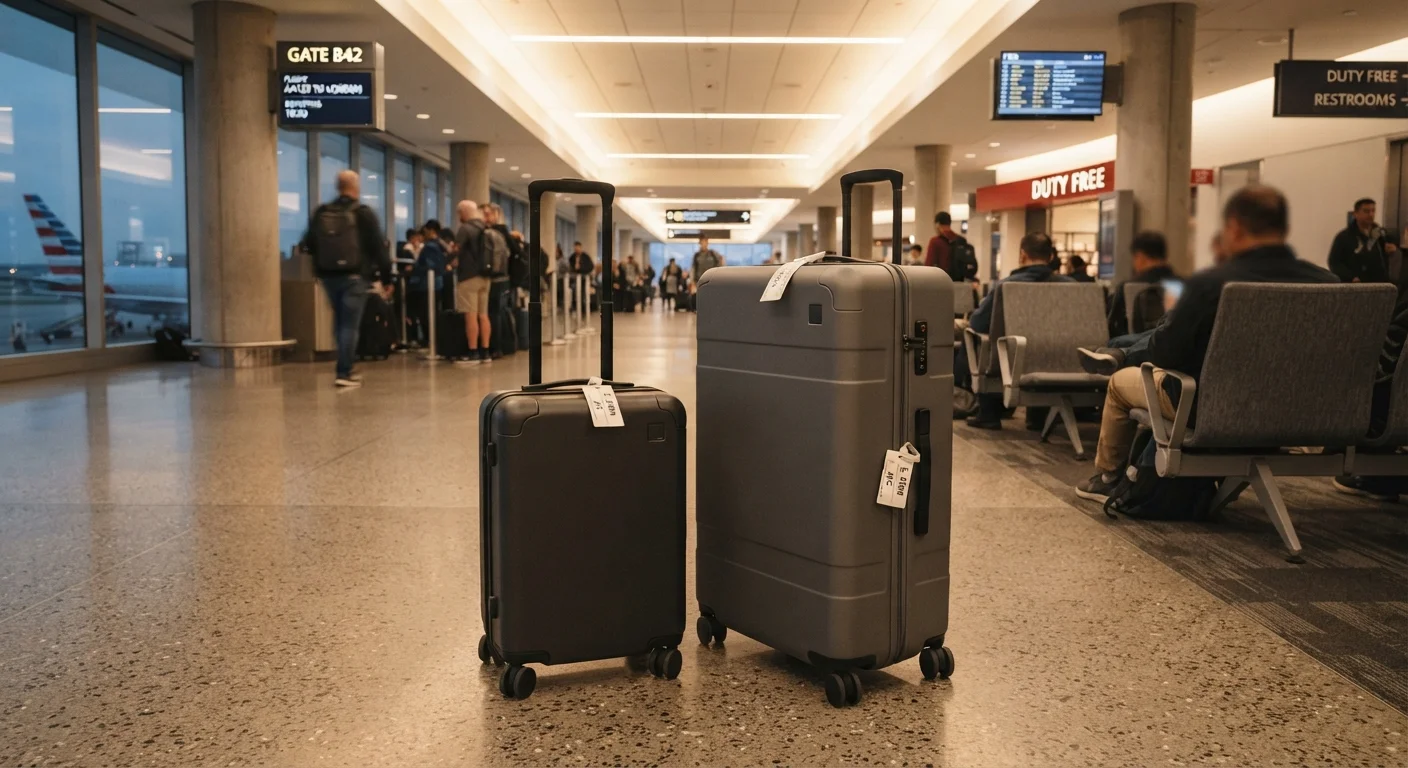
Carry-on size and weight rules vary significantly between airlines, and even between ticket classes on the same carrier. A bag that fits on one airline may be gate-checked on another. Always check the current policy directly on your carrier's website before finalizing your packing - not just at check-in.
The Ruthless Toiletry Edit
Toiletries are where packing discipline tends to break down fastest. The instinct to bring full-size everything - shampoo, conditioner, face wash, moisturizer, sunscreen - quietly fills half a carry-on before a single piece of clothing goes in. The honest question to ask of each product: Can I buy this, or a reasonable substitute, within a short walk of where I'm staying? For most urban and resort destinations, the answer is yes.
Solid versions of common toiletries (shampoo bars, solid moisturizers) sidestep the TSA 3-1-1 liquid rule entirely and take up a fraction of the space. For medications, contact lens supplies, and any prescription item, there's no substitute - those travel regardless. Everything else deserves scrutiny. Experienced travelers also treat the toiletry bag as a permanent pre-packed kit that gets refreshed after each trip rather than rebuilt from scratch, a habit that eliminates the last-minute scramble. For broader context on travel habits that quietly make the whole experience smoother, seasoned traveler habits are worth absorbing well before departure day.