The Real Stakes of Your Luggage Choice
It's a decision most travelers make quickly and often regret - standing at the check-in counter, second-guessing whether that suitcase should have stayed home. The choice between a carry-on and a checked bag isn't just about space. It shapes how your entire travel day unfolds: how long you wait, how freely you move, and how much runway you have if something goes wrong.
For seasoned travelers, luggage strategy is intentional. For everyone else, it can feel like a coin flip. The good news is that once you understand the genuine trade-offs - not just the obvious ones - the right call becomes much clearer. Before you even begin packing, consider running through a pre-departure checklist to confirm your airline's specific baggage policies, which vary more than most travelers expect.
| Criterion | Carry-On Bag | Checked Bag |
|---|---|---|
| Baggage fees | Often free (varies by airline) | Typically $30-$70+ per bag |
| Arrival time | Faster - no carousel wait | 20-45 min extra at baggage claim |
| Packing capacity | Limited - strict size rules | Generous - 50 lbs on most US carriers |
| Liquid restrictions | TSA 3-1-1 rule applies | No liquid size restrictions |
| Risk of loss or delay | Low - stays with you | Small but real risk of misrouting |
| Best trip length | Weekend to ~1 week | 1+ weeks or complex packing needs |
| Tight connection suitability | High - no handoff required | Lower - bag may not transfer in time |
What Carry-On Travel Actually Demands
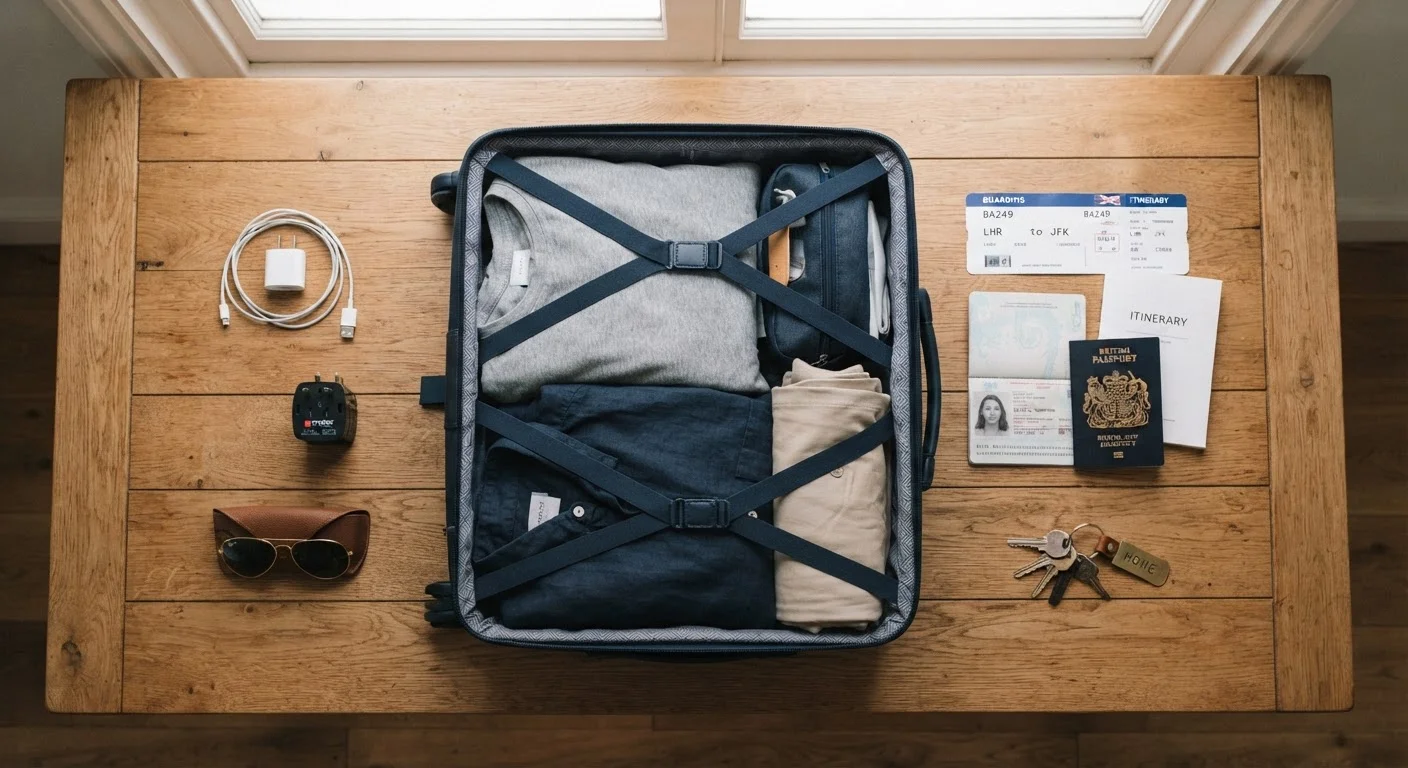
Traveling carry-on only is genuinely liberating - until it isn't. You bypass baggage fees on most carriers, sail through arrivals without waiting at carousels, and keep your belongings within reach on the plane. For tight layovers especially, this matters: a checked bag is a liability when you have less than an hour between connections.
But carry-on travel exacts its own toll. TSA's 3-1-1 liquid rule limits toiletries to containers of 3.4 ounces or less in a single quart-sized bag - a genuine constraint for longer trips or travelers who rely on specific products. Overhead bin space is increasingly competitive, and on fuller flights, airlines may gate-check your bag anyway, removing the very advantage you planned around. Overhead bin policies also differ internationally; a bag accepted domestically may exceed limits on a regional carrier abroad.
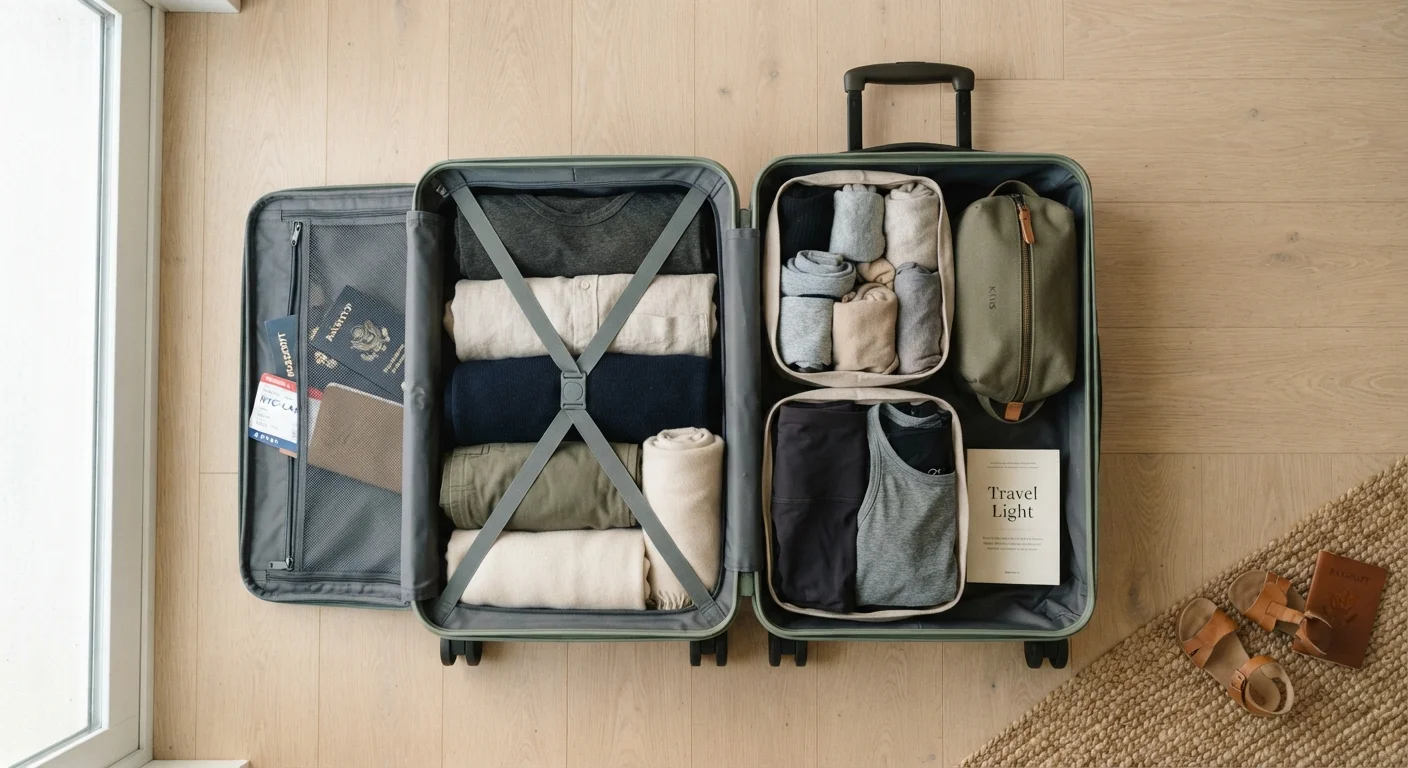
The carry-on approach rewards those willing to pack deliberately. Packing light without sacrificing essentials is a learnable skill - capsule wardrobes, multi-purpose clothing, and solid toiletry alternatives all help. But it does require upfront planning most casual travelers underestimate.
~1 in 170
Checked bags reported mishandled per passenger
According to the Air Travel Consumer Report published by the US Department of Transportation, mishandled bag rates have improved significantly over the past decade but remain a measurable risk.
3-1-1
TSA carry-on liquid rule (oz / containers / bag)
The Transportation Security Administration enforces this rule at all US airport security checkpoints; non-compliant items are confiscated at the checkpoint.
When a Checked Bag Is Simply the Smarter Move
There's a version of travel where checking a bag is not a concession - it's the correct decision. Extended international trips, family vacations, destination weddings, ski holidays, and beach retreats all tend to generate packing lists that won't compress into 22 inches of rolling space. Trying to force them there leads to the exact frustration that drives overpacking in the first place.
A checked bag allows you to bring full-size toiletries, pack shoes properly, carry a hair dryer if your destination doesn't supply one, and avoid the mental gymnastics of editing your wardrobe down to near nothing. For travelers with medical equipment or mobility aids, checking baggage may also be the only practical option - and most US carriers have specific rules around these items that are worth verifying in advance.
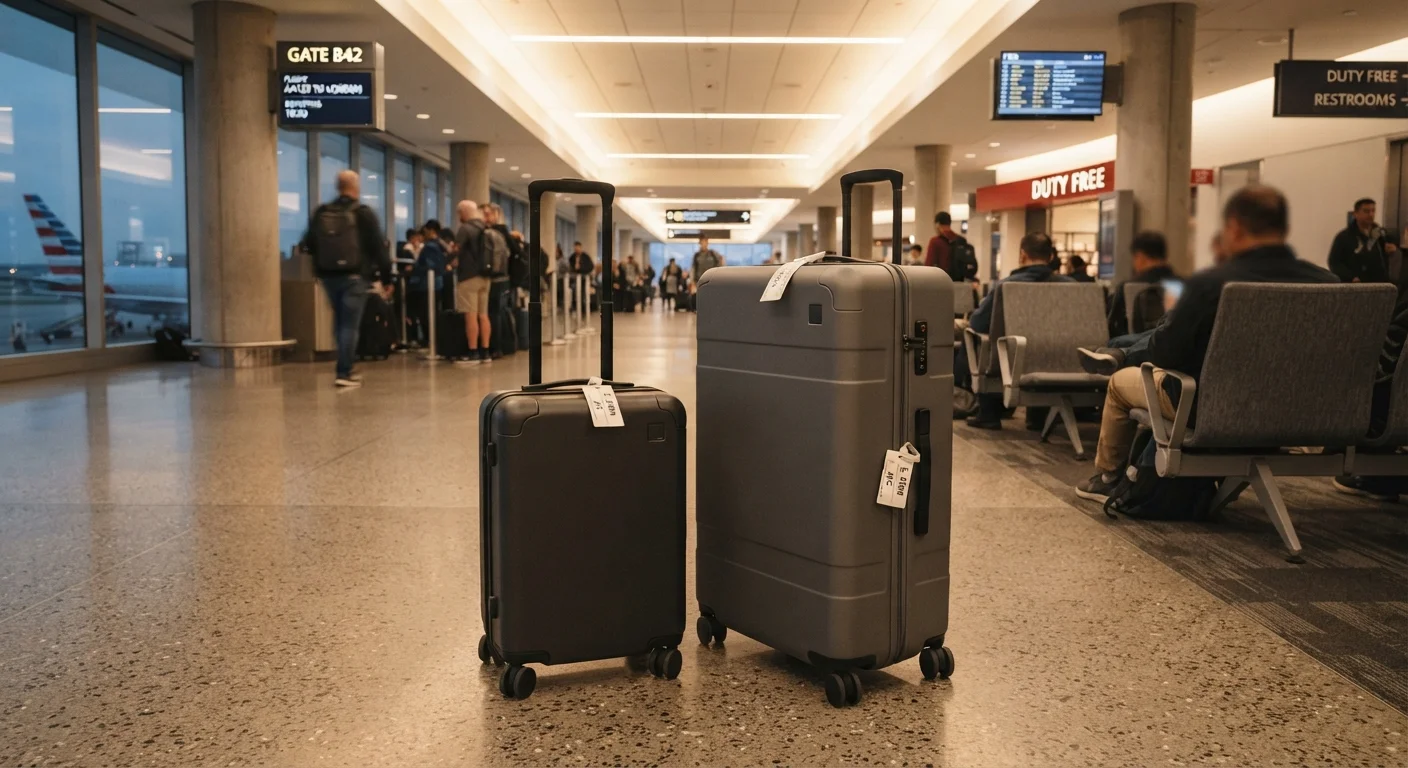
The real risks are worth naming honestly: checked bags do get delayed and, occasionally, lost. Experienced travelers photograph their luggage before every flight and pack a change of clothes in their personal item as a buffer. Labeling bags inside and out, using a distinctive luggage tag, and filing a report immediately if a bag doesn't appear are habits that reduce the sting of the rare worst-case scenario.
Airline Policies Vary Significantly
Basic economy fares on many US carriers now restrict even carry-on bags to personal items only, effectively making a checked bag the only option for more than a personal tote. Budget carriers operating internationally may impose stricter size and weight limits than travelers expect. Always verify the specific baggage rules for every carrier on your itinerary - especially when booking through a third-party platform, where the fare class may not be immediately obvious.