The Science Behind Pressure Shifts
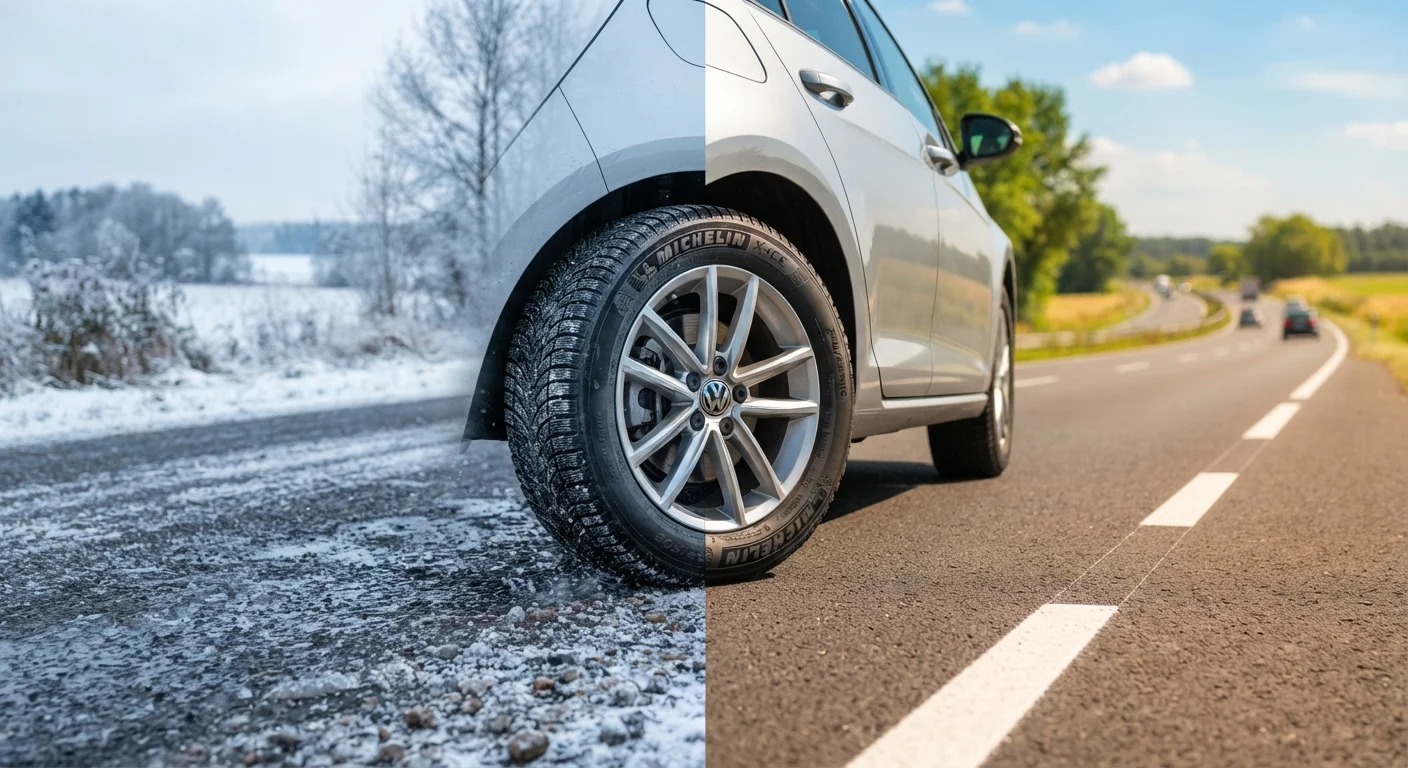
Air behaves predictably under pressure: heat makes it expand, cold makes it contract. Your tires are a sealed environment, so when the outside temperature drops sharply overnight, the air inside your tires loses pressure - not because anything is leaking, but because the molecules have less energy and take up less space.
This matters more than many drivers realize. A tire that was sitting at the correct PSI on a mild October afternoon may be meaningfully underinflated by the first cold snap in November. The reverse happens in summer: parked in a hot parking lot, your tires can read higher than recommended - and heat from the pavement adds to pressure generated by normal driving.
~1 PSI
Pressure change per 10°F temperature shift
This is a widely cited general guideline in automotive maintenance, though exact values vary by tire and current inflation level.
25%
Estimated share of vehicles with at least one underinflated tire
Various highway safety organizations have reported that a significant portion of vehicles on the road are operating with underinflated tires at any given time.
3+ hours
Rest time needed before a cold tire pressure check
Industry guidance recommends checking pressure after tires have cooled to ambient temperature for the most accurate reading.
Understanding this cycle helps you respond to it rather than be caught off guard by a warning light or, worse, a tire that's been quietly wearing wrong for months.
What Happens When Pressure Is Off
An underinflated tire doesn't hold its shape properly. The sidewalls flex more than intended, generating excess heat during driving - which accelerates wear and, in extreme cases, can contribute to a blowout. The tread also contacts the road differently, leading to faster wear on the outer edges.
An overinflated tire is a different problem. Too much pressure makes the tire stiffer, so only the center strip of tread bears the load. That causes wear in the middle and reduces the tire's ability to conform to road irregularities, which affects grip - particularly on wet roads. See our guide to driving in rain, snow, and fog for more on how tire condition influences wet-weather handling.
Check All Four Tires - Including the Spare
Pressure differences between tires on the same vehicle are common and can affect how the car handles, especially in emergency maneuvers. While you're at it, check the spare tire too - a flat spare is of no help when you actually need it.
Both extremes also affect fuel efficiency. Underinflated tires create more rolling resistance, which means your engine works harder. The effect isn't enormous, but it adds up across thousands of miles.
When and How to Check Tire Pressure
The most reliable time to check tire pressure is when tires are cold - meaning the vehicle has been sitting for at least three hours, or you've driven fewer than a mile at low speed. Driving heats the air inside tires and inflates them temporarily, which can make an underinflated tire look acceptable.
A basic digital tire gauge costs only a few dollars and is worth keeping in your glove compartment. Remove the valve cap from the tire stem, press the gauge firmly onto the valve, and read the number. Compare it to your vehicle's recommended PSI - which is found on a sticker inside the driver's door jamb or in the owner's manual. Do not use the number printed on the tire sidewall; that's the tire's maximum pressure, not the target.
TPMS Isn't a Substitute for Manual Checks
Many vehicles built after 2008 are equipped with a tire pressure monitoring system (TPMS) that alerts you when pressure drops significantly - typically 25% below recommended. But that threshold means a tire can be noticeably underinflated without triggering any warning. Manual checks with a gauge catch problems earlier.
If you're adding air at a gas station, add a little at a time and re-check - it's easier to let air out than to realize later you've gone too high. Most gas station air pumps allow you to release pressure by pressing a small pin inside the valve stem.
Building seasonal tire pressure checks into your routine is one of the more straightforward things you can do for your car. The seasonal car check-up routine is a good place to anchor this habit alongside other time-based maintenance tasks.
Seasonal Patterns Worth Knowing
In most parts of the US, drivers should pay closest attention to tire pressure during two transition periods: the move from warm weather into fall and winter, and the return to warmer temperatures in spring. These are the windows where temperature swings are sharpest and pressure changes are most pronounced.
Summer brings its own risks. Hot pavement can raise tire temperatures beyond what normal inflation accounts for, and tires that are already at the high end of their recommended range can push into overinflated territory. If you're driving through a heat wave, keeping your car running well in extreme heat is worth reviewing - tires are just one of several systems that heat stresses.
Wheel alignment is also worth mentioning here. Tires running at the wrong pressure for extended periods tend to wear unevenly, which can make an underlying alignment problem harder to detect or diagnose. If your tires show uneven wear even after correcting pressure, wheel alignment may be worth checking before assuming pressure alone was the cause.