Why Fluids Matter More Than Most Drivers Realize
Your car depends on about half a dozen fluids to run safely. Each one handles a specific job - lubricating, cooling, pressurizing, or cleaning - and when any of them drops too low or degrades, the effects can range from annoying to expensive. The good news: checking most reservoirs takes less than five minutes and no tools. This guide walks through each fluid, where to find it, and what warning signs to watch for.
If you're new to vehicle ownership, our beginner's maintenance overview is a solid place to start before diving into individual systems.
| Number of key fluids | 6 in most vehicles |
| Check engine oil | Monthly or every few fill-ups |
| Check coolant | When engine is cold only |
| Brake fluid color (healthy) | Clear to light yellow |
| Transmission fluid color (healthy) | Pinkish-red, not dark or burnt |
| Washer fluid substitute | Use dedicated fluid - not plain water |
The Six Reservoirs Under Your Hood
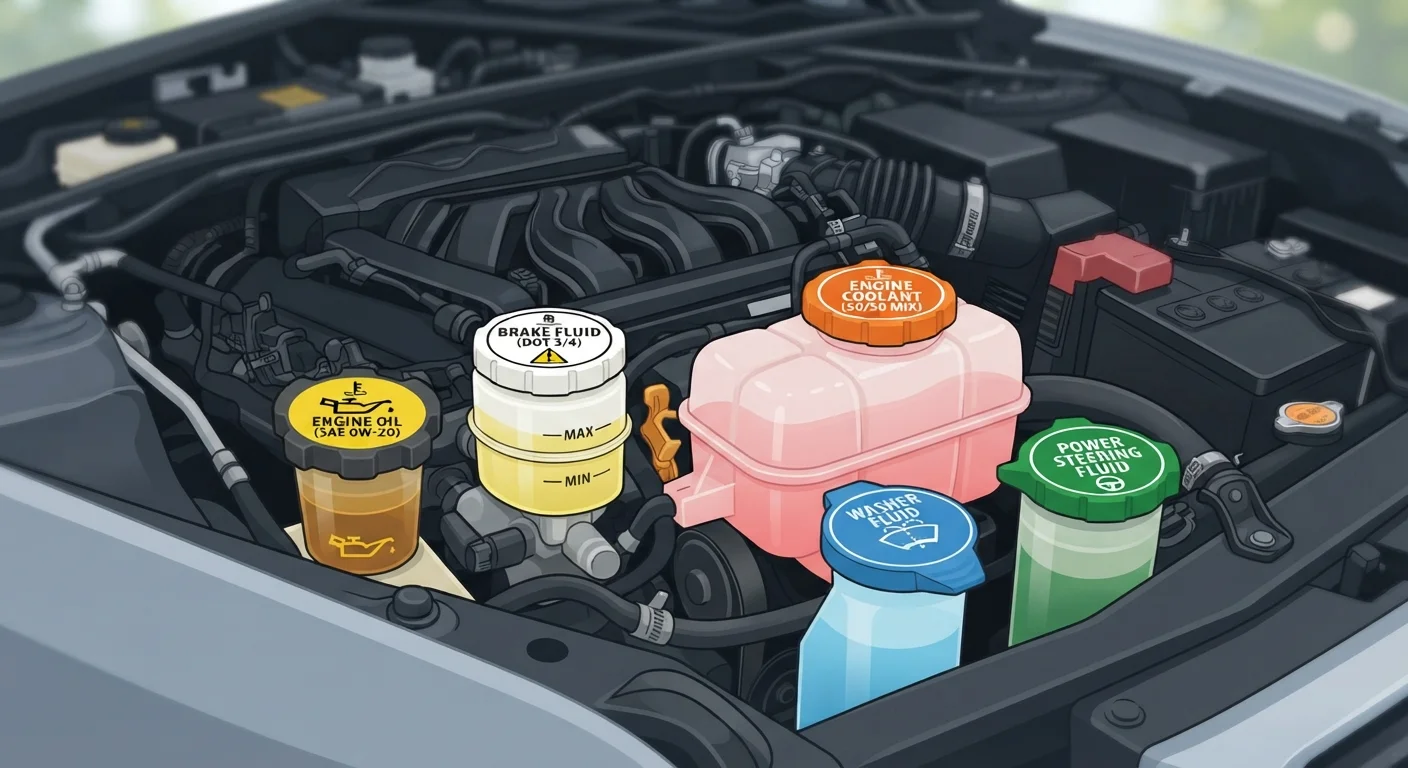
Most passenger vehicles share the same core set of fluid reservoirs. Locations vary by make and model, so always confirm with your owner's manual - but here's what each one does and what to look for.
Engine Oil
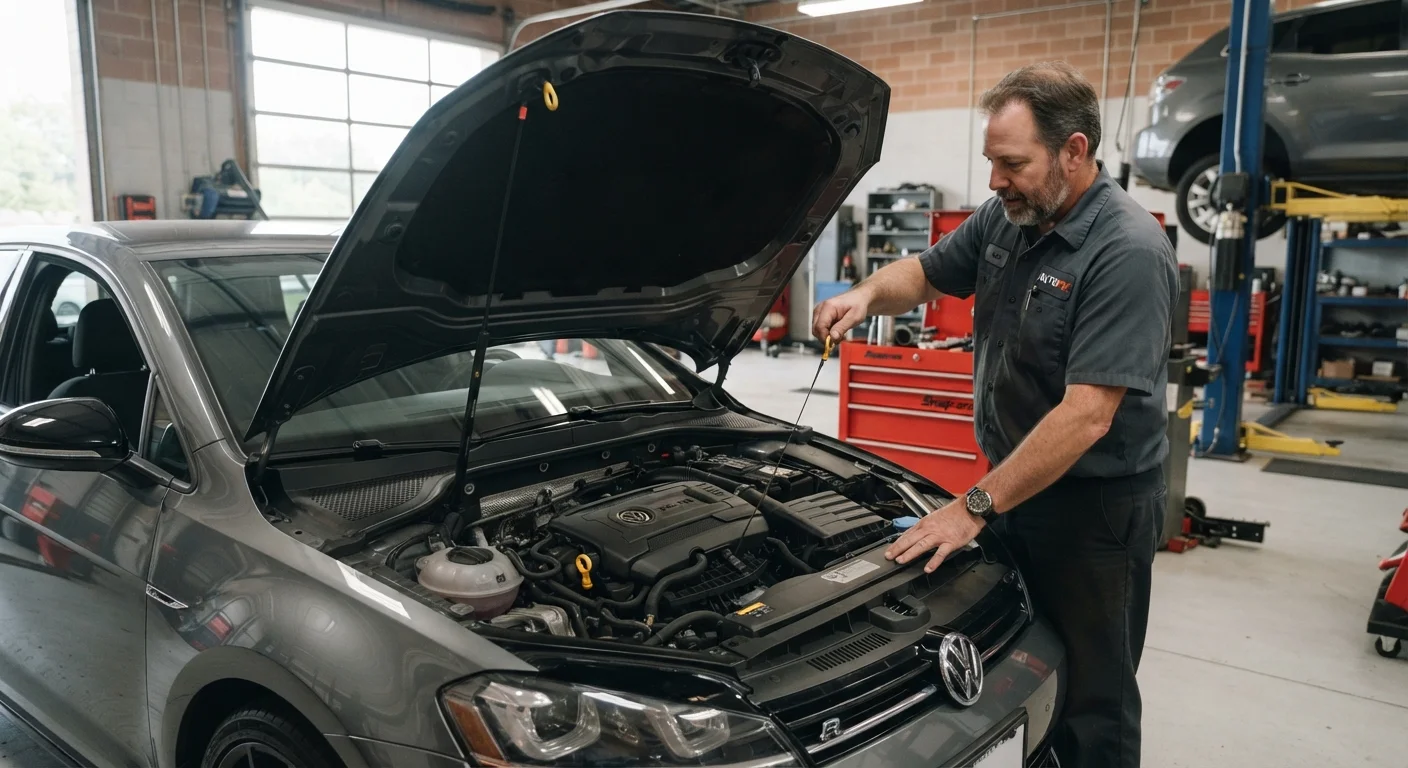
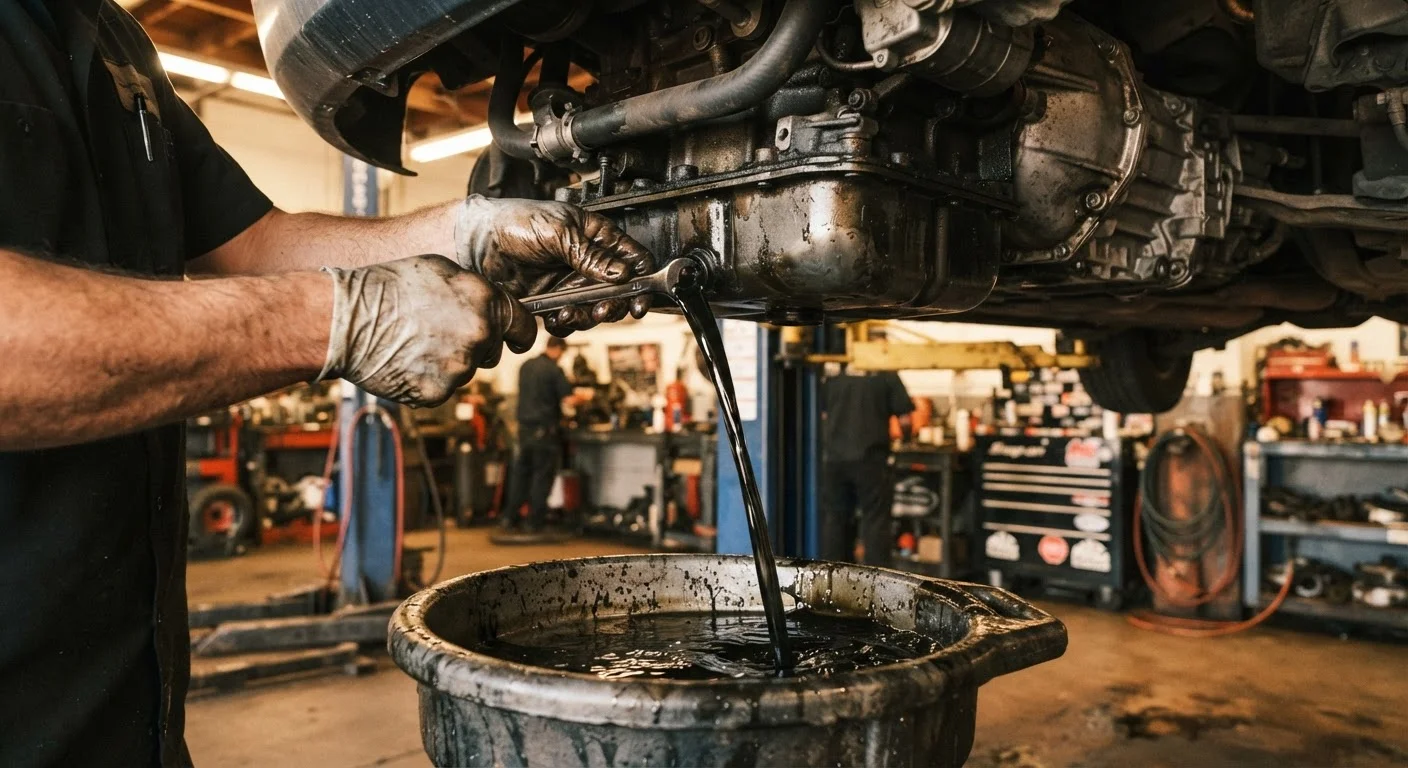
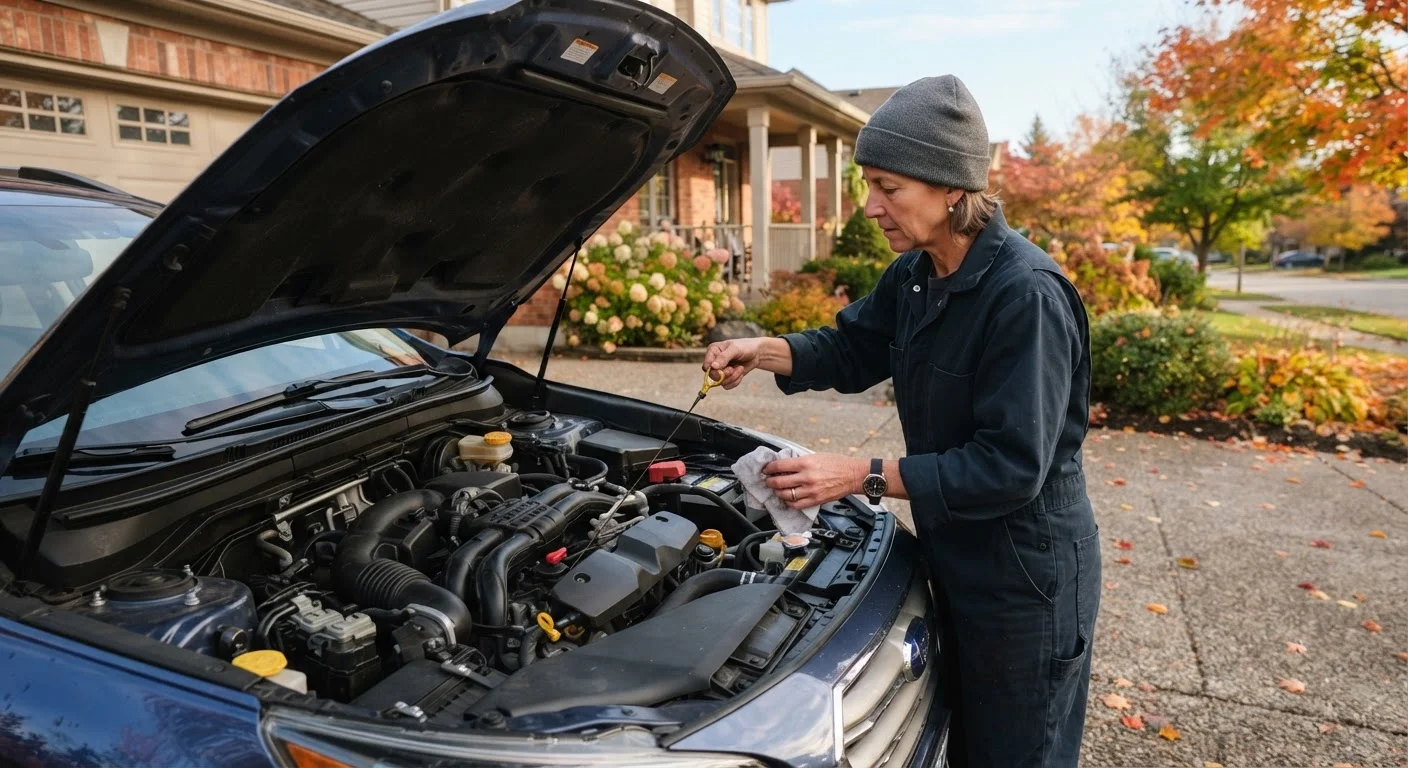
Engine oil lubricates the hundreds of moving metal parts inside your engine, reducing friction and carrying away heat. It's checked via a dipstick (not a reservoir cap on most cars). Pull the dipstick, wipe it clean, reinsert fully, then pull again. The oil level should fall between the two marks. Dark brown or black oil is normal; gritty or milky oil is not. Learn more about oil change intervals and what skipping them costs you.
Coolant (Antifreeze)
Coolant circulates through your engine to prevent overheating in summer and freezing in winter. Its reservoir is usually a translucent plastic tank near the radiator with MIN and MAX lines. Check it cold - opening a hot radiator cap can cause serious burns. Low coolant or a consistently dropping level may point to a leak.
Brake Fluid
Brake fluid transmits the force from your foot on the pedal through hydraulic lines to the brakes themselves. It lives in a small reservoir near the firewall on the driver's side, often labeled with a brake icon. The level naturally drops slightly as brake pads wear - a significant drop, however, can indicate a leak and warrants prompt attention from a qualified mechanic.
Hydraulic system
A system that uses pressurized fluid to transmit force. Your brakes and (on older vehicles) power steering rely on hydraulic systems to multiply the force you apply.
Dipstick
A long, thin metal rod inserted into a fluid reservoir that lets you check the fluid level and condition by reading markings on the stick after withdrawal.
Firewall
The metal barrier separating the engine bay from the passenger cabin. Several reservoirs - including brake fluid - are mounted near it.
Coolant reservoir
A translucent plastic tank connected to the radiator that holds excess coolant. Its level expands and contracts with engine temperature, and it's the safe place to check coolant without opening the pressurized radiator cap.
Transmission fluid
A specialized oil that lubricates, cools, and helps control gear changes inside the transmission. It differs from engine oil in formulation and should never be substituted.
Power Steering Fluid
This fluid powers the hydraulic system that makes turning the wheel feel effortless. Many newer vehicles use electric power steering and have no fluid reservoir at all - check your manual if you're unsure. On vehicles that do have it, the reservoir is typically a small capped container near the steering rack with a dipstick built into the cap.
Transmission Fluid
Transmission fluid lubricates and cools the gearbox. On automatic transmissions, there's usually a dipstick under the hood (some newer models are sealed and require a shop inspection). Unlike engine oil, transmission fluid should stay relatively clean and pinkish-red. Dark, burnt-smelling fluid is a sign it needs attention.
Windshield Washer Fluid
The simplest of the group - a plastic reservoir, usually blue, that feeds the jets that clean your windshield. Use dedicated washer fluid rather than plain water, which can freeze in cold weather and doesn't clean as effectively.
Warning Signs You Shouldn't Ignore
Dashboard warning lights are a last resort - your car has usually been trying to tell you something for a while before a light appears. Build the habit of a quick under-hood check every few fill-ups. A seasonal check-up routine is a practical way to stay ahead of problems.
~20%
Of roadside breakdowns tied to fluid issues
Fluid neglect - including overheating and lubrication failure - is among the leading causes of preventable roadside breakdowns, according to general industry estimates.
5 min
Approximate time to check all visible reservoirs
A quick under-hood inspection of oil, coolant, brake fluid, and washer fluid can typically be completed in about five minutes with no tools required.
Pay particular attention to these signals:
- Puddles under the car - Different fluids have different colors. Bright green or orange is likely coolant; reddish could be transmission or power steering fluid; clear water near the front passenger area is usually just air-conditioning condensation and is normal.
- Soft or spongy brake pedal - Can indicate low brake fluid or air in the lines. Have a mechanic inspect it promptly.
- Burning smell while driving - Oil or coolant leaking onto hot engine parts produces a sharp, unpleasant odor. Don't ignore it.
- Steering that feels stiff - On vehicles with hydraulic power steering, difficulty turning can point to low fluid.
When in doubt about any fluid or warning sign, a qualified mechanic is the right call. Some issues - like brake system leaks - carry real safety implications that go beyond DIY territory. See which maintenance tasks are safe to handle yourself for a clear-eyed look at where the line is.
Always Consult Your Owner's Manual
Reservoir locations, fluid specifications, and check intervals vary significantly between vehicle makes and models. Your owner's manual is the authoritative source for your specific car. Using the wrong fluid type - even in the right reservoir - can cause damage, so match the spec listed in the manual or on the reservoir cap itself.
Staying on top of fluids is one part of broader vehicle ownership. For a fuller picture - from insurance to registration to maintenance schedules - our end-to-end car ownership guide covers it all in one place.