The Core Distinction: What Each Inquiry Actually Is
A credit inquiry - also called a credit pull or credit check - is a record that someone has accessed your credit report. But not all credit checks work the same way, and mixing them up leads to a lot of unnecessary anxiety.
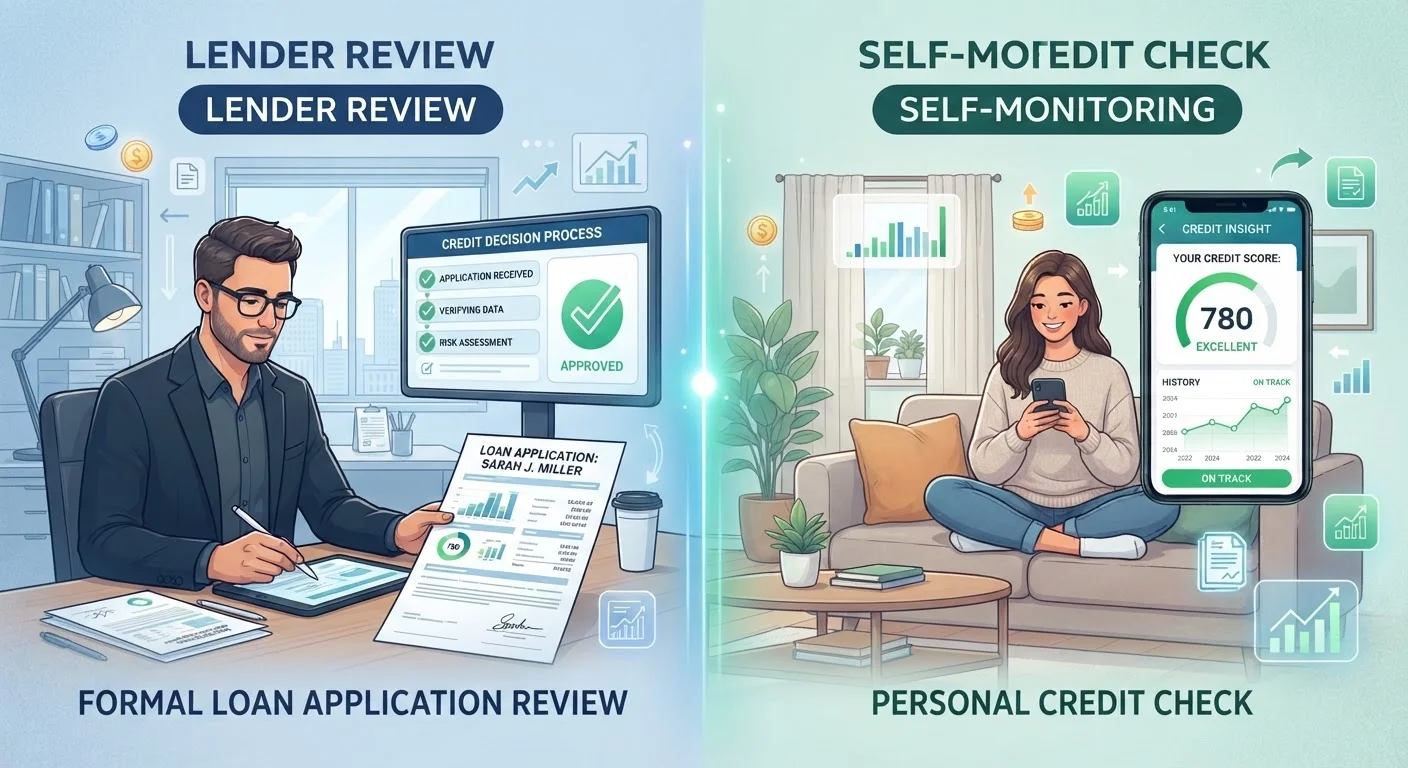
A hard inquiry happens when a lender, landlord, or other institution checks your credit as part of evaluating a formal application for credit. Think mortgage lenders, auto financers, credit card issuers, and some private student loan providers. You almost always have to authorize a hard pull before it happens.
A soft inquiry is any credit check that is not tied to a formal credit application. Examples include checking your own credit score or report, a credit card company pre-screening you for an offer, or an employer doing a background check. Soft pulls can sometimes happen without your direct authorization, depending on the context and applicable law.
Both types appear in the inquiry section of your credit report - but only hard inquiries are factored into credit score calculations. This is a key distinction that the credit score myths article addresses in depth.
How Hard Inquiries Affect Your Credit Score
Hard inquiries are included in the "new credit" category of scoring models like FICO, which generally accounts for roughly 10% of your total score. A single hard inquiry typically reduces a score by fewer than five points for most consumers, though the exact impact varies based on your overall credit profile.
~5 pts
Typical score drop per hard inquiry
According to FICO, a single hard inquiry lowers most consumers' scores by fewer than five points, though the impact varies by individual profile.
10%
Weight of 'new credit' in FICO scores
FICO scoring models allocate roughly 10% of a score to the new credit category, which includes hard inquiries alongside new account openings.
45 days
Rate-shopping window (FICO 8)
FICO's newer models allow up to 45 days for loan-type rate shopping before treating multiple inquiries as more than one event.
Crucially, hard inquiries only remain score-relevant for about 12 months, even though they stay visible on your report for 24 months. So the ding is real, but it's temporary.
One important consumer protection: scoring models recognize that shopping around for the best rate on a mortgage, auto loan, or student loan is financially sensible - and they accommodate it. Multiple hard inquiries for the same loan type made within a short window (typically 14 to 45 days depending on the scoring model) are usually counted as a single inquiry. This "rate-shopping" grouping does not apply to credit card applications.
Rate-Shopping Protection Doesn't Cover Credit Cards
The inquiry-bundling benefit only applies to installment loan products like mortgages, auto loans, and student loans. If you apply for multiple credit cards in quick succession, each application counts as a separate hard inquiry with no grouping protection. Space out credit card applications when possible to minimize unnecessary score impacts.
You can see a full list of inquiries on your credit report - something the credit report walkthrough explains section by section.
Side-by-Side Comparison
The table below captures the key differences at a glance. Understanding these distinctions helps you anticipate what will and won't affect your score when credit is being checked.
| Hard Inquiry | Soft Inquiry | |
|---|---|---|
| Triggered by | Formal credit application | Self-check, pre-screening, background check |
| Affects credit score | Yes - small, temporary impact | No impact at all |
| Requires your authorization | Almost always yes | Not always required |
| Stays on report | Up to 24 months | Usually visible only to you |
| Score-relevant duration | Approximately 12 months | Never scored |
| Common examples | Mortgage, auto loan, credit card application | Checking own score, pre-approved offers |
If you're unsure what score range you currently sit in and how inquiries might affect your standing, the credit score ranges guide breaks down each band and what lenders typically read into it.
Practical Tips for Managing Inquiries Strategically
Knowing how inquiries work lets you apply for credit with more confidence and less guesswork.
Monitor Your Credit Without Fear
Many consumers avoid checking their own credit scores because they worry it will lower their score - but this is a myth. Self-checks are soft inquiries and carry zero scoring consequences. Regularly reviewing your credit report is actually a smart habit that can help you catch errors or signs of fraud early.
- Check your own credit freely. Using free credit monitoring tools, pulling your report from AnnualCreditReport.com, or reviewing scores through your bank will never hurt your credit. These are all soft inquiries.
- Group your rate shopping. If you're applying for a mortgage or auto loan, try to submit applications within a two-week window to take advantage of inquiry bundling by scoring models.
- Avoid unnecessary applications. Applying for several new credit cards in a short span stacks hard inquiries that don't benefit from rate-shopping protections, which can signal financial distress to lenders.
- Dispute errors. Hard inquiries you don't recognize could indicate identity theft. You have the right to dispute inaccurate inquiries with the credit bureaus directly.
Understanding how your borrowing activity appears on your report - including the mix of revolving and installment credit - gives you a fuller picture of your financial profile.
This article is for general informational and educational purposes only and does not constitute personalized financial or credit advice. Consult a qualified financial professional for guidance specific to your situation.