The Gap Between 'Organized' and 'Aesthetically Pleasing'
Most people picture a spotless pantry with matching labeled containers when they think of an organized home. That image is compelling - and almost entirely beside the point. True organization has one practical job: making it easy to find what you need and return it when you're done. Whether the storage is a wicker basket or a repurposed shoebox is irrelevant to whether the system works.
This distinction matters because chasing an aesthetic standard rather than a functional one leads to frustration. You spend money on containers, rearrange things beautifully, and then the system collapses within weeks because it wasn't built around your actual routines. As covered in our complete home organization overview, sustainable tidiness starts with understanding how you live - not how you'd like a room to look in a photo.
Myth
An organized home should look tidy at all times, in every room.
Fact
A functional home looks tidy enough that daily life runs smoothly - active spaces will naturally show use.
Expecting every surface to look camera-ready ignores how people actually inhabit their homes. A dining table used for homework, a kitchen counter with a coffee maker out, a desk with open notebooks - these are signs of a home being lived in, not a disorganized one. The test is whether the space works for the people using it, not whether it would pass a visual inspection.
Myth
If something is visible, it's clutter.
Fact
Visibility and clutter are unrelated; items on display can be intentional and functional.
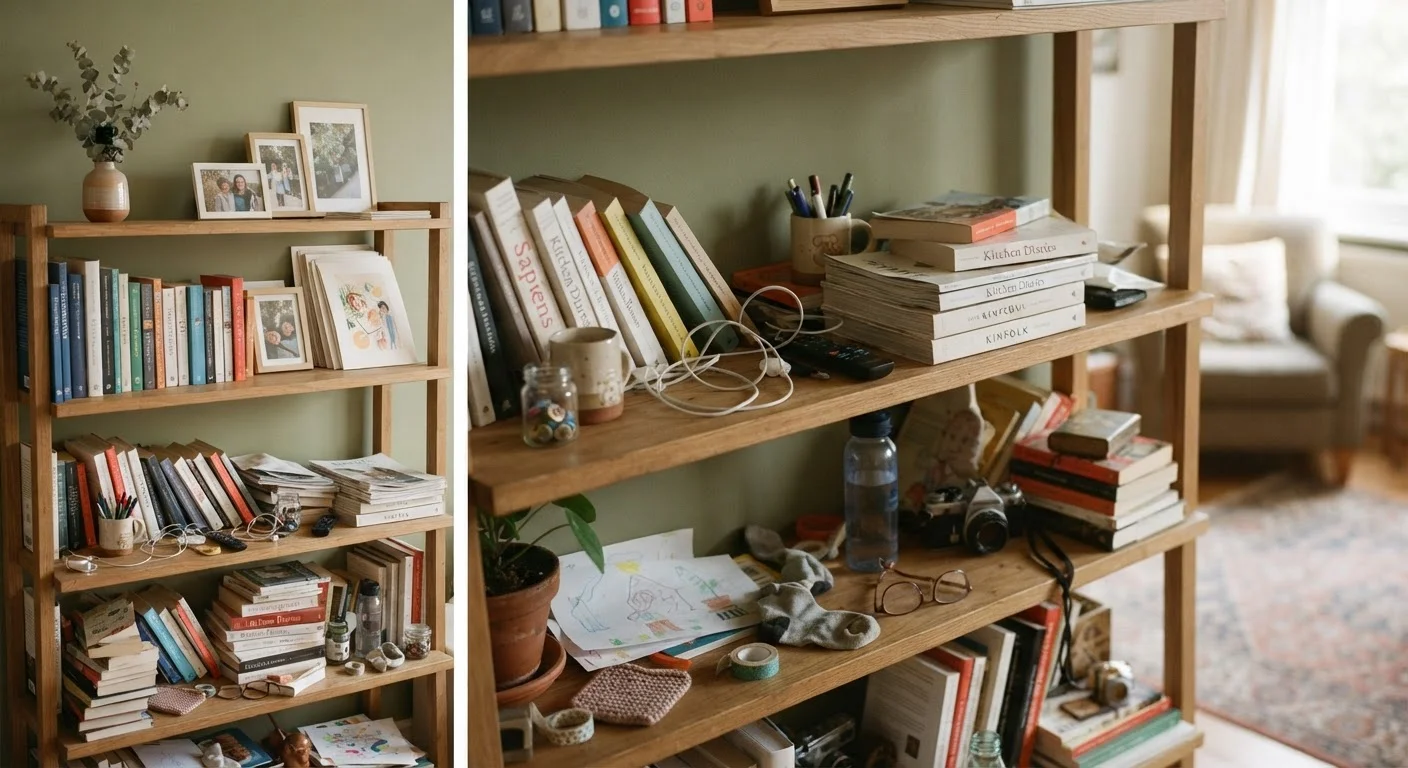
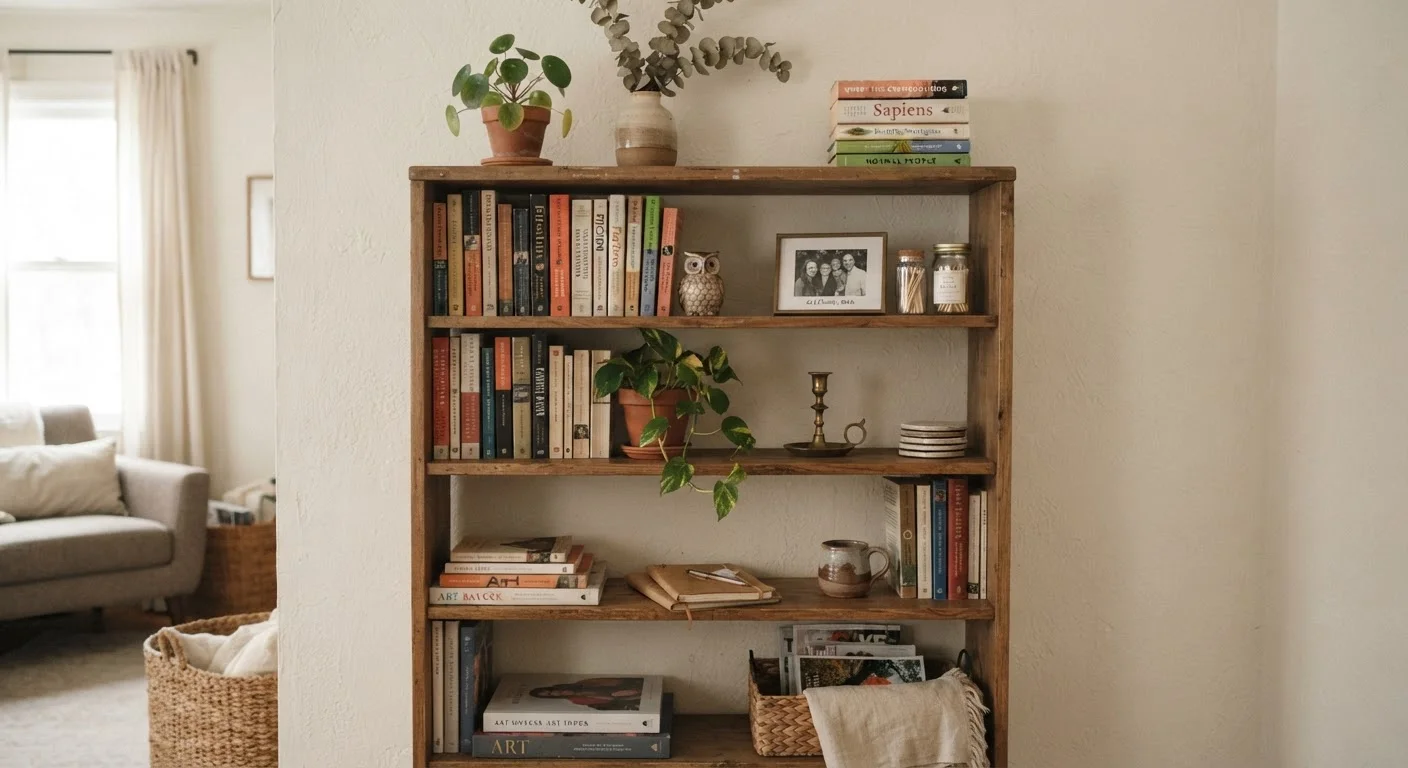
Clutter is defined by whether items have a designated purpose and place - not by whether they're out in the open. A spice rack on the counter, tools on a pegboard, or books on an open shelf are all visible and all organized. Conversely, a drawer stuffed with miscellaneous items no one uses is hidden and genuinely cluttered. Where something lives matters far less than whether its location makes sense.
Myth
You need to declutter everything before you can get organized.
Fact
Decluttering and organizing work best as sequential steps, but small, targeted organizing can happen anytime.
While a full declutter before organizing is ideal, waiting for the perfect purge before taking any action often means nothing improves. A more practical approach: organize high-traffic areas first, even imperfectly, to reduce daily friction. Then declutter category by category as time allows. Progress built incrementally is more durable than a single all-day overhaul that burns out your motivation.
Myth
Buying the right storage products will solve disorganization.
Fact
Storage products are only useful after you've defined a system; without that, they add expense and complexity.
Containers, bins, and drawer dividers are tools - they don't create organization on their own. Buying storage before deciding what stays, what goes, and where each category lives often results in organizing the clutter rather than reducing it. The system - who uses what, when, and where - must come first. Products support the system; they don't replace the thinking required to build one.
Myth
Organized people never have clutter.
Fact
People with effective systems still accumulate clutter; they simply have routines for addressing it regularly.
Clutter is a normal byproduct of daily life in any household. Mail arrives, projects expand, and things migrate from their spots. What distinguishes a well-organized home isn't the absence of mess but the presence of low-effort habits to address it before it compounds. Brief, routine resets - rather than marathon tidying sessions - are what keep spaces manageable over time.
Why Systems Fail - and What Actually Holds
The most common reason an organized space reverts to chaos isn't laziness. It's that the system required too many steps to maintain. A rule of thumb used by professional organizers: if putting something away takes more than a few seconds, most people will set it down instead. That pile of jackets near the door isn't a character flaw - it's a sign the coat closet is too inconvenient.
If your tidy space keeps reverting to clutter, the fix is almost always structural, not motivational. Reduce friction by storing things where you actually use them, not where it looks best. Give frequently used items the most accessible spots. Reserve hard-to-reach areas for rarely needed things.
80%
Items kept but rarely used
Professional organizers commonly estimate that around 80% of the items people store are used less than once a year, suggesting most storage challenges are rooted in accumulation rather than storage space.
~40%
Time spent searching for misplaced items
Studies on household productivity suggest Americans spend a significant portion of their daily time looking for misplaced objects, with some estimates pointing to roughly 2.5 days per year.
Shared households add another layer of complexity. A system designed by one person for their habits will frustrate everyone else. Organizing a home with others works best when storage logic is negotiated, not imposed.
Avoid Designing Systems Only You Understand
In shared households, an organization system that only one person can navigate creates dependency and resentment. If a partner or family member can't intuitively find or return items, the system will break down quickly. Label generously, keep categories broad and obvious, and involve others in the planning stage so the logic makes sense to everyone using the space.
Building Organization That Lasts
Decluttering and organizing are separate processes, and doing them in the wrong order wastes effort. Organizing a space before removing what doesn't belong means you're creating storage solutions for things that shouldn't be kept. Assess what you actually use first, then build a system around what remains.
Maintenance doesn't require a weekly overhaul. Small, consistent habits - a five-minute reset at the end of the day, or a single recurring check of one area per week - outperform sporadic deep-cleaning sessions. For room-specific strategies, our kitchen organization principles article walks through how to apply these ideas in one of the home's most-used spaces.
Finally, it's worth considering whether a minimal approach suits your household before committing to it. There are real trade-offs to stripping things down, which our look at minimalist organization examines honestly. The right level of organization is the one you can actually sustain - nothing more, nothing less.
Organization Should Reduce Stress, Not Create It
If maintaining your current system feels like a constant chore, the system needs adjustment - not more willpower. A well-designed organization approach should require minimal daily effort to sustain. If you find yourself dreading tidying up or feeling shame about how your home looks, that's a signal to simplify the system, not push harder against it.