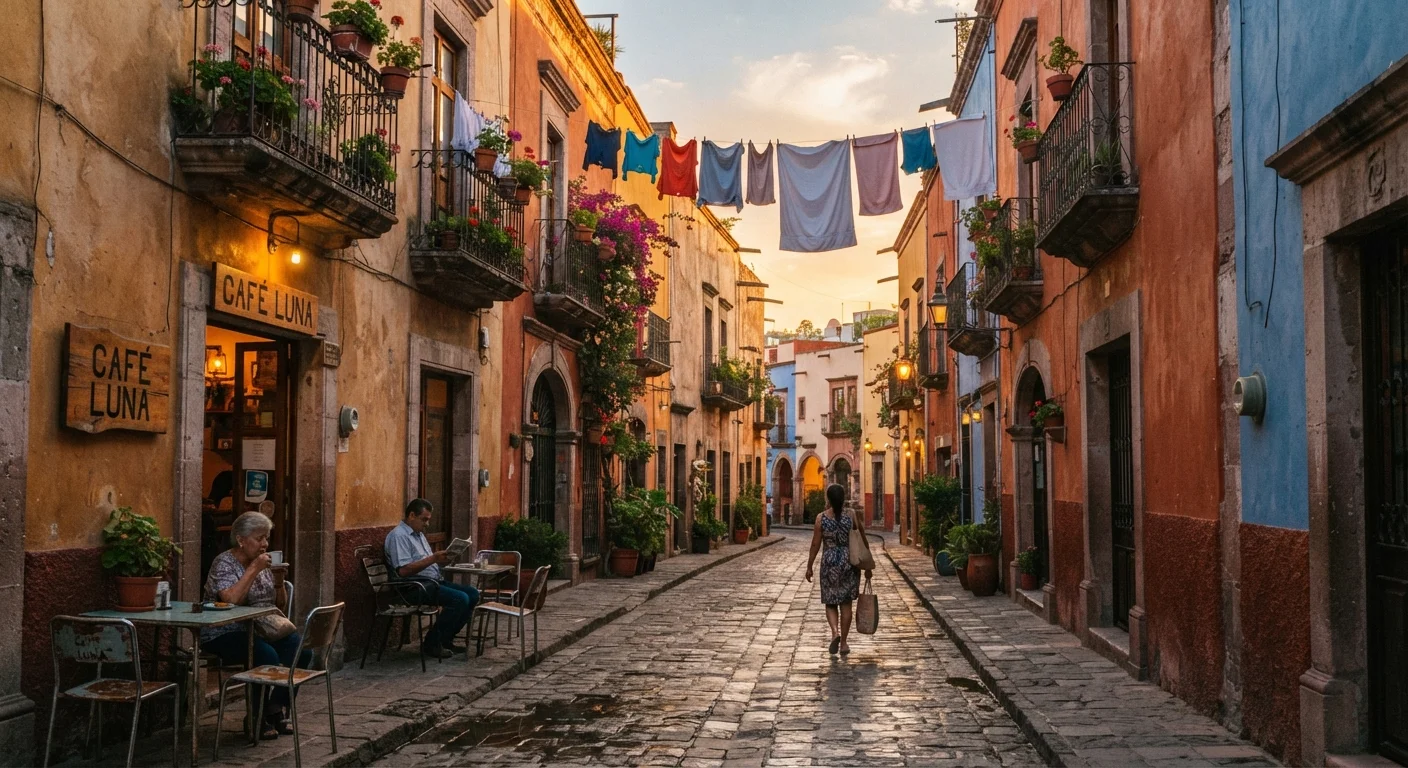

What a Homestay Actually Means
The word "homestay" covers an unusually wide spectrum. At one end, it describes a spare bedroom in a family home where the host cooks breakfast and invites you to join family dinners. At the other, it's a self-contained annexe where the owner lives next door and interaction is minimal. Between those poles lies almost everything imaginable - shared bathrooms, communal kitchens, house curfews, farm chores, language-exchange arrangements, and cultural programming that ranges from deeply thoughtful to loosely improvised.
That breadth is worth understanding upfront. Unlike a hotel room, where the product is standardized enough to compare meaningfully, a homestay is fundamentally a relationship - one shaped by the personalities, schedules, values, and circumstances of the specific family involved. This makes thorough pre-booking research less optional than it might seem. Our guide on researching a destination before you book is a useful starting point for building that groundwork, especially for destinations where English-language reviews are sparse.
The Real Advantages of Staying with a Host Family
The case for homestays is strongest when travelers are honest about what they're actually after. If the goal is genuine cultural immersion rather than a curated performance of it, few accommodation formats come close.
Genuine daily-life cultural immersion
Staying inside a working household exposes travelers to routines, food, and conversation that no tourist attraction replicates. This kind of access is typically unavailable through hotels or hostels.
Rich language practice in natural context
Conversation at the dinner table or during shared chores accelerates language learning in ways classroom study rarely matches. Hosts often enjoy the exchange as much as guests do.
Access to destinations with limited formal lodging
In rural areas or smaller towns, homestays may be the only practical accommodation option, opening up destinations that are otherwise hard to visit independently.
Insider local knowledge from hosts
A trusted host can provide practical guidance - transport routes, safe neighborhoods, local customs - that saves time and avoids common tourist pitfalls.
Often more affordable than comparable hotels
In many destinations, homestays offer a lower price point than hotels of equivalent cleanliness and location, particularly when meals are included in the arrangement.
Daily domestic life - the foods served, the rhythms of a household, the way a family navigates a morning - communicates things about a place that no museum exhibit can. Sharing those moments with a local family in a residential neighborhood gives travelers a perspective that's difficult to manufacture through any other means. Language learners in particular benefit enormously: conversation practice over a shared meal tends to outpace classroom hours in both speed and retention.
There's also a practical dimension. In smaller towns or rural areas where formal accommodation is limited, homestays can open up destinations that would otherwise be logistically difficult to visit. And when hosts are well-matched to guests, that local knowledge - which bus to take, which market to visit, which neighborhood to avoid after dark - is worth more than any guidebook.
Where Homestays Frequently Fall Short
The same intimacy that makes homestays compelling is also what makes them difficult when things go wrong. Guests who struggle with a hotel can simply check out. Guests who find a homestay arrangement uncomfortable face a more complicated social calculus.
Privacy is often limited or unpredictable
Shared bathrooms, communal living areas, and socially engaged hosts can feel intrusive for travelers who need personal space. The degree of privacy varies widely and isn't always clear from listings.
House rules can feel restrictive
Curfews, no-guest policies, and fixed mealtimes are common in many homestays. These constraints are reasonable from a host's perspective but can frustrate travelers expecting hotel-like flexibility.
No standardized quality benchmarks
Unlike hotels, homestays lack a universally applied rating framework. Descriptions like "comfortable" or "quiet" are entirely subjective and can lead to significant mismatches.
Language barriers can strain daily interaction
When guest and host share little common language, even basic logistics become effortful. This can shift from charming to exhausting over an extended stay.
Difficult to exit gracefully if things go wrong
Unlike a hotel stay, leaving a homestay early carries social weight and can feel awkward or even rude depending on the cultural context. Guests often feel obligated to stay regardless of comfort.
Host expectations aren't always transparent
Some hosts expect participation in family life, chores, or language exchange without stating this explicitly in the listing. Unspoken assumptions on both sides are a frequent source of friction.
Privacy is the most consistent friction point. Shared bathrooms, thin walls, and hosts who interpret "cultural exchange" as near-constant companionship can feel suffocating for travelers who recharge through solitude. House rules - around noise, guests, mealtimes, and curfews - are another common surprise. These exist for legitimate reasons, but they aren't always communicated clearly before arrival.
Accommodation quality also varies without reliable standardization. A star rating system doesn't exist for homestays the way it does for hotels, which means a listing described as "comfortable" can mean very different things depending on who wrote the description. Travelers weighing different accommodation formats - and the planning trade-offs each involves - may find it useful to compare how independent travel arrangements stack up against more structured options.
What Shapes the Experience Most
Research and communication do more to determine homestay quality than almost anything else. Reading recent reviews carefully - and paying attention to specifics like host responsiveness, cleanliness, and how conflicts were handled - is far more informative than overall star counts. Reaching out to a host with direct questions before booking reveals a great deal about communication style and expectations on both sides.
Cultural Norms Vary - In Both Directions
What reads as excessive involvement from a host may simply reflect a culture where hospitality means constant inclusion. Equally, a guest's preference for solitude can be misread as rudeness. Before arriving, it's worth reading about the specific social customs of your destination - not to perform them perfectly, but to understand where your own assumptions might not translate. Our guide on researching unfamiliar destinations covers this kind of cultural groundwork in detail.
Cultural expectations around hospitality vary significantly by country and region, and what feels intrusive in one context may be warm and generous in another. Travelers should approach house rules and social expectations with genuine curiosity rather than treating their own norms as the default. The same applies in reverse: the best hosts understand that guests come from different backgrounds and allow space for that difference.
It's also worth acknowledging that homestays sit within a broader conversation about ethical cultural tourism. When hosts from marginalized communities offer homestay experiences, the line between meaningful exchange and performative exploitation can blur. The questions worth asking before booking an indigenous or community-based cultural experience apply with equal weight here: Who benefits financially? Who designed the experience, and for whom?
~180
Countries with active homestay programs
Industry observers and travel researchers have noted homestay arrangements operating across approximately 180 countries, spanning rural villages to urban neighborhoods.
74%
Travelers citing cultural connection as key motivation
Surveys of experience-focused travelers consistently identify cultural immersion as the primary driver for choosing homestays over conventional accommodation.