What a Capsule Closet Actually Means
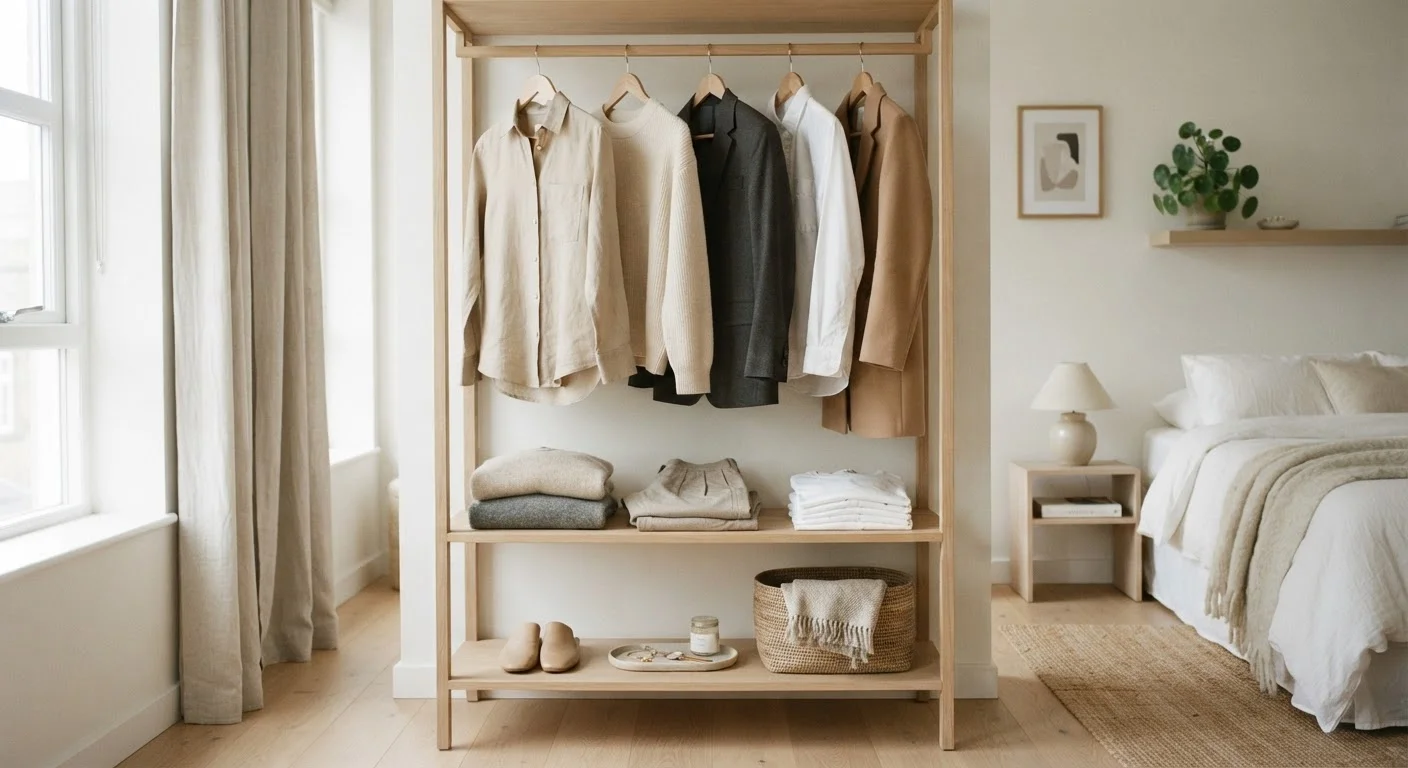
The phrase "capsule wardrobe" gets used loosely, but the core idea is straightforward: keep a small, intentional set of clothing that covers your real daily needs. Every item earns its place because it fits well, gets worn regularly, and pairs easily with other pieces you own.
This isn't about owning the least possible - it's about owning the right amount for your life. Someone who works from home has different needs than someone who commutes to an office five days a week. A capsule closet reflects your actual routine, not an idealized version of it.
The practical payoff is meaningful. When your wardrobe contains only items you like and wear, choosing an outfit becomes a two-minute task instead of a source of daily friction. That reduction in low-stakes decision-making - often called decision fatigue - frees up mental energy for things that matter more.
No Single "Right" Number of Pieces
You'll find many articles prescribing a specific item count - 33, 37, or 50 pieces are common numbers. These are useful starting frameworks, not strict rules. The right size for your capsule depends on your climate, career, family responsibilities, and how often you do laundry. Use those numbers as rough guides, not benchmarks to hit exactly.
Starting With What You Already Own
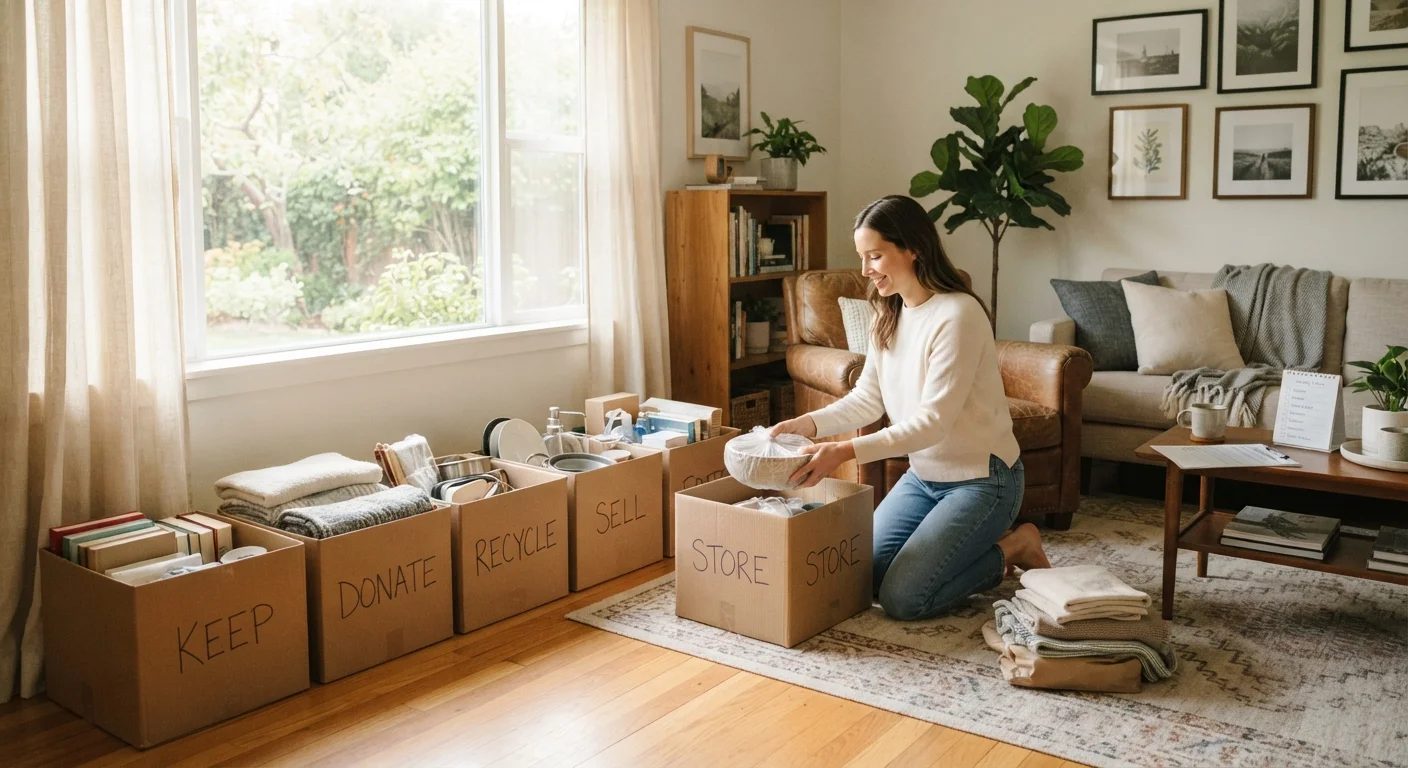
Building a capsule closet rarely requires buying anything new at first. The starting point is an honest look at what's already in your drawers and on your hangers. Pull everything out. Sort it into three groups: items you wear regularly, items you haven't worn in the past year, and items you're uncertain about.
The first group is the foundation of your capsule. The second group is strong evidence for what to remove. The third group can go into a box with a date written on it - if you haven't reached for anything in that box after three months, it's easier to let those pieces go.
If the editing process feels overwhelming, the approach doesn't have to be all-or-nothing. Our guide on decluttering your home without the overwhelm offers a low-pressure room-by-room framework that applies equally well to closets.
Use the "Box Test" for Uncertain Items
If you're not sure whether to keep something, fold it into a labeled box rather than putting it back in the closet. Note the date on the box. After 60-90 days, if you haven't gone back to retrieve anything, the decision to donate or store those items becomes much easier to make.
Organizing What Stays
Once you've narrowed down your clothing, how you store it makes a real difference in whether the system holds. The guiding principle is visibility - if you can see it, you'll wear it. Buried or hidden items default to being forgotten.
A few practical approaches:
- Group by category, not by color. Keeping all tops together, all bottoms together, and all layers together makes it easier to build outfits quickly.
- Use consistent hangers. Uniform hangers reduce visual clutter and help you see how much space your wardrobe actually takes up.
- Store off-season items separately. Rotating seasonal pieces - whether to a spare drawer, a shelf box, or under-bed storage - keeps your active capsule uncluttered. This is especially useful in smaller spaces, and our article on storage strategies for compact homes explores ways to handle limited square footage.
If your closet setup itself needs rethinking, it's worth weighing whether fixed or flexible storage fits your space better. Our overview of fixed shelving versus modular storage systems can help you evaluate your options before making changes.
~20%
Clothing worn regularly from the average wardrobe
A commonly cited figure in wardrobe research suggests most people regularly wear only about 20% of the clothes they own, with the rest rarely or never used.
35,000
Decisions an average adult makes per day
Researchers studying decision-making have noted that adults make tens of thousands of micro-decisions daily, and reducing trivial ones like outfit choices can preserve mental energy for higher-stakes tasks.
Maintaining a Capsule Closet Over Time
A capsule wardrobe isn't a one-time project - it's a habit. Seasonal reviews (roughly every three months) are the most effective maintenance tool. Use each review to retire worn-out pieces, swap in weather-appropriate items, and make sure what you have still fits how you're actually living.
One useful rule: before anything new comes in, something old should leave. This keeps the wardrobe from quietly expanding back to its original size over time.
If you share your home with others, coordinating storage habits can add a layer of complexity. The strategies in our guide on organizing shared spaces with different habits are worth reviewing if multiple people share a closet or laundry routine.
The capsule approach also translates naturally to travel. A well-edited wardrobe at home makes packing far easier - most of what you need is already mix-and-match ready. Our guide to packing light builds directly on this idea.