The Core Documents Every Traveler Should Carry
Before a single bag is packed, your documents deserve their own checklist. Think of them as the infrastructure of your trip - without them, nothing else moves. The essentials fall into a few clear categories, each serving a distinct purpose at borders, hotels, hospitals, and rental counters.
| Passport validity buffer | 6 months beyond return date (Required by many countries; verify with destination's embassy) |
| Physical copy sets recommended | 2-3 sets (luggage, home contact, wallet) (General travel safety guidance) |
| International Driving Permit validity | 1 year from issue date (AAA and similar issuing organizations) |
| Documents to digitize | Passport, visa, insurance card, itinerary, emergency contacts |
| Recommended digital storage method | Encrypted cloud folder with 2FA + offline phone download |
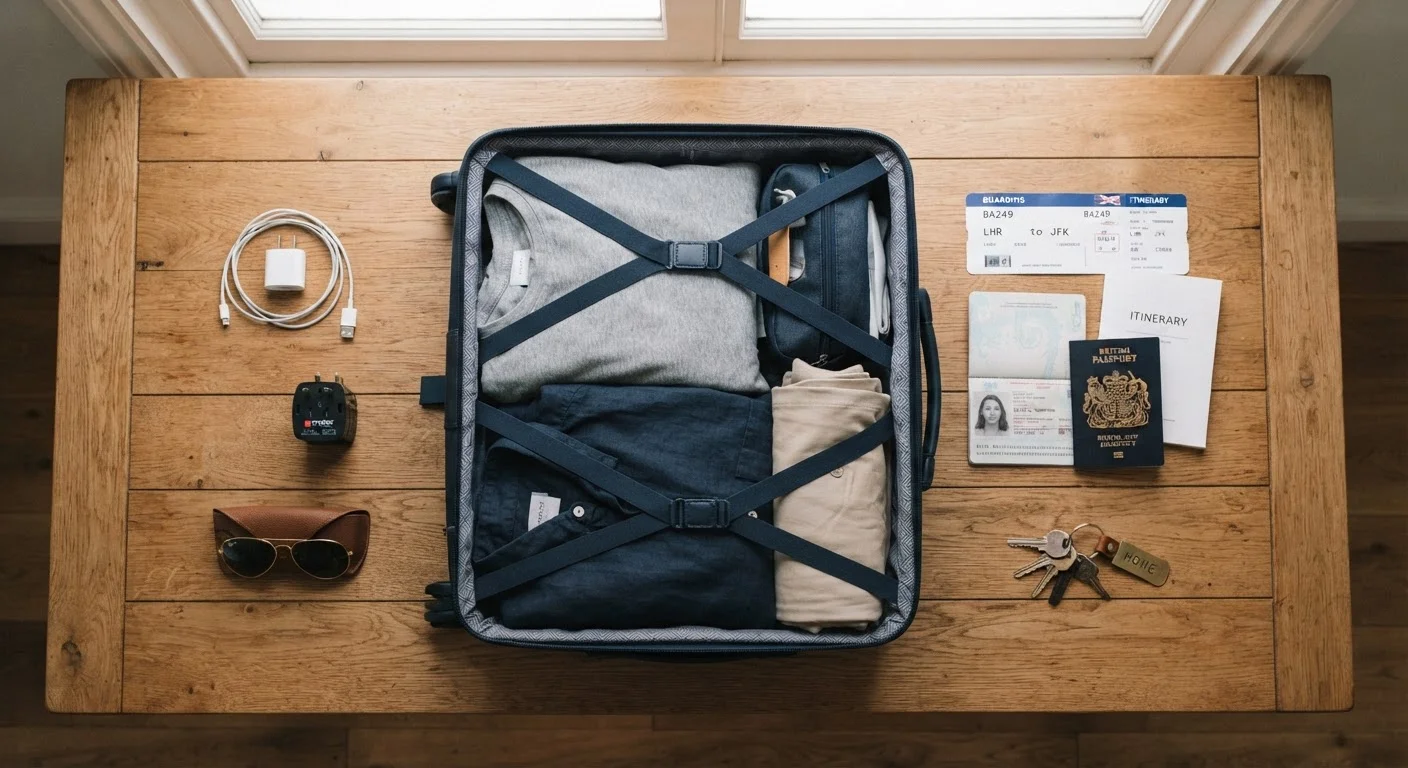
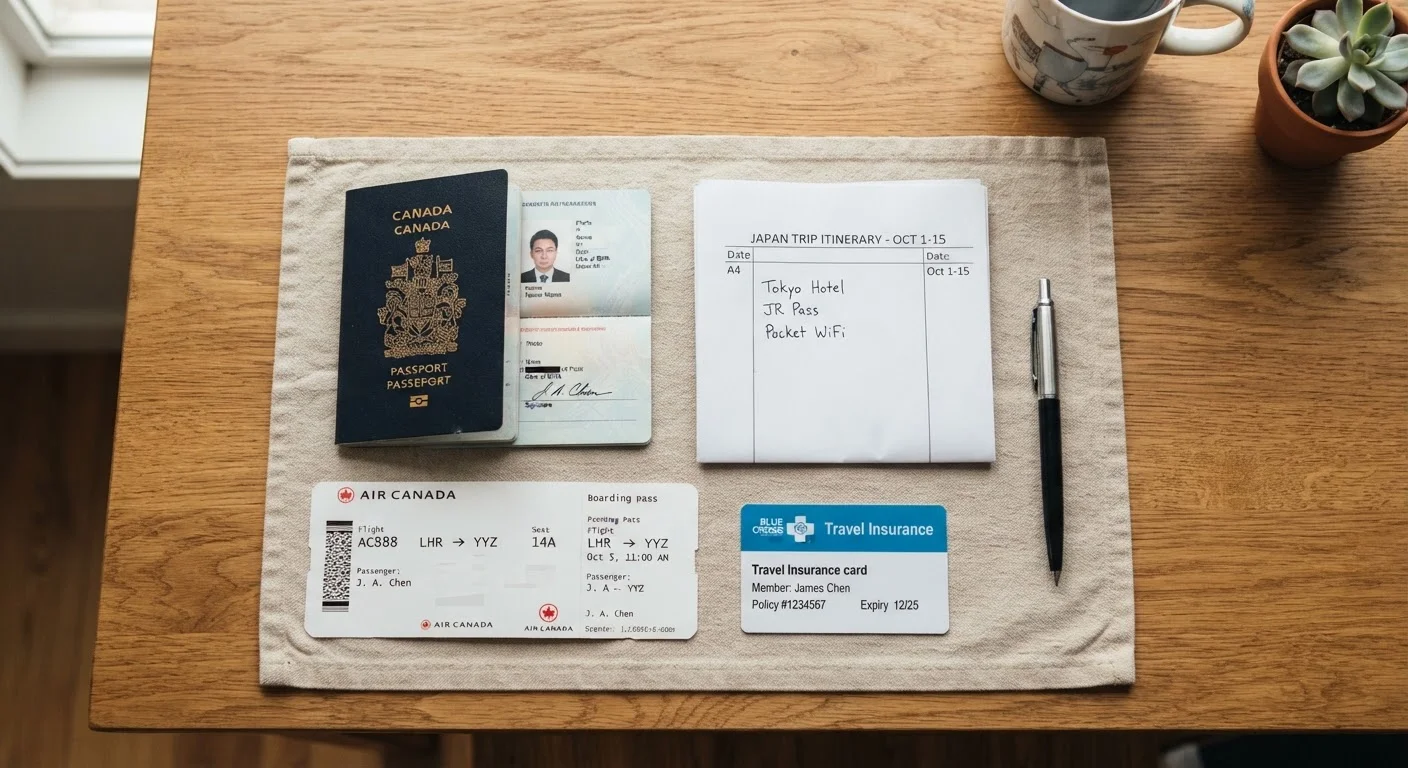
Passport: Required for all international travel. Check that it's valid for at least six months beyond your return date - many countries enforce this rule strictly. If you're traveling to countries that require a visa, carry that documentation alongside it.
Travel insurance card or policy summary: A compact reference showing your policy number, emergency contact line, and coverage dates. Keep this separate from your main wallet so it's accessible even if your bag is stolen.
Driver's license or state ID: Useful domestically and abroad - some countries accept an IDP for renting vehicles. Verify requirements with the rental company and your destination country before departure.
Health insurance card: Even if your domestic plan offers limited overseas coverage, the card provides policy details needed if your travel insurer requires coordination of benefits. For guidance on health considerations before you go, see Staying Healthy While Traveling.
What to Copy and How Many Sets to Make
The old traveler's rule - carry copies separately from originals - remains as sound as ever. A photocopy of your passport's data page, visa sticker, travel insurance summary, and driver's license gives you a workable backup if an original is lost or stolen. Most experienced travelers keep one set of copies in checked luggage, one with a trusted contact at home, and a digital version secured online.
Leave a Set With Someone You Trust
Before departure, email or securely share scanned copies of your passport, insurance card, and itinerary with a family member or close friend back home. If your phone and bag are both lost, that trusted contact can relay your policy number to an insurer or your passport details to an embassy. It takes five minutes and provides genuine peace of mind.
For the physical copies, a simple letter-size envelope tucked into your luggage works fine. Don't store copies in the same pocket or pouch as the originals - the whole point is geographic separation. If you're heading somewhere with a higher risk of petty theft, consider splitting originals across a money belt and hotel safe rather than keeping everything in one wallet.
Couples and families traveling together should each carry a copy of the other's key documents. It's a redundancy that takes two minutes to prepare and can cut through bureaucracy quickly if something goes wrong. For a broader pre-departure review, Pre-Trip Checklist covers additional items worth confirming before you leave home.
Storing Documents Digitally - and Doing It Safely
Digital backups have become the standard companion to physical copies, and for good reason: a smartphone with the right files loaded can unlock a remarkable amount of help at an embassy, airport, or insurance hotline. The key is storing documents in a way that's both accessible and protected.
1 in 4
Travelers who lose a document abroad
Surveys by travel insurance providers consistently note document loss as among the most common travel disruptions reported by policyholders.
72 hrs
Typical emergency passport processing time at a U.S. embassy
Processing times vary by location and demand; the U.S. State Department advises contacting the nearest embassy or consulate immediately after loss.
A password-protected cloud folder - using a service with strong encryption and two-factor authentication - works well for scanned passport pages, insurance policy PDFs, and itinerary confirmations. Avoid storing sensitive documents as plain email attachments or in shared folders without access controls.
Offline access matters too. Download copies to your phone before departure so you can pull them up even without Wi-Fi. A dedicated travel documents folder in your phone's secure notes app or a password manager's document vault offers an extra layer of protection without relying on connectivity.
For those who manage household documents with the same level of care, Paper, Digital, or Hybrid explores how to compare storage systems more broadly. And if this is your first international trip, Your First International Trip walks through the full planning arc from passport to packing.
Always verify entry requirements, visa rules, and official travel advisories through your government's travel information service before departure - conditions can change, and this article is for general informational purposes only.