What the Framework Actually Claims
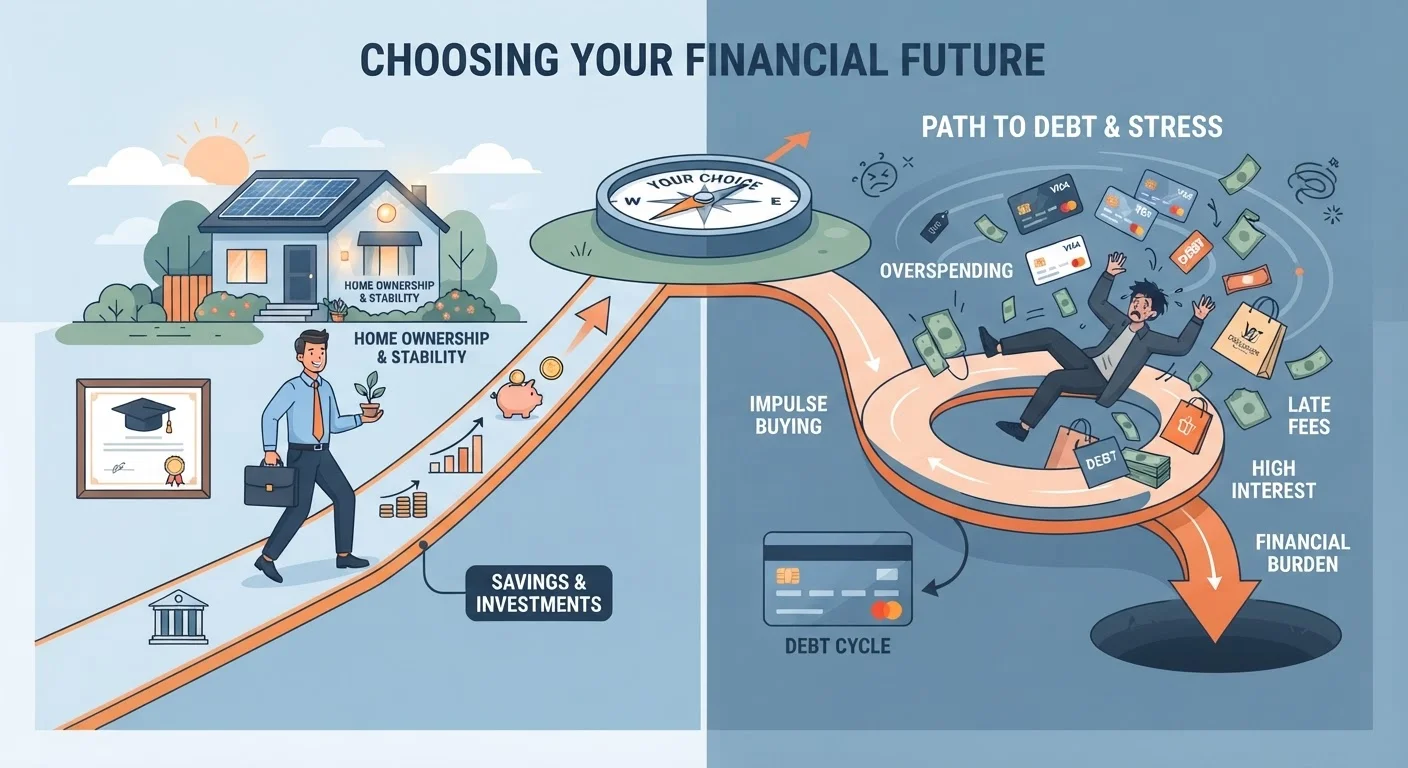
The good debt vs. bad debt concept sorts borrowing into two buckets based on its supposed long-term effect. Good debt is typically defined as borrowing that builds wealth or increases earning power over time - a mortgage, a student loan, or a small business loan. Bad debt refers to borrowing that funds consumption with no lasting financial return - credit card balances on discretionary purchases, payday loans, or high-interest personal loans for non-essentials.
The core logic is intuitive: if the expected return on what you borrowed for exceeds the cost of borrowing, you come out ahead. If it doesn't, you've paid a premium for something that doesn't grow in value. For anyone new to borrowing, that framing provides a genuinely useful mental anchor.
Where the framework runs into trouble is in its tendency to be applied as a binary label rather than a spectrum - as if all mortgages are automatically beneficial and all credit card debt is automatically damaging, regardless of the actual numbers involved.
What the Framework Gets Right
Gives first-time borrowers a practical mental framework
For someone encountering debt concepts for the first time, knowing that not all borrowing carries the same risk or purpose is a meaningful starting insight. It discourages treating a mortgage and a payday loan as interchangeable.
Encourages linking borrowing to long-term financial goals
By categorizing debt around its expected return, the framework nudges borrowers to think about whether a loan serves a financial purpose - a habit that can prevent impulsive or unplanned borrowing.
Highlights the importance of interest rates and loan terms
Debt conventionally called 'good' typically comes with lower interest rates and structured repayment plans, while 'bad' debt tends toward high rates. Recognizing this correlation helps borrowers compare costs more carefully.
Builds financial vocabulary and confidence
Having language to discuss debt with advisers, lenders, or family members helps borrowers participate more actively in financial decisions rather than deferring blindly.
Despite its limitations, the good/bad framing captures some durable truths worth holding onto.
The emphasis on purpose and return is one of them. Debt taken out to acquire an asset that generates income or appreciates - rental property, education leading to higher wages - does have a different risk profile from debt used to fund a vacation or clothing. Recognizing that distinction discourages reflexive borrowing without a plan.
The framework also implicitly highlights interest rate as a key variable. Debt conventionally labeled 'good' tends to carry lower, fixed interest rates with structured repayment terms. Debt labeled 'bad' often carries high and sometimes variable rates. That correlation is real, even if not universal.
Where It Falls Short
Creates false confidence in 'approved' debt categories
Labeling student loans or mortgages as inherently 'good' can cause borrowers to skip rigorous analysis of interest rates, repayment capacity, and actual expected returns - leading to outcomes that don't match the label.
Ignores individual circumstances and income stability
Whether debt is manageable depends heavily on a borrower's income, job stability, and existing obligations - factors the binary framework entirely ignores.
Misclassifies low-cost consumer debt as uniformly harmful
A short-term personal loan at a modest interest rate used to handle a genuine cash-flow need may be entirely reasonable, yet the framework would categorize it as 'bad debt' alongside high-rate payday lending.
Doesn't account for market and timing risk
A mortgage taken out near a housing market peak, or student debt in a declining field, may carry significantly more risk than the 'good debt' label implies - context the framework can't capture.
Can discourage healthy skepticism about 'good' borrowing
When debt is pre-approved by a label, borrowers may feel less motivated to negotiate terms, shop for rates, or question whether they need to borrow at all.
The framework's weaknesses become clearest when you look at edge cases - which in practice are quite common.
Consider student loans. They're frequently placed in the 'good debt' column because education correlates with higher lifetime earnings. But a $90,000 loan for a degree with limited labor-market demand, or borrowed at a high interest rate without a clear repayment path, may not serve the borrower well at all. The label 'good' offers false reassurance.
Mortgages present a similar complication. Homeownership does build equity over time in many cases, but a loan taken out with a very small down payment, high interest rate, or in a volatile housing market carries real risk. The secured nature of a mortgage means your home is collateral - a fact the 'good debt' label can obscure.
The Real Variable: Cost vs. Return
The most reliable way to evaluate any debt is to compare its annual cost (the interest rate and fees) against the concrete or likely return on what you're borrowing for. A low-rate loan for a high-return purpose can be financially sound; a high-rate loan for any purpose is difficult to justify mathematically. This cost-versus-return lens works across debt types in a way that 'good' and 'bad' labels simply cannot.
Conversely, some lower-cost personal debt used strategically - for example, a short-term loan at a modest rate to smooth a cash-flow gap - may be entirely manageable, yet the framework would flag it as 'bad.'
A More Useful Set of Questions
Rather than asking 'is this good or bad debt?', a more productive approach involves a few concrete questions:
- What is the interest rate, and how does it compare to the expected return? If the cost of borrowing is higher than what the borrowed money will generate or save, the math may not work in your favor.
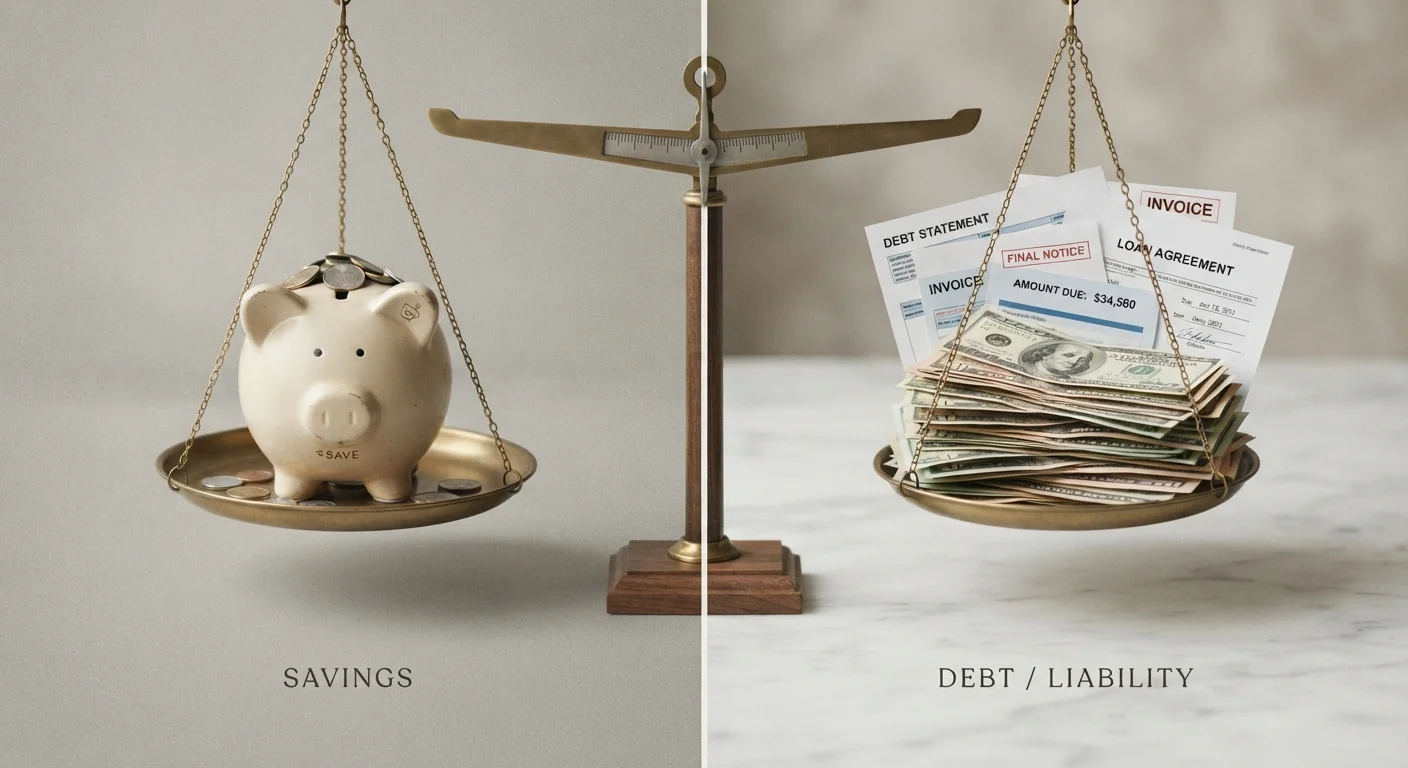
- Is the repayment realistic given my income? Even low-cost debt becomes a burden if monthly payments crowd out savings or emergency fund contributions. The debt vs. savings trade-off is worth thinking through carefully.
- What happens if circumstances change? Job loss, illness, or a market downturn can transform manageable debt into a crisis. Stress-testing the repayment plan matters.
- Are there alternatives? Sometimes restructuring existing debt or adjusting savings behavior removes the need to borrow at all.
~$1.77T
Total U.S. student loan debt outstanding
According to Federal Reserve data, outstanding student loan balances underscore why 'good debt' labels don't automatically translate to manageable debt.
20%+
Typical annual percentage rate on credit cards
The Consumer Financial Protection Bureau has noted average credit card APRs regularly exceed 20%, illustrating the cost difference that makes 'bad debt' labels intuitively meaningful.
If you're already carrying multiple debts and trying to prioritize, the debt avalanche and snowball methods offer structured approaches that go well beyond simple good/bad categorization.
This article is for general informational and educational purposes only and does not constitute personalized financial, tax, or legal advice. Consult a qualified financial adviser before making decisions about your own borrowing or debt management.